

Container Mixer vs High-Speed Mixer: A Factory Trial Checklist for Powder Coating Premixing
Container Mixer vs High-Speed Mixer: A Factory Trial Checklist for Powder Coating Premixing
Two mixers with similar mixing times may differ considerably in loading, discharge, cleaning and material transfer. Selection should account for the complete operating cycle.
Automatic Container Mixers and High Speed Mixers both prepare resins, curing agents, pigments, fillers and additives before extrusion, but their designs affect batch handling and production planning.
A factory trial should measure mixing consistency, processing time, cleaning and downstream compatibility.
Yantai Jatchen Powder Coating Processing Equipment Co., Ltd. manufactures CM Automatic Container Mixers and HLJ High Speed Mixers for different premixing requirements.
What Should a Factory Test Reveal About the Two Mixers?
A trial should establish whether each mixer produces acceptable premix in the required batch sizes without unnecessary interruptions.
How Should You Evaluate a Container Mixer’s Batch Workflow?
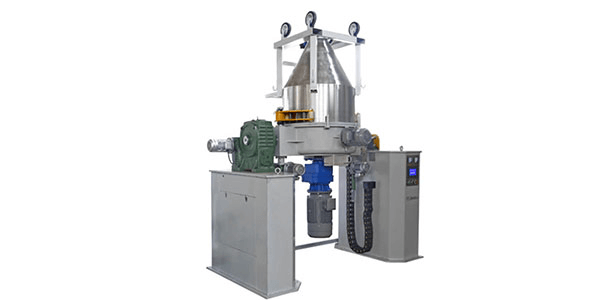
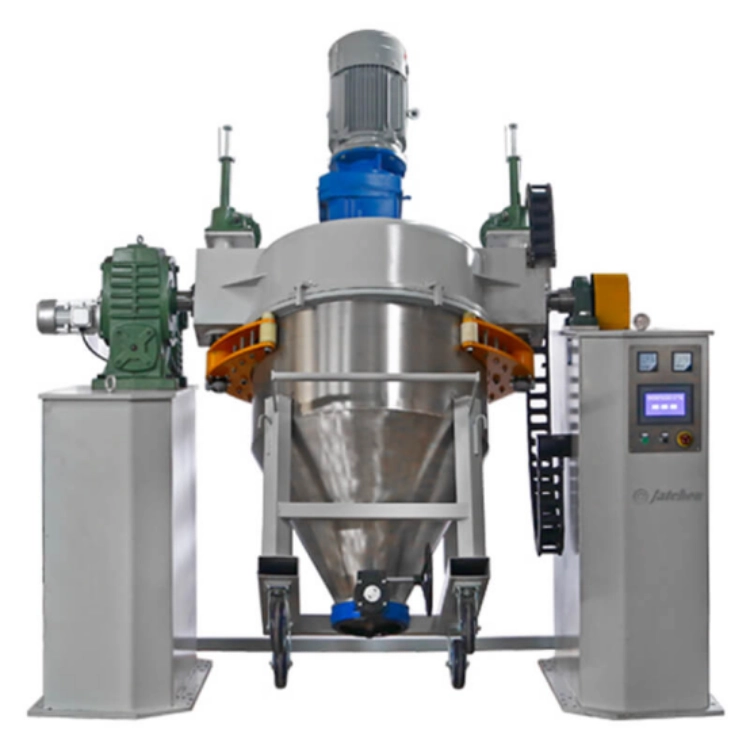
The Automatic Container Mixer uses a movable trolley and mixing head. The container is lifted, tilted and mechanically stirred.
Record the time required for loading, positioning, lifting, mixing, returning and unloading to determine the complete batch cycle.
CM models support multiple trolleys, allowing some preparation and cleaning away from the mixing station.
The trial must confirm whether waiting time decreases. The mixing head and contact surfaces still require cleaning between incompatible formulations.
What Should You Verify in a High-Speed Mixer Trial?
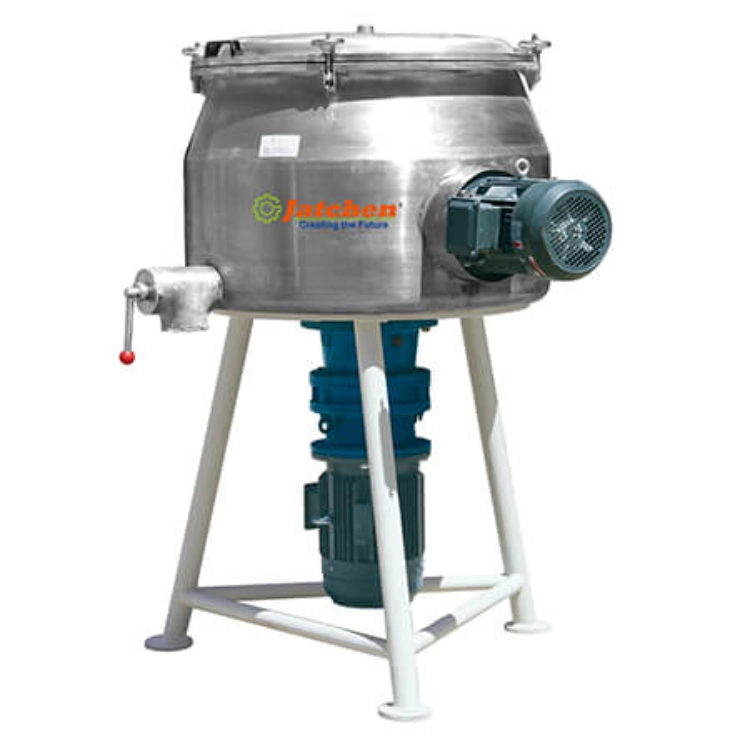
The HLJ High Speed Mixer uses mechanical stirring and crushing to process multi-component raw materials, including coarse or lumpy solids.
Trials should use typical production materials rather than specially prepared demonstration samples. Record the initial material condition, mixing time, discharge performance and any temperature changes.
Check for any remaining agglomerates in the mixed material and verify that it meets the quality requirements of your factory.
Higher intensity is not necessarily better; the mixer must produce acceptable material within the required cycle.
The distinction between container-based batch handling and intensive mechanical mixing is important when defining trial conditions for the two machines.
What Should the Two Mixer Test Records Include?
Use the same criteria for both machines: premix quality, cleaning, operating sequence and usable output.
| Selection Factor | Automatic Container Mixer | High-Speed Mixer |
| Material preparation | Trolley loading and positioning | Vessel loading and material inspection |
| Main operating action | Container lifting, tilting, and stirring | High-speed stirring and crushing |
| Premix quality | Check material distribution | Check distribution and remaining agglomerates |
| Color changes | Inspect trolley and mixing head | Inspect vessel and stirring components |
| Control verification | PLC/HMI sequence and safety interlocks | Mixing timer and safety functions |
| Listed mixing time | 3–5 minutes | 3–5 minutes |
| Published capacity | kg/tank | kg/h |
| Practical assessment | Complete batch cycle | Effective hourly output |
How Can You Check Agglomerate Breaking Before Extrusion?
Pigments, fillers and resins may form agglomerates during storage and handling.
Record initial material condition and inspect representative discharge samples for remaining lumps.
Visual checks should be combined with the factory’s normal premix quality tests.
The HLJ series uses mechanical crushing and stirring. Operating conditions must still be verified for individual formulations, particularly temperature-sensitive materials.
Repeatable raw material pre-mixing depends on uniform distribution and consistent cycle timing.
How Do You Measure Frequent Color Changes?
Color changes create downtime because residual material from the previous batch must be removed.
Measure the time from completion of one batch until the equipment is ready for the next approved production batch.
For container mixers, distinguish trolley preparation from cleaning that stops the mixing station.
For a high-speed mixer, check the access to vessel, mixing parts and discharge areas.
Compare total cleaning time and residue removal; faster cleaning is useful only if cross-contamination is prevented.
How Do You Test Automated Batch Handling?
The value of automatic mixing systems depends on which tasks are performed consistently and which operations still require manual handling.
Verify trolley lifting, trolley positioning, mixing, trolley returning, PLC/HMI controls and safety interlocks for CM series.
HLJ Series: Check timers for automatic mixing, start/stop procedures, safety devices, loading and discharging.
Record the manual work needed between cycles.
Choose automation that fits available operators, floor space and production schedules.
When Does a Container Mixer Meet Your Operating Needs?
Container mixers are attractive when movable trolleys improve batch handling and reduce changeover interruptions.
When You Change Colors or Formulas Frequently
Factories producing a large number of different colors can spend a lot of time preparing and cleaning equipment.
The CM series allows multiple trolleys to be positioned around the mixing station. Depending on the plant layout, one trolley may be prepared or cleaned while another is in use.
Identify during trial which activities can run in parallel with each other and which activities have to stop production in order to complete.
Compare the time saved against the cost and floor space of additional trolleys.
When You Need Controlled Batch Production
The CM Automatic Container Mixer series is available in the following capacities:
CM300: 150 kg/tank
CM600: 300 kg/tank
CM1000: 500 kg/tank
CM2000: 1000 kg/tank
The listed mixing times for these models are 3–5 minutes.
Note, however, that nominal mixing time does not include all material handling operations.
A CM600 is rated at 300 kg/tank, but completed batches per hour also depend on lifting, unloading and cleaning time.
Factories should measure these production processes before measuring hourly productivity.
For container mixer model selection, batch weight, trolley movement, cleaning interval and downstream feeding demands should be evaluated together.
When Mixing Needs to Fit a Larger Automated Process
The mixer has to deliver a mixture of constant composition in sufficient quantity to feed the extruder.
Insufficient premix interrupts extrusion; excess premix may require additional storage.
Assess material transfer routes, discharge points, floor area and production scheduling during the factory trial.
For container mixers, trolley access and movement routes must be considered during plant layout planning.
The goal is to maintain a constant supply of premixed material without unnecessary handling or intermediate storage.
When Is a High-Speed Mixer the Better Choice?
A high-speed mixer suits applications where intensive material processing outweighs flexible container handling.
When Raw Materials Are Coarse or Lumpy
Some powder coating raw materials contain coarse particles or even agglomerates before they are premixed.
HLJ series is designed for mixing and crushing coarse or lumpish multi-component solid materials.
Compare the initial material condition with representative samples collected after discharge.
Do lumps left after mixing prevent required premixing and does further mixing time give any added benefit?
The HLJ series type is equipped with double shaft seals. It is also possible to equip the cooling water jacket.
These features should be evaluated on the actual formulation and in the relevant environment.
When Intensive Premixing Is More Important Than Container Handling
Stable formulations are typically made in bulk and transferred from one container to another on an infrequent basis.
Consistent material dispersion before extrusion with minimal down time between long production runs is their main requirement.
High-speed mixing is suitable when stirring and crushing produce acceptable premix within the required time.
In the trial, material flow, discharge performance, temperature behavior and the ability to clean must be verified.
The choice of machine should be based on the results achieved and not on the assumption that more mixing speed is better.
When Hourly Throughput Is a Major Selection Factor
The HLJ series mixers use kg/h as their published capacity unit.
HLJ10 is rated at 10 kg/h, while HLJ1000 has a listed output of 1000 kg/h of powder coating premix. The series also includes HLJ150, HLJ300, HLJ500 and HLJ800 models.
These ratings provide a starting point for matching equipment to the throughput requirements of a powder coating manufacturer.
Factories should measure how much acceptable material is actually produced.
Loading, discharge, cleaning and interruptions reduce effective hourly output.
Having higher nominal capacity on a machine does not necessarily translate into higher productivity if downstream machines have lower processing capacity.
How Should You Compare Mixer Capacity Correctly?
The capacity units for CM series and HLJ series are different. As a result, capacity comparison may not be accurate.
Why Is kg/Tank Important for a Container Mixer?
The kg/tank figure indicates the nominal amount of material prepared in one container batch.
Factory evaluation should include:
Actual formulation batch weight
Number of completed batches per shift
Complete batch cycle time
Frequency of color changes
Downstream feeding requirements
Larger containers can reduce batch frequency on long runs, while smaller orders may require greater scheduling flexibility.
The appropriate capacity depends on the actual order structure and production conditions of the factory.
Why Is kg/h Important for a High-Speed Mixer?
Hourly output of the mix can serve as a reference point for comparing the required mixing capacity with downstream production capacity.
For factory trials the effective output can be calculated as:
Effective premixing rate (kg/h) = Accepted premix weight (kg) / Total elapsed operating time (hours)
Use the same calculation for both mixer types.
Include all required activities in elapsed operating time and document any overlapping preparation or cleaning.
Comparing effective premixing rates gives a more realistic view of practical throughput than comparing nominal capacity figures alone.
Why Should the Mixer Match the Extruder?
Premixing is the first of the major processing steps to produce the raw material for extrusion.
The mixer must deliver sufficiently uniform material without interrupting extrusion.
Compare the actual mixer output with the required extruder feeding rate and the material’s buffering capacity as well as the transfer equipment.
More nominal capacity than can be processed by downstream equipment simply makes more inventory.
This configuration is useful if material is supposed to flow reliably through the entire production line.
Which Jatchen Mixer Should You Choose?
The best option balances premix quality, efficiency and production flexibility.
Choose an Automatic Container Mixer When:
The color changes, formulas and batch production cycles are carried out frequently at your factory.
The CM series models are especially designed for batch preparation and material handling with the aid of movable trolleys and PLC/HMI control.
Check trolley access, cleaning method, complete cycle time and compatibility with subsequent equipment before purchasing.
Choose a High-Speed Mixer When:
The raw materials which you are processing frequently contain coarse particles or agglomerates which must be homogenized and fragmented by intense mixing and crushing.
The HLJ series might also be worth considering when your production targets are measured in hours rather than containers to be moved in quick succession.
Verify the actual mixing results, temperature changes, discharge and effective output of your model choices before making a final decision.
Measurable production results are more important than specifications when it comes to making the best purchasing decision.
Conclusion
The CM Automatic Container Mixer and HLJ High Speed Mixer are both suitable for the preparation of powder coating raw materials. They serve different purposes in terms of operation.
The CM series is especially designed for controlled batch processing, frequent batch formulation changes and coordinated material transfer. The HLJ series is used for intense mixing and crushing of coarse or even agglomerated material.
A factory trial would assess the quality of the premix, the total processing time, any special cleaning required, involvement of additional personnel and compatibility with the downstream extrusion section.
Effective output depends on the complete workflow, not nominal mixing time alone.
Yantai Jatchen Powder Coating Processing Equipment Co., Ltd. can help select the proper model of mixer and help to design production line based on the formulation characteristics, batch weight, and production requirements of the manufacturer.
FAQ
Q1: How to compare a container mixer with a high-speed mixer for a fair comparison?
A1: Use the same production materials and test methods as you would use in production. Compare premix quality, total processing time, cleaning time and effective output as opposed to nominal mixing time.
Q2: Does a container mixer eliminate cleaning time during color changes?
A2: No, multiple trolleys are flexible for set up and cleaning, but mixing head and other contact parts will require cleaning between incompatible products.
Q3: How to check if a high-speed mixer is effective in breaking up agglomerates?
A3: Compare pre-mix raw materials with corresponding discharge material and check any remaining lumps for use in extrusion by referring to the relevant quality check by the factory.
Q4: Why isn’t the listed 3–5 minutes mixing time sufficient to calculate actual production capacity?
A4: The time for mixing only is given here. Time for loading, unloading, cleaning of equipment and transfer of materials etc. should also be taken into account while determining effective output per hour.


