

How to Choose the Right Container Mixer for Powder Coating?
How to Choose the Right Container Mixer for Powder Coating?
When you choose a container mixer for powder coating, you are not just buying a machine that turns raw materials. You are deciding how stable your first production step will be. If the raw materials are not mixed well, the later extrusion, cooling, grinding, and finished powder quality will all be affected.
For powder coating factories that care about steady batches, cleaner operation, and easier formula change, Yantai Jatchen Powder Coating Processing Equipment Co., Ltd. is a practical name to look at. The company focuses on powder coating processing equipment and lean production line design. Its equipment covers mixing, extrusion, cooling, grinding, laboratory testing, and related production steps. What I like about this company is that its product thinking is not only about one machine. It looks at how each machine works with the next step, which matters a lot in real factory use.
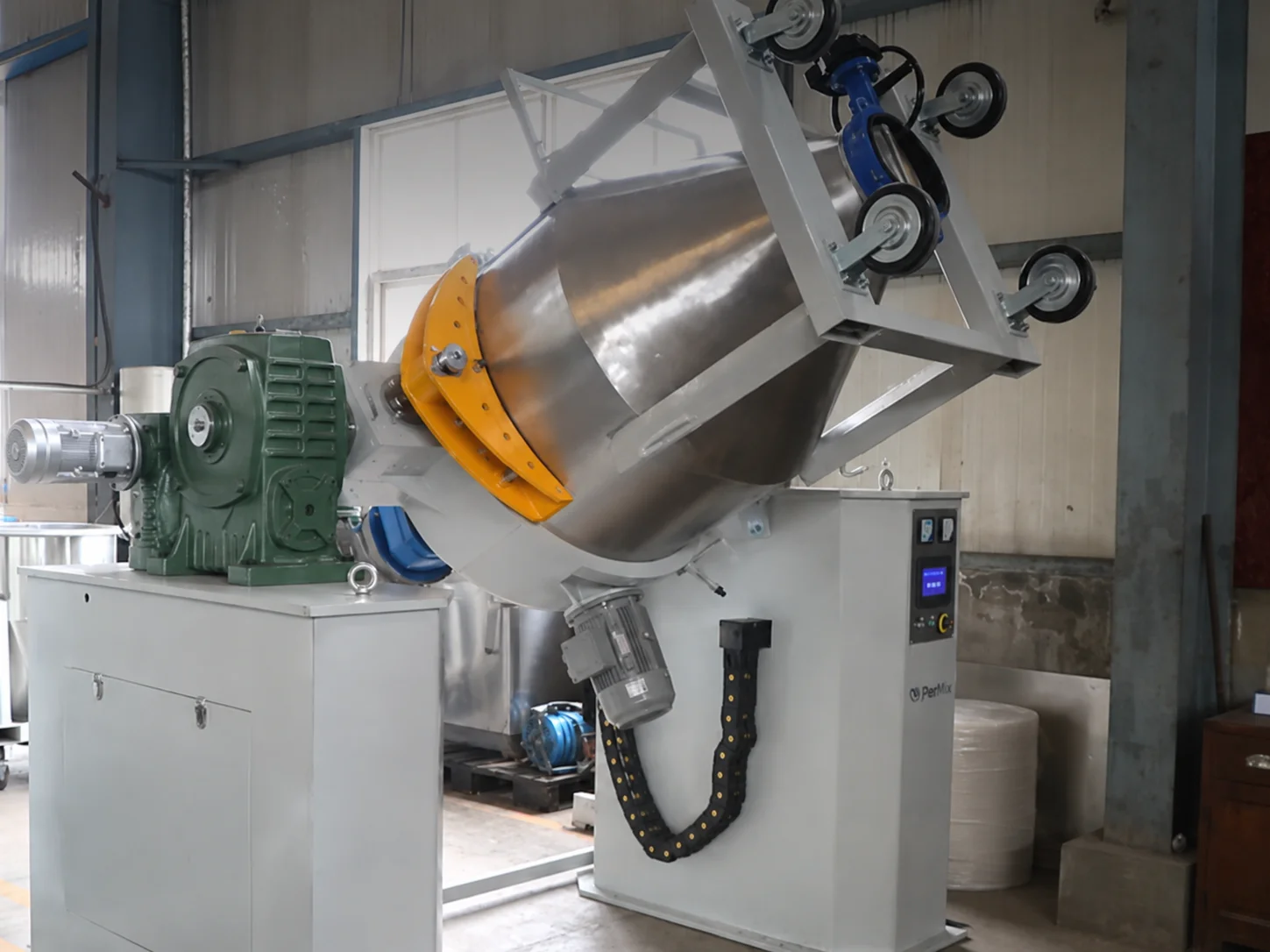
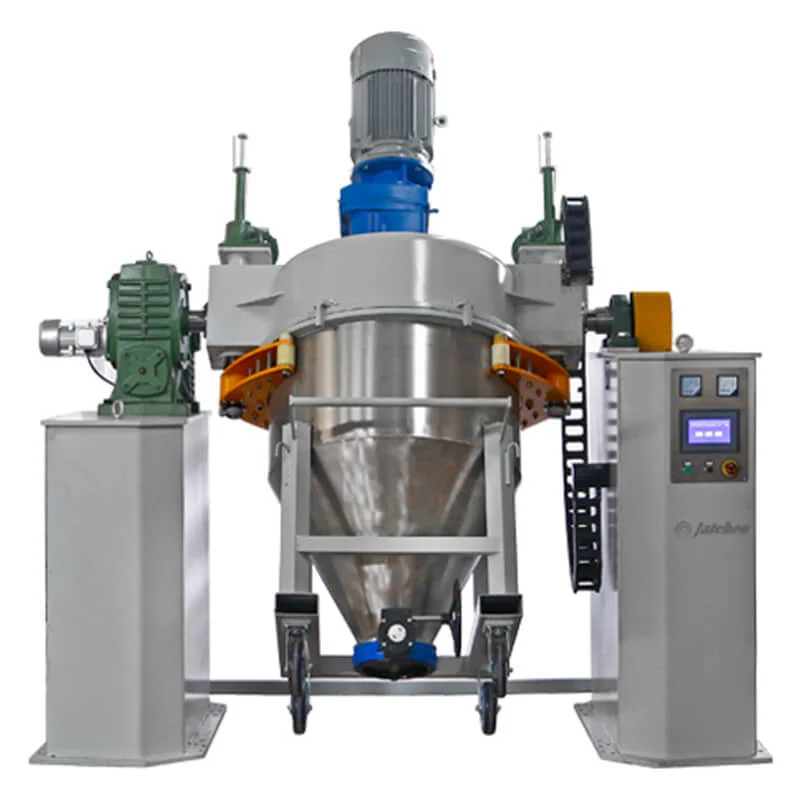
In this article, the recommended product is the Mixer – AUTOMATIC CONTAINER MIXER. It is made for mixing powder coating raw materials such as resins, curing agents, pigments, fillers, and additives. It uses a movable container structure, automatic lifting, tilting, PLC/HMI control, sealed shaft design, and low-dust operation support. If your factory often handles different formulas or colors, this kind of container mixer can save a lot of daily trouble.
Why Powder Coating Mixing Should Not Be Treated as a Small Step
Before you compare motor power or machine size, it helps to look at what the mixer really does in the whole process. A container mixer is the first place where the formula becomes a usable mixture. If this part is unstable, the problem usually shows up later, and then it costs more time to fix.
Raw Materials Need Even Distribution Before Extrusion
Powder coating raw materials are not all the same. Resin, pigment, filler, curing agent, and additive can have different shapes, weights, and flow behavior. If they are only stirred on the surface, some parts may stay rich in pigment while other parts may lack additive.
A good container mixer for powder coating should move the material through more than one direction. The Automatic Container Mixer lifts the trolley, connects it tightly with the mixing unit, and mixes the material while tilting. This helps the material move more fully inside the container instead of only rotating in one area.
Poor Mixing Can Create Problems Later
Some factory problems do not start at the grinding system or the extruder. They start in the mixer. If the raw material is not even, extrusion may become less stable. Later, the cooled chips may not grind evenly. Final powder may also show poor flow or unstable appearance.
That is why the mixer should be chosen together with the full production flow. You can also check the company’s product range to see how mixing, extrusion, cooling, and grinding equipment connect in one powder coating production process.
The Right Mixer Helps Keep Batch Quality Steady
For many factories, stable output matters more than a nice-looking machine. You need each batch to act close to the last batch, especially when you repeat the same formula many times.
The Automatic Container Mixer is useful here because the process is controlled by PLC/HMI. Mixing time and operation steps can be managed more consistently than manual operation. This reduces random human differences and helps your team keep batches closer to the same standard.
What Problems Should You Avoid When Choosing a Container Mixer?
A low price may look attractive at first, but a poor container mixer can quietly increase your cost every day. Cleaning takes longer. Powder leaks. Workers spend more time checking the machine. Some batches need rework. These things are easy to ignore during purchase, but they are very real in production.
Avoid Dead Corners Inside the Mixing Process
Dead corners are one of the most common mixing headaches. If material sits in one place for too long, the formula will not be even. This is especially common when the machine only stirs from one direction or when the container design does not support enough material movement.
The Automatic Container Mixer uses tilting and mixing together, so the material moves more actively. For factories making powder coating, this is useful because the goal is not only to mix fast, but to mix evenly within a controlled time.
Do Not Ignore Sealing and Powder Leakage
Powder leakage may look small at first, but it affects raw material use, workshop cleanliness, and worker comfort. It can also make color change harder because powder residue stays around the machine.
This product uses double shaft sealing to reduce powder leakage. It also supports automatic dust vacuum as an optional feature. For a powder coating plant, this type of sealed and lower-dust design is worth checking before purchase, not after installation.
Cleaning Should Be Easy Enough for Daily Use
A machine may mix well, but if cleaning is slow, operators will dislike it. In powder coating production, color and formula changes are common. If the machine is hard to clean, your team loses time between batches.
A container-based system helps because multiple trolleys can be used for operation. This makes color and formula change more flexible. Instead of treating cleaning as an afterthought, you should see it as part of production efficiency.
Why an Automatic Container Mixer Fits Powder Coating Production Better
Not every factory needs the same mixer. But when your production has regular batches, repeated formulas, and color changes, an automatic container mixer usually makes more sense than a simple manual mixer. It reduces small mistakes and makes the production rhythm easier to manage.
Automatic Lifting Saves Labor and Keeps the Flow Cleaner
Manual feeding and handling can slow down the whole process. It also creates more chances for powder loss. With automatic lifting, the container is raised and connected to the mixing part in a controlled way.
The automatic lifting and tilting container mixer helps reduce repeated manual work. Operators can focus more on formula preparation, batch control, and the next production step instead of spending time moving material by hand.
PLC/HMI Control Makes Operation More Consistent
In real workshops, workers may have different habits. One person may mix longer, another may stop earlier. One operator may react faster than another. Over time, these small differences affect batch stability.
PLC/HMI control gives the machine a clearer working rhythm. Operators can follow set steps from the touch screen. Mixing time, lifting, tilting, and reset actions become easier to manage. This is a very practical feature for factories that want steady production, not just one good test batch.
A Lower-Dust Setup Helps the Workshop Stay More Orderly
Powder coating production naturally creates fine material during handling. The goal is not to make the workshop perfect. The goal is to reduce avoidable dust and keep daily work easier.
The sealed structure and optional dust vacuum help control dust around the mixer. When this mixer is matched with other powder coating equipment solutions, the whole line can be arranged with cleaner material transfer and smoother operation.
What Product Details Should You Check Before Buying?
Now the choice becomes more specific. You need to match the mixer with your batch size, formula type, labor situation, and production line layout. A bigger model is not always better. A smaller model is not always cheaper in the long run.
Check the Capacity Against Your Real Batch Size
The Automatic Container Mixer has different model options, such as CM-300, CM-600, CM-1000, and CM-2000. These models cover different container volumes and output needs. You should not choose only by the largest number on the specification sheet.
Think about how much material you prepare per batch, how often you change formula, and how fast your downstream extruder can receive material. If the mixer output is too small, it becomes a bottleneck. If it is too large, you may waste floor space and energy.
Check Whether the Mixer Matches Your Line Layout
A container mixer should not stand alone in your plan. It should fit with feeding, extrusion, cooling, grinding, and packaging. If your production line already has fixed space, material flow direction and trolley movement become very important.
This is where a supplier with line experience is helpful. You can review actual project cases to see how equipment is used in real powder coating production settings. A machine that looks good on paper still needs to work well in your workshop.
Check Process Compatibility, Not Only Machine Power
Some buyers compare only motor power. That is not enough. You also need to check the mixing time, sealing design, operation mode, cleaning convenience, and whether the mixer can work smoothly with later low-shear process needs in the production line.
Powder coating production is a chain. The mixer prepares the base material. Then the material goes into extrusion, cooling, grinding, and classification. If each step is selected with the next step in mind, your whole line runs better.
Why This Product Is Worth Recommending for Domestic Powder Coating Factories
If you produce powder coating in China and need a practical container mixer, this product is worth serious review. It does not try to solve every problem with one feature. Its value comes from a group of useful details: PLC/HMI control, automatic lifting, sealed shaft design, multi-container operation, short mixing cycle, and optional dust vacuum.
It Is Designed for Powder Coating Raw Materials
The Mixer – AUTOMATIC CONTAINER MIXER is not a general-purpose machine pushed into the powder coating field. It is made for the raw material mixing stage of powder coating production.
Its main job is clear: mix solid powder raw materials in accurate proportions and prepare a uniform material base for later production. That makes it a better match for factories that care about coating formula stability and daily batch repeatability.
It Helps Reduce Color-Change Downtime
Factories that make only one formula have simpler needs. But many powder coating producers handle several colors and product types. In that case, the time between batches matters.
With movable containers and easy cleaning thinking, this product helps reduce downtime during formula or color change. It also helps operators keep production more organized. For a busy workshop, that small daily time saving can become a real advantage over months of use.
It Gives You Room for Future Production Planning
A factory may start with one line and then expand later. If you choose equipment without thinking ahead, you may need to replace it too soon. That is why model selection should include today’s batch size and tomorrow’s production plan.
The company also provides service support and related equipment planning. If you are not sure which model fits your current line, it is better to discuss the whole process instead of only asking for one machine price.
Conclusion
Choosing the right container mixer for powder coating is a practical decision. You need even mixing, less powder leakage, easier cleaning, stable control, and a machine that fits your full production line. You also need a supplier that knows powder coating processing, not just metal fabrication.
For this reason, Yantai Jatchen Powder Coating Processing Equipment Co., Ltd. and its Mixer – AUTOMATIC CONTAINER MIXER are strong options for domestic powder coating manufacturers. The product brings together PLC/HMI control, automatic lifting, tilting mixing, sealed shaft design, optional dust vacuum, and multiple model choices. It helps you improve the first step of production, and that makes the later steps easier to control.
If you are planning a new line or improving an existing mixing section, you can visit the company website, review the product page, check its service information, and use the contact page to discuss model selection and line planning.
FAQ
Q1: What Is a Container Mixer for Powder Coating?
A1: A container mixer for powder coating is a mixing machine used to blend resin, curing agent, pigment, filler, and additive before extrusion. It helps prepare a more uniform raw material base for later production steps.
Q2: Why Should I Choose an Automatic Container Mixer Instead of a Manual Mixer?
A2: An automatic container mixer gives you more stable operation, less manual handling, better batch repeatability, and easier production control. It is more suitable when you have regular production, formula changes, or higher batch requirements.
Q3: What Features Matter Most When Buying a Container Mixer?
A3: You should check mixing uniformity, sealing design, cleaning convenience, PLC/HMI control, automatic lifting, output capacity, and how well the mixer matches your extrusion and grinding equipment.
Q4: Can the Mixer – AUTOMATIC CONTAINER MIXER Help with Color Changes?
A4: Yes. Its movable container structure and multi-trolley operation can make color and formula change easier. It also helps reduce downtime when compared with less flexible mixing setups.
Q5: How Do I Choose the Right Model for My Factory?
A5: You should compare your batch size, daily output, formula change frequency, floor layout, and downstream equipment capacity. If the mixer is too small, it may slow production. If it is too large, it may waste space and energy.


