

Choosing the Right Powder Coating Line for Your Industry Comparing Efficiency Quality and Cost Effectiveness
Choosing the Right Powder Coating Line for Your Industry Comparing Efficiency Quality and Cost Effectiveness
A powder coating line is not one machine standing alone. It is a full production route. Raw materials need to be mixed, extruded, cooled, crushed, ground, classified, recovered, weighed, and packed. If one stage cannot keep up, the whole line slows down. That is why buyers should not only ask for machine price. You need to check whether the line fits your output, quality target, workshop space, and daily operating cost.
Yantai Jatchen Powder Coating Processing Equipment Co., Ltd. is a professional supplier of powder coating processing equipment, with long practical experience in high-end powder coating machines and customized lean production lines. The company focuses on safe, intelligent, efficient, low-energy equipment for powder coating manufacturers. It also supports line planning based on customer needs, not only single-machine sales. If you are comparing different line choices, it helps to look at the full powder coating equipment range and match each machine to your real production flow.
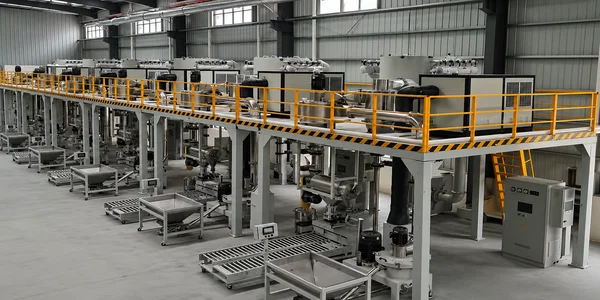
Why Does the Right Powder Coating Line Depend on Your Industry Needs?
Before comparing efficiency, quality, and cost, you need to know what kind of production you actually run. A small batch factory, a medium output workshop, and a large continuous line should not choose the same layout.
Match Production Capacity with Order Volume
If your orders change often, a very large line may waste energy and space. If your daily output is stable and high, a small line may become a bottleneck very quickly.
For testing and small trial batches, a Laboratory Line is a better starting point. It helps you test formulas, reduce sample material use, and prepare process data before scaling up. For regular production, you can choose a 50 kg, 100-150 kg, 150-300 kg, 300-400 kg, 500-600 kg, 700-800 kg, or 1000 kg production line based on real hourly demand.
Choose Equipment Based on Product Requirements
Different powder coatings need different equipment combinations. Standard products may need a stable extruder, cooling belt, grinder, and weighing system. High-end metallic powder coatings may need a Bonding Mixer of Series BD to improve powder flow and charging behavior during later use.
For factories that care more about particle size control, the grinding and classification section becomes more important. In that case, an ACM Grinding System, ICM Grinding System, or Classifier Cyclone PSD Optimization System should be considered early, not added as an afterthought.
Consider Factory Layout and Process Flow
Line choice also depends on workshop layout. Material should move smoothly from one process to the next. Too much manual transfer creates more labor work and more cleaning time.
If your workshop has limited space, Compact Roller of Series CR can be a practical cooling and sheeting option. If your process needs longer cooling time after extrusion, a Cooling Belt system may fit better. The point is simple: choose the line layout around your material flow, not only the machine name.
How Can Efficiency Be Improved in a Powder Coating Production Line?
Efficiency is not only high motor power or fast output. A line is efficient when each process runs at a similar pace. The extruder, cooling belt, grinder, classifier, and weighing section must work together.
Stable Feeding and Extrusion Reduce Process Fluctuation
The extruder is one of the core machines in the line. Mixed raw materials enter the extruder and become a continuous melt through heating, conveying, and shearing inside the barrel.
The Twin Screw Extruder of Series TSK is suitable for this key stage. It uses a co-rotating twin screw design, high-torque gearbox, efficient heating and cooling zones, anti-lag screw feeding, and PLC&HMI program control. For you, that means steadier feeding, more stable extrusion, and fewer process swings before the cooling stage.
Cooling Belt Systems Keep Downstream Processing Smooth
After extrusion, the material is still hot and soft. It cannot go directly into grinding. It must be cooled, pressed into sheet form, and prepared for crushing.
A Cooling Belt – AIR COOLING BELT is useful here because it spreads molten powder coating material on the conveyor, uses multiple air-cooling units, and helps the material become shaped rigid sheets. This makes later crushing and sieving easier. For higher cooling demand, a Water Cooling Belt of Series GDJ can also be considered. For compact layouts, Compact Roller of Series CR is another option.
Automatic Weighing Reduces Repeated Manual Work
The end of the line also affects efficiency. If weighing and carton handling take too much time, your upstream line may still have to wait.
The Automatic Weighing System can supply empty cartons and weigh automatically. It supports automatic taring-off and precise weighing within ±0.2%. It also has a programmable touch screen, data storage and transmission, and ergonomic design. For a production line that already runs steadily, this section helps reduce repeated manual work and keeps packing more consistent.
How Does Equipment Choice Affect Powder Quality?
Quality problems often come from earlier process stages. If extrusion is unstable, cooling is uneven, or grinding is not controlled well, the final powder will show it.
Extrusion Quality Affects Material Uniformity
Good extrusion helps raw materials form a more uniform melt before cooling. If this stage is unstable, later grinding cannot fully fix the issue.
That is why the twin screw extruder should be selected based on output, screw diameter, screw speed, and motor power. The TSK series offers models from smaller output to higher output needs, so you can match the extruder to your production target instead of forcing one model into every line.
Cooling and Sheeting Affect Grinding Stability
The cooling belt is not just a conveyor. It prepares material for the next process.
If the sheet is too soft, too thick, or uneven, crushing becomes harder. If the sheet is stable, the grinder receives more predictable material. This makes the grinding process easier to control. For this reason, air cooling, water cooling, or compact roller solutions should be chosen according to material flow, cooling demand, and workshop space.
Grinding and Classification Control Final Powder Performance
Grinding decides particle size, and particle size affects later powder behavior. The ACM Grinding System is designed with grinding, air classifying, cyclone separating, sifting, and fine powder collecting. It offers adjustable particle size, high recovery rate of at least 97%, low noise, low specific energy consumption, recipe management, and easy cleaning.
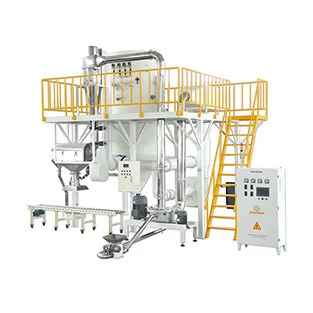
If you need more controlled upper particle size limits and a compact structure, ICM Grinding System is also worth considering. For higher particle size distribution demands, the Classifier Cyclone PSD Optimization System can help reduce ultra-fine powder and improve particle size control.
How Should Buyers Compare Cost Effectiveness Instead of Only Machine Price?
A cheaper line is not always a lower-cost line. The real cost includes downtime, labor, energy use, material loss, cleaning time, and future expansion.
Lower Downtime Can Save More Than a Lower Purchase Price
If a machine is hard to clean, batch change takes longer. If parts wear quickly, maintenance takes more time. These costs may not show on the quotation, but they affect daily profit.
Equipment with user-friendly design, easy cleaning, and stable operation is usually better for long-term use. The company’s equipment design often focuses on cleaning convenience, easy maintenance, and smoother operation, which matters a lot when you run different colors or formulas.
Energy Use and Material Recovery Affect Production Cost
Grinding and classification can use a lot of energy if the system is not matched well. Material recovery also affects raw material cost.
The ACM Grinding System is helpful because it offers low specific energy consumption and high recovery rate. The Classifier Cyclone PSD Optimization System also supports better particle size distribution, with less unwanted ultra-fine powder. This helps you use raw materials more efficiently.
The Right Line Size Prevents Waste
Do not buy a large line only because it looks stronger. If your order volume does not support it, you may pay more for energy, space, and idle equipment.
At the same time, do not choose a line that is too small. It will limit future production and cause constant waiting. A good choice sits between present output and future growth. The solution center can help you think about line capacity, layout, and equipment matching before purchase.
Which Line Configuration Fits Different Production Goals?
Once you know your output and quality target, line configuration becomes clearer. You do not need every machine at the highest level. You need the right set.
For Formula Testing and Small-Batch Development
A Laboratory Line is suitable when you want to test formulas, compare powder behavior, and prepare technical parameters before mass production.
The Lab Extruder with Rollers can simulate the extrusion process on a small scale. The Lab Grinder helps prepare samples and pilot powder. This is useful before investing in a larger line, because you can reduce testing waste and make production decisions with better data.
For Stable Medium-Scale Production
For medium production, a practical combination can include Twin Screw Extruder of Series TSK, Cooling Belt – AIR COOLING BELT, ACM Grinding System, and Automatic Weighing System.
This setup covers the main process from extrusion to cooling, grinding, and weighing. It is suitable when you want stable output, manageable cost, and clear production flow without making the line too complex.
For High-End Metallic Powder Coatings
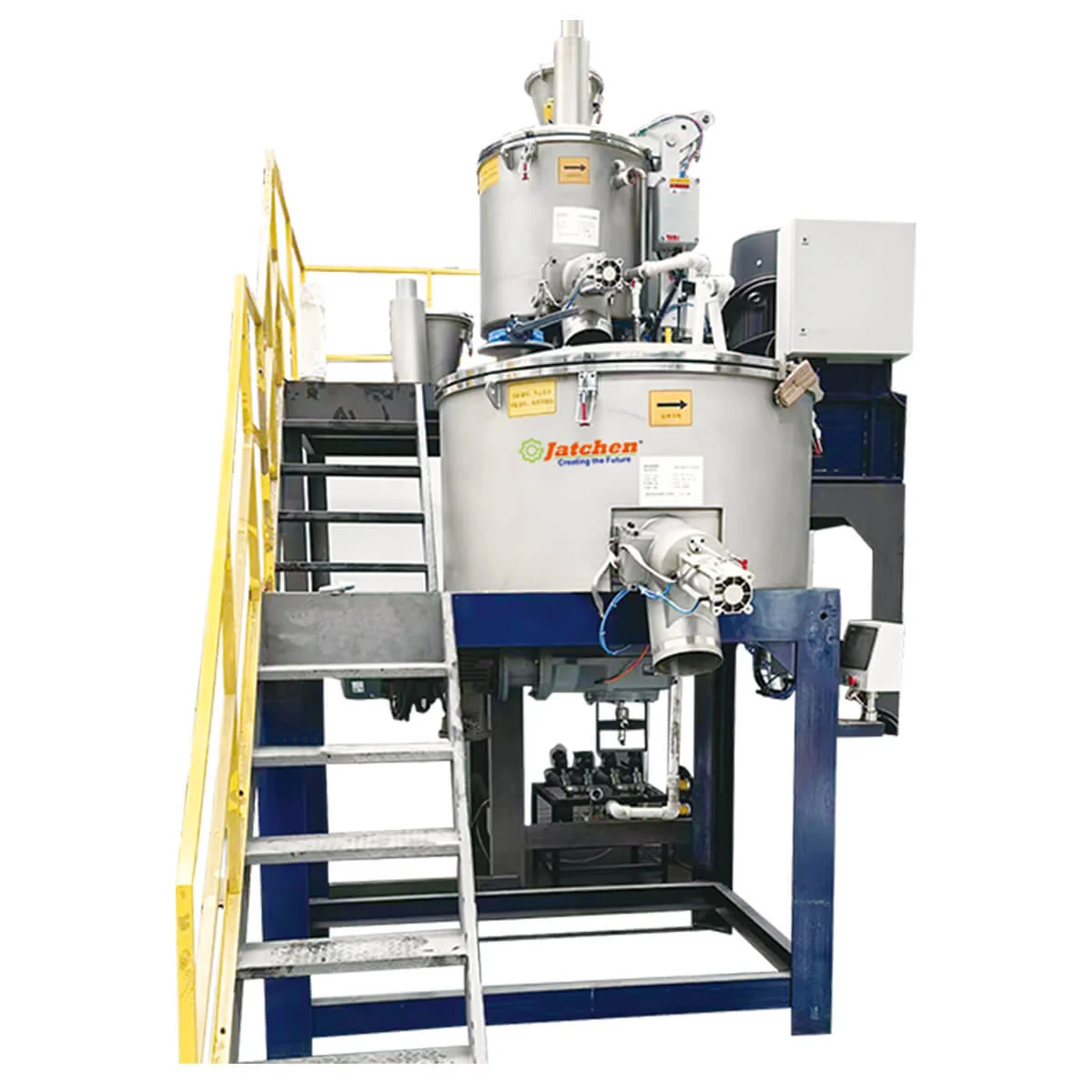
If you produce metallic powder coatings, the Bonding Mixer of Series BD can be added as a special process machine.
It is designed to create stable bonding between powder particles of different sizes. It uses PLC&HMI control, variable frequency speed control, cooling and hot water jacket design, automatic discharge valve, optional nitrogen generator, and anti-explosion protection for the mixing container. It is more suitable for factories that need higher-end metallic powder coating production.
Why Choose This Supplier for Powder Coating Line Planning?
Choosing a production line is easier when one supplier can cover more process stages. It reduces the risk of mismatched machines and unclear responsibility.
Full Process Equipment Coverage
The supplier covers laboratory equipment, extruders, cooling belts, grinding systems, particle size optimization systems, bonding equipment, and weighing systems.
This gives you more room to build a complete line instead of buying unrelated machines from different places. You can review more product information through the main product catalog before deciding which sections need priority.
Customized Lean Production Line Support
Every factory has different limits. Some care about output. Some care about color change. Some need smaller footprint. Some plan to expand later.
Customized line planning helps you avoid buying machines that look good alone but do not work well together. You can also check the case center to see how production solutions are arranged for real projects.
Practical Service and Contact Support
A powder coating line needs support before and after purchase. You may need help with equipment choice, layout planning, operation training, or later maintenance.
The service section is useful when you want to check support details. If you already have output targets or workshop drawings, the next step is to use the contact page and discuss a line plan that fits your production needs.
Conclusion
Choosing the right powder coating line is really about balance. You need enough efficiency, stable powder quality, and a cost level that makes sense over years of use.
For production efficiency, Twin Screw Extruder of Series TSK, Cooling Belt – AIR COOLING BELT, Water Cooling Belt, Compact Roller, and Automatic Weighing System can help create smoother process flow. For powder quality, ACM Grinding System, ICM Grinding System, and Classifier Cyclone PSD Optimization System are important. For high-end metallic powder coatings, Bonding Mixer of Series BD is a strong option.
The best line is not always the biggest one. It is the line that matches your industry, output, product type, factory layout, cleaning needs, and long-term cost. If you need help with selection, start with the product catalog, check available service support, and contact the team for a production line plan that fits your workshop.
FAQ
Q1: What Should I Check First When Choosing a Powder Coating Line?
A1: Start with your output target, product type, workshop space, and future expansion plan. These points decide whether you need a laboratory line, medium production line, or higher-output line.
Q2: Which Machine Is Most Important in a Powder Coating Production Line?
A2: There is no single answer. The extruder, cooling belt, grinding system, and classification section all affect the final result. A balanced line is more important than one strong machine.
Q3: When Should I Choose an AIR COOLING BELT?
A3: Choose an AIR COOLING BELT when you need to cool extruded powder coating material, form stable sheets, and prepare the material for crushing and sieving in a continuous line.
Q4: How Can I Improve Particle Size Control?
A4: You can use ACM Grinding System, ICM Grinding System, or Classifier Cyclone PSD Optimization System based on your quality needs. These systems help control grinding, classification, and particle size distribution.
Q5: Is a Customized Production Line Better Than Buying Single Machines?
A5: In many cases, yes. A customized line helps match extrusion, cooling, grinding, classification, weighing, and layout. This reduces bottlenecks and makes daily operation smoother.


