

From Extrusion to Grinding: How a Cooling Conveyor Belt Improves Powder Coating Production Flow
From Extrusion to Grinding: How a Cooling Conveyor Belt Improves Powder Coating Production Flow
When you run a powder coating production line, the job is not finished after extrusion. The hot material still needs to be cooled, pressed into sheets, crushed into chips, and sent toward grinding. This is where a cooling conveyor belt becomes a key part of the line, not just a simple transfer device. It affects sheet shape, cooling speed, chip size, and the later grinding result.
Yantai Jatchen Powder Coating Processing Equipment Co., Ltd. has worked deeply in powder coating production equipment for many years. The company focuses on practical machines and line planning for powder coating factories, including mixing, extrusion, cooling, grinding, particle size control, weighing, and laboratory equipment. What makes the company useful for production plants is not only one machine, but the way each machine can be matched into a lean line according to output, formula change needs, cleaning frequency, and workshop layout. You can also check its company background to see how its equipment experience fits real powder coating production rather than general material handling.
Why Does the Section Between Extrusion and Grinding Need Better Control?
After the mixed raw materials pass through the extruder, the material is still in a hot, soft state. It cannot enter the grinding system directly. If this middle section is not handled well, the whole line may slow down even when the extruder and mill both have enough capacity.
Hot Material Needs Stable Sheet Forming
The material coming out from the extruder must be pressed into a sheet with proper thickness. If the sheet is too thick, it may not cool fast enough. If it is too thin or uneven, it may break in a random way before crushing.
A good cooling section gives the material a steady shape first. That shape decides how smoothly it can move forward. This is why sheet forming is not a small detail. It is one of the first steps that protects the later grinding process.
Uneven Cooling Can Make Grinding Harder
Grinding works better when the chips have a more even form. If the sheet cools unevenly, some parts may remain soft while other parts become firm. The crusher then produces chips with mixed sizes, and the mill has to work harder.
For a powder coating plant, this can mean more load on the grinding system and less stable final powder quality. You may not notice the problem at the cooling point at first, but it often appears later in grinding efficiency and particle consistency.
Manual Transfer Breaks the Production Rhythm
Some plants still treat this middle section as simple conveying. In real production, every transfer point matters. Manual handling or unstable conveying can lead to material build-up, waiting time, and extra cleaning.
A continuous belt system keeps the line moving. It links extrusion, cooling, crushing, and grinding into one more stable flow. That is the main reason factories pay attention to this machine when they upgrade an old line.
Where Does the Cooling Conveyor Belt Fit in the Production Line?
A cooling conveyor belt sits after the extruder and before the grinding system. It receives the hot material, forms it into sheets, cools it, and sends it into crushing. This is the stage where the product changes from a soft mass into chips that are ready for milling.
It Connects the Extruder with the Cooling Stage
The extruder melts and mixes the formula ingredients under controlled conditions. Once the material leaves the machine head, it needs to be handled quickly and evenly. Delays at this point can affect the shape of the material.
The belt section gives the material a fixed path. Instead of letting material pile up or depend on workers for transfer, the belt carries it forward at a set speed. This makes the line easier to manage.
It Helps Build a Continuous Powder Coating Line
In a full production line, the mixer, extruder, cooling equipment, crusher, mill, classifier, and collection system should not work like separate islands. They need to match one another.
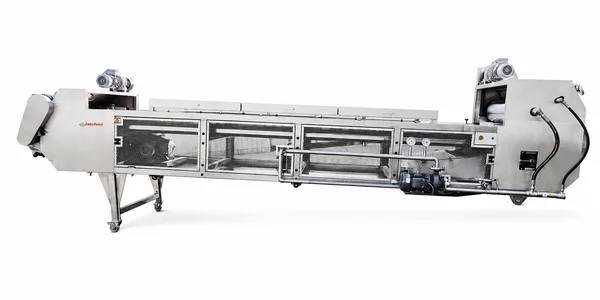
The Cooling Belt – WATER COOLING BELT is designed for this position. It receives thermo-melting material from the extruder, uses cooling rollers to press it into sheets, cools it on the stainless steel conveyor, and crushes it into chips. This makes the next grinding step easier to control.
It Reduces Bottlenecks Before Grinding
Many production delays happen before the mill, not inside the mill. If the cooling stage is too slow, the extruder cannot run at its best output. If the chips are not stable, the grinding system cannot keep a smooth feed.
The cooling belt helps balance these two sides. It gives the line a more regular material flow, so the grinding system receives chips in a more suitable form.
What Makes the WATER COOLING BELT Suitable for Powder Coating Production?
The machine used in this section must do more than move material. It must press, cool, guide, and crush. The design should also be easy to clean because powder coating factories often change colors or formulas.
Stainless Steel Belt Supports Clean Conveying
The machine uses a stainless steel conveyor belt. This is useful for powder coating production because the belt surface is strong, clean, and suitable for continuous operation.
The belt carries the sheeted material through the cooling section. A stable conveying surface helps reduce sticking and keeps the sheet moving in the right direction. For plants that care about batch cleanliness, this design is much better than rough or hard-to-clean conveying surfaces.
Water Cooling Helps Remove Heat Faster
The water cooling structure improves cooling speed and stability. The material is first rolled into sheet form, then carried forward while heat is removed. Compared with a weak cooling section, this helps shorten the waiting time before crushing.
A stable cooling conveyor belt also helps keep the sheet shape more regular. That matters because the crusher works better when the material has already reached a firm and steady state.
Adjustable Settings Give More Process Flexibility
Different formulas and output targets may need different sheet thickness or belt speed. The equipment allows roller speed and chip thickness adjustment, so the plant can tune the process according to actual production needs.
This is practical for factories that do not produce only one formula all year. When you change production plans, the cooling section should not become a fixed bottleneck. Adjustable control gives you more room to match the line.
How Does Better Cooling and Crushing Improve Grinding Results?
The grinding system depends heavily on the material it receives. If chips enter the mill in a poor state, the mill must spend more effort correcting problems created earlier. A better cooling and crushing section keeps the grinding step more stable.
Chips Become Easier to Feed into the Mill
After cooling, the sheet is crushed into chips. These chips are easier to feed into the ACM or ICM grinding system than large, uneven pieces.
Good chips reduce sudden feeding changes. This helps the mill work at a steadier load. For operators, that usually means the grinding process feels less difficult to manage during long production runs.
Particle Size Control Starts Before the Mill
Many people think particle size control only happens inside the grinding and classifying system. In fact, the process starts earlier. If the sheet and chips are not stable, the mill receives uneven material from the beginning.
A well-matched cooling conveyor belt supports the mill by preparing the material properly. It does not replace the grinding system, but it gives the grinding system a better starting point.
Better Flow Supports Lower Waste
When the material is cooled, crushed, and fed in a more stable way, the plant can reduce unnecessary rework. The line also becomes easier to clean and restart after batch changes.
This is why the cooling section should be chosen together with the rest of the powder coating equipment products, not as a random conveyor. It has a direct effect on production flow.
How Should You Choose This Equipment for Your Production Line?
Before choosing a cooling belt, you should look at output, formula type, workshop space, cleaning needs, and the machines before and after it. A machine that looks fine on paper may still create problems if it does not match the line.
Match Capacity with the Extruder and Mill
The cooling section should match the output of the extruder and the processing ability of the grinding system. If it is too small, it slows down the whole line. If it is oversized without need, it takes more space and adds cost.
The product has several model options with different belt widths, belt lengths, and output ranges. This helps a factory choose a more suitable machine instead of forcing one standard size into every layout.
Check Cleaning Access for Color Change
Powder coating factories often change colors. Cleaning time matters. If the cooling and crushing section is hard to clean, every color change creates downtime.
You should pay attention to belt surface, roller area, guide device, crusher structure, and daily maintenance access. A practical design saves time not once, but every time the plant changes batch.
Plan the Whole Line Instead of One Machine
The cooling belt should work with the mixer, extruder, grinding system, classifier, and weighing section. If one part runs faster than the rest, the line still cannot reach stable production.
For new lines or upgrades, it is better to review the complete process through a production line solution. Real line planning helps you avoid mismatched output, crowded layout, and repeated changes after installation.
Conclusion
A conveyor belt in powder coating production is not only a transport tool. From extrusion to grinding, it helps control sheet forming, cooling speed, chip preparation, and the stability of the next milling step. If this section works well, the whole line runs with less waiting and fewer small problems.
The water cooling belt system is a strong fit for plants that need stable cooling, sheet pressing, stainless steel conveying, adjustable chip control, and integrated crushing before grinding. It is especially useful when you want the extruder and grinding system to work as one smooth line, not as separate machines.
The company behind this equipment has practical experience in powder coating machine design and lean line planning. Its value is not only the WATER COOLING BELT itself, but also the ability to match the machine with production output, factory layout, and later service needs. You can review real case references, learn more from the news center, or check available service support when planning an upgrade.
If you are building a new powder coating line or improving the section between extrusion and grinding, a cooling conveyor belt should be one of the first machines you review. For equipment selection, layout discussion, or project communication, you can reach the contact team through the official website.
FAQ
Q1: What Does a Cooling Conveyor Belt Do in Powder Coating Production?
A1: A cooling conveyor belt receives hot material from the extruder, presses it into sheets, cools it during conveying, and helps prepare chips for the grinding system.
Q2: Why Is Water Cooling Useful After Extrusion?
A2: Water cooling helps remove heat faster and more evenly. This makes the sheet more stable before crushing and reduces problems before grinding.
Q3: Is the WATER COOLING BELT Used Before or After Grinding?
A3: It is used before grinding. It receives material after extrusion, helps press and cool it into sheets, and prepares chips for the grinding system.
Q4: How Does Chip Quality Affect the Grinding System?
A4: More regular chips feed into the mill more smoothly. This helps the grinding system work with steadier load and supports more stable final powder quality.
Q5: When Should a Factory Upgrade Its Cooling Belt Section?
A5: You should consider upgrading when the section after extrusion often slows the line, sheet cooling is uneven, chips are hard to grind, or color change cleaning takes too much time.


