

What Is an ICM Impact Classifier Mill and When Should Powder Coating Producers Use It?
What Is an ICM Impact Classifier Mill and When Should Powder Coating Producers Use It?
Does your processing route not yet allow sufficient influence on the upper end of the particle size distribution? The ICM impact classifier mill is a fine impact mill with a built-in classifier, which is ideal for use in a powder coating line, for the creation of a steeper particle size distribution and a lower content of oversize particles. The additional separation step after cooling and crushing is also deliberately designed.
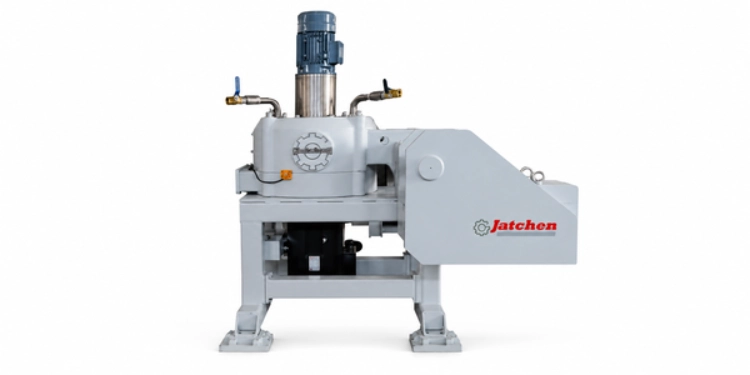
The ICM GRINDING SYSTEM from Yantai Jatchen Powder Coating Processing Equipment Co., Ltd. is intended for fine grinding of brittle materials. The grinding system consists of a solid grinding mill housing which is designed to be low-vibration and to be low-noise. The grinding mill is directly driven. The system is easy to clean. The classifier can be set to a fixed upper grain size limit according to requirement. Decisions must be based on formula, performance, cleaning possibilities and the required grain size distribution.
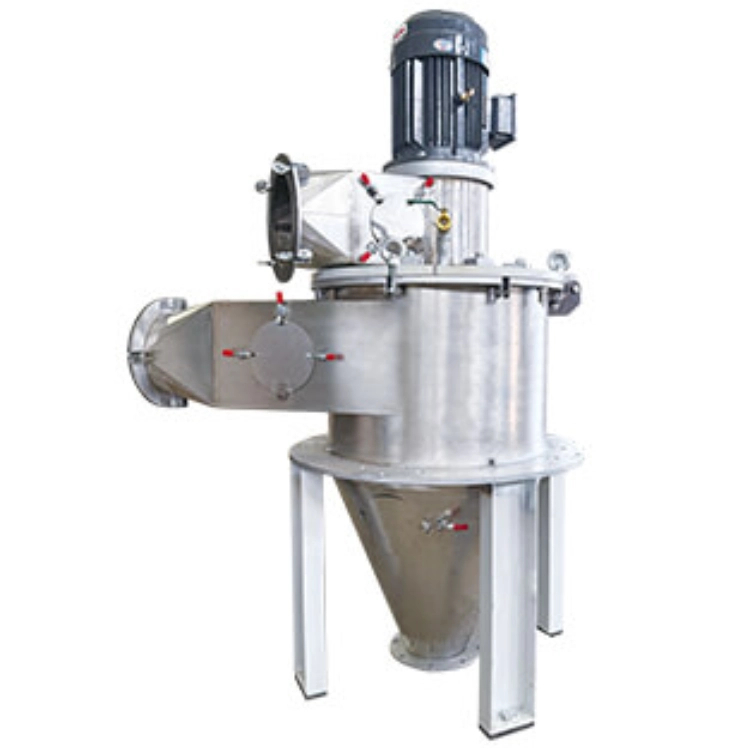
What Makes an ICM an Impact Classifier Mill
Impact Grinding Reduces Cooled Material
Powder coating material, after having been extruded and cooled, generally is crushed into chips before being ground into powder. An ICM uses an impact-grinding chamber to break up the brittle chips into fine powder. It is therefore necessary to include the upstream cooling belt and crusher in the selection of the mill in order to receive a stable feed.
Classification Controls the Upper Size
The classifier decides which particles within a defined size range are to be selected and which material is to be further processed by subsequent equipment. In this respect, an impact classifier mill is very different from simple size-reduction machinery. In this grinding mill guide we explain what you have to consider when choosing a grinding mill and explain some ICM terminology.
The Housing Supports Stable Operation
ICM Mill is a solid housing designed mill using direct drive, low vibration and low noise operation. From a production workshop perspective, such a design facilitates easy inspection and cleaning of the mill. PLC/HMI control and a clear parameter record must also be taken into account for the mechanical design.
When ICM Is a Better Fit Than a General Mill
Tighter Upper Particle Size Matters
Use ICM if the upper particle size limit is crucial to your product. Typically used on higher spec finishes such as gloss, matte and color strength coatings, where the particle distribution needs to be controlled more closely. Reference the D50, D90 and upper size values against your target.
The Formula Needs Fine Crushing
The ICM is a fine crusher for brittle materials. Review the formula and cooled chip condition prior to selecting a model. A system processing one powder is generally not suitable for processing all other powders. A test or process discussion is recommended.
The Line Can Support the Required Output
Different models of ICMs are available for different sizes of mills: laboratory or production configurations up to high output models. It is necessary to match the mill with the TWIN SCREW EXTRUDER, the cooling belt, the sifter, the collection route and the packing rate. High precision of a classifier does not help if there is a downstream bottleneck.
ICM Selection Factors for a Powder Coating Line
Particle Size and Product Grade
Express the finished powder requirements in operational terms. Outline the desired particle size range together with the acceptable fine powder content and upper particle size limit. Indicate whether different grades are to be produced on the same production line. Use the particle-size control reference to organize the information for subsequent review by suppliers.
Output and Energy Use
Most model names only refer to the main model, not to the practical output of the complete ICM-system. The direct drive and the optimized grinding chamber are only the beginning. The output depends on many other factors and also on the cooling, sifting, dust collection and packing sections. How does the model fit into these parts?
Cleaning and Maintenance Access
Frequent formula or color changes make easy cleaning important. Ask how the grinding chamber, classifier, screens, cyclone, and collection areas are accessed. A sealed material path, low-dust collection, and a written cleaning route reduce the chance that residue becomes a second process problem.
Connect ICM With the Upstream Process
Feed the Mill With Consistent Chips
The feed to the mill is affected by cooling and crushing. The water cooling belt can be suited for higher output versions with circulation and the air cooling belt for more compact versions. The water cooling belt or air cooling belt must be checked against the plant arrangement.
Keep Extrusion Stable
TSK uniformly feeds and low shear extrudes semi-finished product prior to cooling. TSK is controlled with PLC/HMI, multi-zone temperature control, and anti-bridge feeding in order to supply consistent input to grinding stage. However, input to ICM must be subjected to appropriate particle-size adjustment.
Plan Dust Collection
Because grinding and classification creates fine powder, a collection route must be planned for the mill. Independently controlling dust removal for the mixing, grinding and packing areas can help to keep a clean workshop. In addition, automatic lifting of the container mixer simplifies the upstream batch filling process.
ICM Compared With an ACM Route
ACM for Common Production Needs
The ACM GRINDING SYSTEM is a complete processing plant for high speed grinding, air classifying, cyclone separation, sifting and collecting of fine powders. ACM Grinding Systems are frequently the entry level system for making common indoor epoxy paints and occasional polyester powders. More information on the ACM system can be found on this page.
ICM for a More Demanding Size Target
For specific applications, such as a tighter upper size limit, steeper distribution or specific fine crushing, ICM becomes more relevant. When selecting a milling solution for a specific application, product data should be used to select the best solution, not the assumption that the most advanced milling solution is automatically the best.
Use the Line Test to Make the Choice
Review the formula, chip condition, output requirements, and the frequency of cleaning and recording of particle-size distribution. Discuss the expected route to market, the classifier settings, the method of collection, and maintenance access requirements. This helps to move the decision from a simple comparison of the suppliers’ catalogues to a consideration of the process.
Prepare for an ICM Purchase Discussion
List the Current Bottleneck
Is the issue coarse particles, excessive fines, unstable output, difficult cleaning, or insufficient capacity? Write one primary problem and the evidence behind it. This helps Jatchen decide whether ICM, ACM, a classifier cyclone, or an upstream adjustment is the most relevant path.
Review Layout and Utilities
Check height of plant, access to the grinding chamber, space for dust removal, cooling and packing. A complete line needs min. 4.5 m plant height, grinding area min. 5 m. Plan maintenance moves within the layout.
Confirm the Configuration With Jatchen
Use Jatchen service to review the process route and get in touch with Jatchen specifying the required particle-size, output, formula types etc. as well as current equipment. Jatchen can then match the ICM with suitable upstream mixing, extrusion, cooling and downstream collection.
Compare ICM With the Buyer’s Actual Process
Look at the Feed Before the Mill
Start with the material delivered to your mill. Check if cooled chips arrive uniformly, if 2-stage crushing is already installed at the mill, and if large pieces or too much powder are present before grinding. Inconsistencies in feed to your mill can make it appear that the mill is not producing the desired particle size. However, the problem could be in the upstream cooling or crushing and therefore the cooling belt or air cooling belt should also be considered in the ICM decision.
Compare the Cost of Process Changes
When comparing different ICM production lines the full process cost has to be considered, i.e. the cost of the mill, the classifier, collection, sifting, cleaning and the required spare parts. The lowest purchase price does not necessarily mean the simplest production. A more precise grinding route only makes sense if it solves a specific problem with a recorded product. Ask for the operating assumptions of the model, like feed, output and maintenance.
Plan a Trial and Acceptance Record
Before final installation, define what will be checked during a trial: output, particle-size distribution, fine powder share, upper particle-size limit, noise and vibration observations, cleaning access, and the quality of the first packed powder. A written acceptance record gives the production team a common reference when the ICM enters routine use. It also helps separate a machine setting issue from a formula or feed issue.
Review the First Production Samples
It is a good idea to test the first few samples after installing a new air classifier or after making significant changes to the settings. Check particle size, test flow of the powder through the sifter, test the collection and above all make sure that the chamber and the air classifier are easy to clean. Once you have got the process to run reliably, record the sample and link this to the model and formula that were used. This will provide future operators with a useful reference when the same powder is re-run on the same model.
ICM impact classifier mills are very suitable for fine impact grinding with tight upper particle size limits in powder coating production. The choice of an ICM impact classifier mill has to be based on the particle-size data, the behavior of the formula, the required output, the cleaning facilities and the overall compatibility with the other equipment in the line. Jatchen’s ICM system is equipped with direct drive, solid housing, low vibration and noise, easy cleaning, PLC/HMI control and a variety of options, e.g. low-shear extrusion, closed transfer, automatic lifting of upstream equipment, low-dust collection.
FAQ
What Is an ICM Impact Classifier Mill?
A grinding system using impact grinding for brittle materials and classification to size-limit selected materials.
When Should I Choose ICM for Powder Coating?
A tight upper particle size limit, fine crushing or steep particle distribution curve may be the main production requirement for this model to be considered.
Is ICM Always Better Than ACM?
This material would generally meet the requirements of common production applications. ICM would be more suitable where a tighter particle-size distribution is required.
What Should I Check Before Choosing an ICM Model?
Check the formula, the condition of the chips, the production, the particle size, the cleaning access, the cooling route, the collection system and the packing capacity.
Can ICM Be Added to an Existing Line?
This might be possible, however the current extruder, cooling belt, sifter, dust collection, layout and packing route would all need to be reviewed for compatibility.


