

How Can a Classifier Cyclone Reduce Excess Fine Powder After Grinding?
How Can a Classifier Cyclone Reduce Excess Fine Powder After Grinding?
Is your grinding line producing too much fine powder even though the mill is running normally? The issue may be in classification, not only in grinding. A classifier cyclone separates particles by size behavior, helping qualified powder move forward while directing unsuitable fractions back into the process. This gives the operator a more practical way to manage particle size distribution and reduce the share of ultra-fine powder.
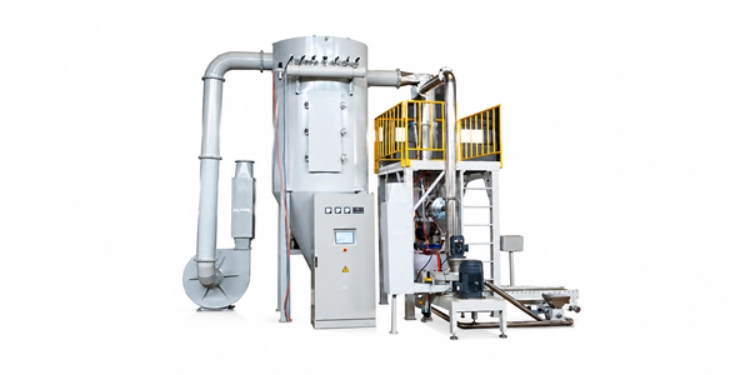
In powder coating production, the classifier must work with the grinding chamber, cyclone, sifter, dust collection, and packing route. Yantai Jatchen Powder Coating Processing Equipment Co., Ltd. provides the Classifier Cyclone PSD Optimization System as an optional system matched with grinding equipment. The right configuration depends on the target particle range, output, formula, and existing line.
Why Excess Fine Powder Appears After Grinding
Grinding and Classification Do Different Jobs
Grinding breaks cooled and tableted material into smaller particles. Classification then separates the resulting powder according to the selected cut. If the grinding system is asked to solve both jobs without a suitable classifier setting, the line may create a broad distribution with more fine powder than the product needs.
The Feed Condition Changes the Result
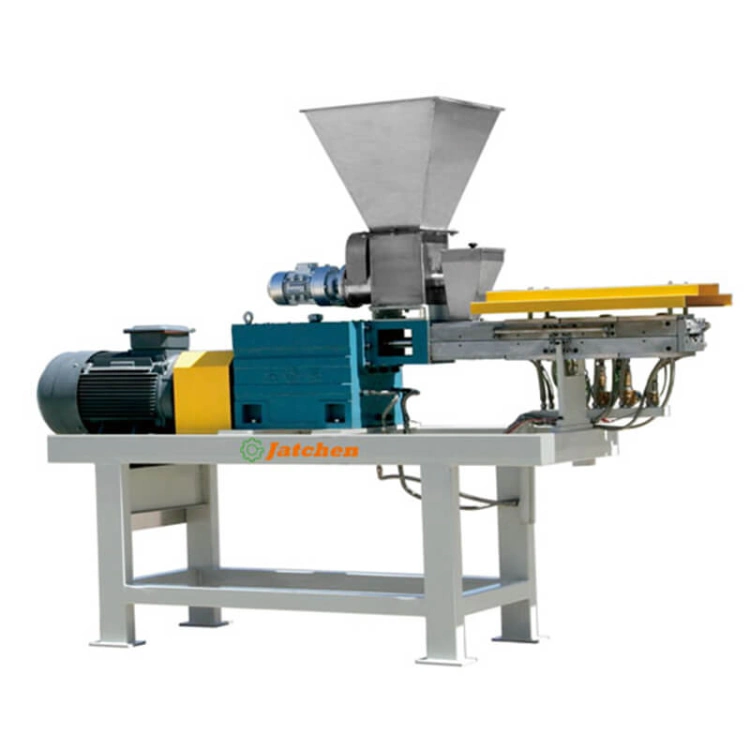
The chips entering the mill come from extrusion, cooling, and crushing. Uneven chip thickness or unstable feeding can change the load inside the grinding chamber. Check the upstream TWIN SCREW EXTRUDER and cooling route before changing classifier parameters. A stable feed gives the classification system a more consistent starting point.
Collection Points Affect the Balance
Fine powder can collect in the cyclone, sifter, transfer pipe, and dust-removal route. A low-dust, sealed material path helps keep the measured output closer to the actual process result. Review the full Jatchen product range when the problem appears in more than one point of the line.
How the Classifier Cyclone Works in the Line
Airflow Carries the Fine Fraction
The classifier uses airflow and a rotating separation action to influence which particles continue with the qualified stream. The exact operating point should be set for the formula and target particle distribution. Do not copy a setting from another powder without checking the feed, output, and product requirement.
The Cyclone Separates and Collects
After classification, the cyclone helps separate powder from the air route and directs material toward collection. This makes the system more than a grinding chamber. It is a connected route that includes grinding, air classifying, cyclone separating, sifting, and fine powder collection. The ACM GRINDING SYSTEM page shows how these functions are combined in a production system.
The Fine Fraction Can Be Recovered
The CC system can help reduce ultra-fine powder and recover fine material for re-extrusion when the process plan supports it. This does not mean every fine fraction should automatically be returned. The formula, material identity, and production route should determine whether recovery is suitable.
Set Up the System Around Particle Size Control
Define D50, D90, and the Upper Limit
Before asking for a classifier cyclone, list the particle-size information you already use. D50 describes the median particle size, while D90 helps show the upper side of the distribution. The D50 and D90 control guide is a useful reference when the production team needs to explain the problem in measurable terms.
Match the CC Model to the Mill
Jatchen lists matched CC and ACM combinations such as CC02 with ACM02, CC08 with ACM07, CC45 with ACM30, and CC60 with ACM40. The proper pair should be reviewed against the actual output and particle-size target. A classifier is not a universal add-on that can be selected independently of the grinding system.
Use Stored Parameters Carefully
The system supports parameter storage and call functions, while PLC/HMI operation helps operators return to a known process setting. Treat stored parameters as a controlled starting point. Confirm the feed condition, classifier setting, collection route, and first output each time the formula or output plan changes.
Troubleshoot Fine Powder Without Guessing
Check the Grinding Load First
Record feed rate, chip condition, grinding setting, classifier setting, sifter condition, and collection behavior. If the feed is too small or too irregular, the classifier adjustment may hide the actual cause. Low-shear extrusion and uniform feeding upstream can support a steadier chip supply.
Inspect Screens and Transfer Areas
A blocked or damaged sifter screen can change the amount of material passing through. Powder buildup in transfer areas can also change the effective route. Cleaning access and low-dust collection should be part of the maintenance plan, especially when formulas change often.
Separate Fine Powder From Dust
Fine product powder and escaped workshop dust are not the same process stream. Keep the product collection route and dust-removal route clear in the operating record. A sealed leak-proof structure in upstream mixing, automatic lifting for batch transfer, and practical dust collection help the line stay easier to inspect.
When to Add a Classifier Cyclone
The Particle Distribution Is Too Broad
If the mill produces both excessive fine powder and an unwanted coarse fraction, a classification upgrade may be more useful than simply increasing grinding intensity. Share the current distribution, target output, and existing ACM or ICM model with the equipment supplier.
The Line Needs Better Fine Powder Recovery
When fine powder is a regular part of the output and can be returned safely to the process, the CC system may make the material route more organized. Discuss the recovery route, re-extrusion capacity, and formula separation before making the decision.
The Existing Mill Is Otherwise Suitable
An optional CC system is most logical when the current grinder, cooling route, and packing route are still suitable. Jatchen can review the line arrangement through service support. Send the particle-size record and use contact Jatchen to confirm the matched configuration.
Build a Fine-Powder Review Routine
Measure the Same Points Every Time
A useful review compares the same sampling points and the same operating conditions. Take a sample after grinding and another after classification or sifting, then record the mill feed, classifier setting, air condition, output, and formula. If the fine fraction rises only after a setting change, the adjustment is likely part of the cause. If it rises before classification, inspect the grinding load and chip condition first. Consistent records are more useful than changing several controls during one shift.
Separate Product Decisions From Housekeeping
The production team should decide which fine fraction belongs in the product and which fraction belongs in the dust-removal route. Fine powder collected in the intended product stream may be handled differently from powder found outside the sealed transfer path. Keep the cyclone, sifter, collector, and floor-cleaning records separate. This makes it easier to see whether the issue is particle distribution, leakage, or an overloaded collection point.
Review the Setting After a Formula Change
Resin, pigment, filler, and additive combinations can behave differently in the grinding chamber. A stored parameter can shorten setup time, but it should not be treated as a permanent setting for every formula. After a change, confirm the first sample, compare the fine fraction with the previous run, and record whether the CC system should recover, reject, or redirect the material. This simple review keeps particle-size control connected to actual production conditions.
Set a Clear Release Rule
The team should define the condition that allows the classified powder to move to packing. For example, the first sample may need a particle-size check and a visual review before the batch is released. If the result is outside the agreed range, hold the material, check the setting and collection route, and record the correction. A clear release rule prevents operators from solving a particle-size issue by blending unverified material into the next batch.
Also compare the released batch with the previous approved record. Note the mill load, classifier setting, fine fraction, and sifter condition so the next adjustment has a clear reference.
A classifier cyclone can reduce excess fine powder by adding a controlled separation step after grinding. The result depends on the feed condition, grinding load, classifier setting, cyclone collection, sifting, and the particle-size target. Jatchen’s Classifier Cyclone PSD Optimization System can be matched with an ACM grinding route, supported by PLC/HMI control, low-shear upstream extrusion, sealed material transfer, automatic lifting in mixing, and low-dust collection. Choose the system from recorded particle-size data rather than from the classifier name alone.
FAQ
What Does a Classifier Cyclone Do in Powder Coating Production?
It separates ground powder by size behavior, helps qualified material move forward, and can reduce or recover an excessive fine fraction.
Can a Classifier Cyclone Replace the Grinding Mill?
No. It works with a grinding system and should be matched to the mill, feed condition, output, and particle-size target.
What Data Should I Prepare Before Choosing a CC System?
Prepare D50, D90, upper-size information, hourly output, chip condition, current mill model, formula type, and the fine-powder problem.
Can Fine Powder Be Returned for Re-Extrusion?
It may be possible when the material identity and production route support recovery, but the re-extrusion plan should be confirmed first.
How Can Jatchen Help With Classifier Selection?
Jatchen can review the existing grinding line, match a CC system with the mill, and discuss layout, operation, maintenance, and service needs.


