

How Much Powder Can a Container Mixer Handle? Capacity Planning for Batch Production
How Much Powder Can a Container Mixer Handle? Capacity Planning for Batch Production
A container mixer can handle different amounts of powder depending on its model, batch design, and production requirements. For Jatchen’s CM series, the rated output ranges from 150 kg per tank to 1,000 kg per tank, providing options for different powder coating production scales.
However, choosing a mixer capacity is not only about selecting the largest available model. Production managers need to consider batch weight, mixing cycle time, formula changes, trolley handling, and the capacity of downstream equipment.
For factories planning a complete powder coating process, Jatchen powder coating equipment covers mixing, extrusion, cooling, grinding, and related production equipment. Matching each stage correctly helps prevent bottlenecks and improves overall production efficiency.
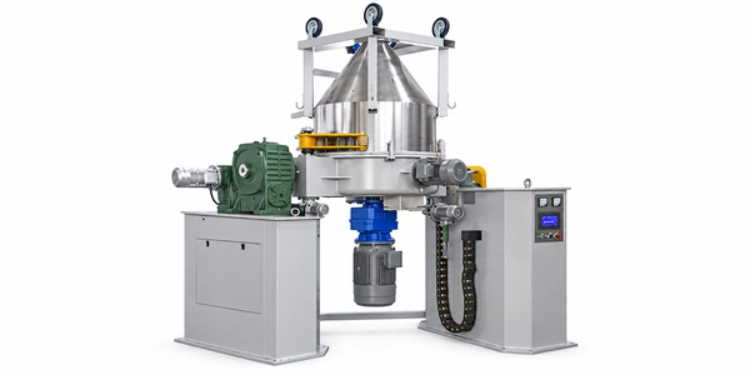
How Much Powder Can a Container Mixer Handle per Batch?
The first step in capacity planning is understanding how much powder a mixer can process in one batch.
Many buyers focus on container volume, but volume and powder weight are not the same measurement.
Why Are Container Volume and Batch Weight Different?
A container mixer specification usually includes both liters and kilograms.
The container volume describes the physical space inside the mixing vessel, while the output per tank describes the amount of powder the machine is designed to process.
For example, a 1,000 L container does not automatically mean it can mix 1,000 kg of powder. Powder coating materials contain different combinations of resin, curing agents, pigments, fillers, and additives. Their bulk density and flow characteristics can affect the actual loading amount.
For production planning, the rated kg/tank output is usually the more practical number to compare.
How Much Can CM300, CM600, CM1000, and CM2000 Handle?
Jatchen’s Automatic Container Mixer series provides several capacity options for different batch production needs.
| Model | Container Volume | Rated Output | Mixing Time | Control |
| CM300 | 300 L | 150 kg/tank | 3–5 min | PLC |
| CM600 | 600 L | 300 kg/tank | 3–5 min | PLC |
| CM1000 | 1,000 L | 500 kg/tank | 3–5 min | PLC |
| CM2000 | 2,000 L | 1,000 kg/tank | 3–5 min | PLC |
These models allow factories to match mixer size with actual production demand.
A smaller batch size may be suitable for factories handling multiple formulas or frequent color changes. Larger batch sizes can reduce the number of mixing cycles when production volume is stable and continuous.
How Does Powder Formula Affect Practical Capacity?
The rated output is an important reference, but the material itself also affects practical operation.
Different powder coating formulations may have different densities and flow characteristics. A factory producing several types of coatings may need different loading strategies compared with a manufacturer producing one standard formula continuously.
Before selecting equipment, it is better to compare the mixer capacity with your normal batch weight and production schedule instead of choosing only based on container volume.
For more selection factors, you can also refer to Jatchen’s guide on how to choose the right container mixer for powder coating, which covers capacity, automation, cleaning, and production requirements.
How Do You Calculate Real Production Capacity?
A common mistake in mixer selection is calculating output only from mixing time.
A mixer with a 3–5 minute mixing cycle does not mean the factory can simply complete 12–20 batches per hour.
The complete production cycle includes:
- Raw material loading
- Container positioning
- Lifting and connection
- Mixing
- Discharge
- Cleaning or formula change
- Preparation for the next batch
How Many Batches Does Your Factory Need?
The best way to plan capacity is to start from daily production demand.
For example:
If your production line needs 4,000 kg of premixed powder per shift:
Using a 500 kg batch:
4,000 ÷ 500 = 8 batches
Using a 1,000 kg batch:
4,000 ÷ 1,000 = 4 batches
Both options can provide the same total material output, but the production workflow is different.
Smaller batches provide more flexibility for different orders. Larger batches reduce repeated operations and can improve efficiency for stable production.
Why Should You Consider the Full Batch Cycle?
The practical output of a container mixer should be calculated based on completed production cycles, not only mixing time.
A more realistic calculation is:
Practical output = batch weight × completed batches per hour
This approach considers the real factory situation instead of theoretical machine speed.
A mixer that completes fewer but larger batches may work better for one factory, while another factory may benefit from smaller and more flexible batches.
How Should Mixer Capacity Match Your Powder Coating Line?
A container mixer is only one part of powder coating production.
After mixing, the material usually moves through extrusion, cooling, grinding, classification, and packaging. The mixer capacity needs to support the entire production flow.
Jatchen solution center provides production equipment solutions that connect different stages of powder coating processing.
How Can You Avoid Creating a Production Bottleneck?
If the mixer capacity is too small, the extrusion section may wait for premixed material.
This reduces the utilization of downstream equipment.
For this reason, capacity planning should compare:
- Mixer batch output
- Number of batches per shift
- Extruder demand
- Production schedule
- Expected changeover time
The goal is not simply to maximize mixer output, but to keep the whole line running smoothly.
Why Is Oversized Capacity Not Always Better?
A larger mixer can reduce the number of batches, but it may not always improve production.
If the mixer produces more material than the next process can consume, the premixed powder may stay between production stages longer than necessary.
This can increase work-in-process inventory and reduce flexibility when handling smaller customer orders.
The right mixer capacity should match your actual production rhythm.
Which Container Mixer Size Fits Different Production Needs?
There is no single mixer size that fits every powder coating factory. The suitable model depends on your normal batch size, production frequency, and how the mixer connects with the rest of your process.
When Are 150–300 kg Batches Suitable?
The CM300 and CM600 provide rated outputs of 150 kg/tank and 300 kg/tank.
These models can work well for factories that:
- handle multiple formulas;
- produce smaller customer orders;
- require frequent color changes;
- need more flexibility in production scheduling.
Smaller batches reduce the amount of material committed to each production cycle, which can be useful when production plans change frequently.
The trade-off is that more batches are required to reach the same daily output.
When Is a 500 kg Batch a Better Choice?
The CM1000 provides 500 kg per tank and can be a practical option for medium-scale batch production.
It provides a balance between flexibility and efficiency.
For factories with stable production demand, a 500 kg batch can reduce repeated mixing operations while keeping material handling manageable.
However, the final choice should still consider the actual consumption rate of extrusion and other downstream equipment.
When Does a 1,000 kg Batch Make Sense?
The CM2000 provides a rated output of 1,000 kg per tank.
This capacity is more suitable for factories producing larger volumes with stable formulas and continuous production requirements.
A larger batch can reduce the number of loading and mixing cycles, helping operators spend less time repeating the same preparation process.
However, a larger mixer is not automatically the best choice for every factory. If your production mainly involves small customized orders, a smaller and more flexible capacity may create better results.
What Factors Affect Practical Container Mixer Capacity?
The rated output tells you what the machine can process, but daily production efficiency depends on several additional factors.
How Do Material Characteristics Affect Mixing Capacity?
Different powder coating materials may behave differently during mixing.
Resins, pigments, fillers, and additives can have different densities and flow properties. These characteristics influence how much material can be loaded and how efficiently the components move inside the container.
For this reason, production planning should always consider the actual powder formulation instead of using only the container volume.
How Do Cleaning and Changeover Time Influence Output?
Powder coating manufacturers often handle different colors and formulations.
Although mixing time may only take several minutes, cleaning between batches can affect the total number of batches completed in one shift.
A system designed for easier cleaning and faster container replacement can improve practical production efficiency without changing the rated machine capacity.
Jatchen’s automatic container mixing system uses a movable container design, allowing factories to organize loading, mixing, and material changeovers more efficiently.
Why Does Production Scheduling Matter?
Two factories using the same mixer model may achieve different daily output because their workflows are different.
Efficient scheduling can reduce waiting time between batches.
For example, preparing the next trolley before the previous batch finishes can help maintain a smoother production rhythm.
Capacity planning is therefore not only about machine specifications. It is also about how well the equipment fits your operating process.
Why Is Jatchen Automatic Container Mixer Suitable for Batch Production?
For powder coating manufacturers, the biggest challenge is usually not finding a mixer with the largest volume.
The challenge is finding a mixer that matches actual production requirements.
Jatchen’s Automatic Container Mixer provides four capacity options, allowing factories to select a suitable batch size based on production demand.
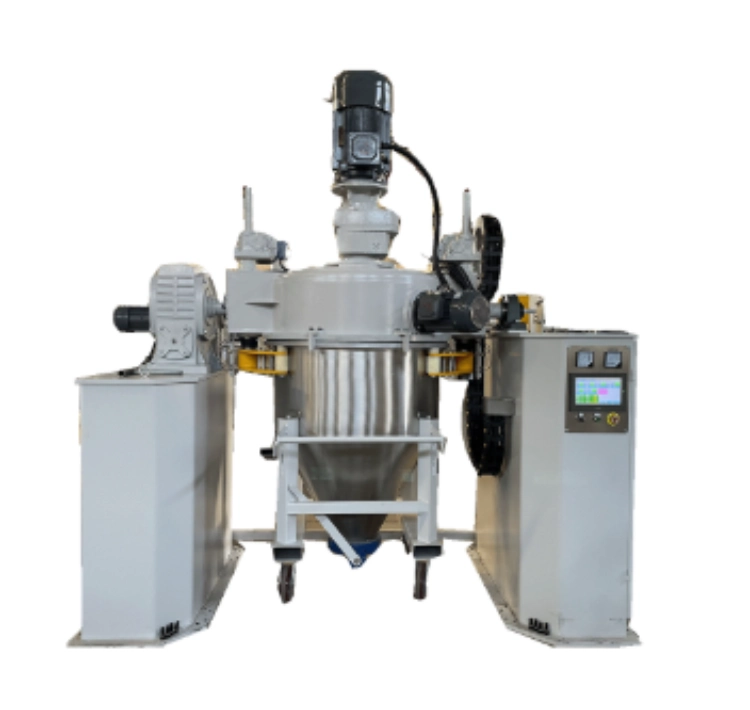
Four Capacity Options for Different Production Scales
The CM series covers:
- CM300: 150 kg/tank
- CM600: 300 kg/tank
- CM1000: 500 kg/tank
- CM2000: 1,000 kg/tank
This range makes it easier for manufacturers to match equipment capacity with current production needs while leaving room for future expansion.
PLC Control for Stable Batch Operation
The CM series uses PLC control to support repeatable production processes.
For factories producing powder coatings continuously, stable operation is important because consistent batch handling helps maintain predictable production schedules.
Movable Container Design for Flexible Production
The container trolley system allows raw materials to be loaded, lifted, mixed, and returned after processing.
This design helps factories organize different production batches more efficiently, especially when handling multiple formulas or color changes.
For manufacturers planning complete powder coating production solutions, Jatchen also provides service and technical support related to equipment selection, installation, and production requirements.
Conclusion
The amount of powder a container mixer can handle depends on more than container volume.
Jatchen’s CM series provides batch capacities from 150 kg/tank to 1,000 kg/tank, giving manufacturers different options for small, medium, and high-volume powder coating production.
The best selection method is to start with your actual production demand:
- How many kilograms do you need per shift?
- How many batches can your team complete?
- How fast can downstream equipment consume the mixed material?
- How often do you change formulas or colors?
A mixer that is too small may create unnecessary batch cycles and slow down the production line. A mixer that is too large may reduce flexibility and increase unnecessary work in process.
The right container mixer capacity is the one that keeps the entire powder coating production process balanced.
You can learn more about Jatchen’s powder coating equipment manufacturing experience and explore how different production stages can be matched according to your factory requirements.
FAQ
Q1: How much powder can a container mixer handle per batch?
A container mixer’s batch capacity depends on the model. Jatchen CM series mixers provide rated outputs from 150 kg/tank to 1,000 kg/tank.
Q2: Is container volume the same as powder mixing capacity?
No. Container volume describes the internal space of the vessel, while powder capacity refers to the actual material weight processed per batch.
Q3: Can I calculate mixer output only from mixing time?
No. Mixing time is only one part of the production cycle. Loading, lifting, discharge, cleaning, and batch preparation also affect practical output.
Q4: Which container mixer size should I choose?
The suitable model depends on your batch requirements, daily production volume, formula changes, and downstream equipment capacity. Compare your production plan with CM300, CM600, CM1000, and CM2000 specifications before selecting a model.


