

How Can Automatic Weighing Improve Powder Coating Line Packing?
How Can Automatic Weighing Improve Powder Coating Line Packing?
Is the packing stage slowing down an otherwise stable powder coating line? Manual carton supply, repeated tare checks, and inconsistent weighing can create a queue after grinding and sieving. Automatic weighing helps organize the final stage by supplying cartons, taring, weighing the set amount, and keeping the packing operation closer to the production rhythm.
The AW-E Automatic Weighing System from Yantai Jatchen Powder Coating Processing Equipment Co., Ltd. is designed for carton supply and automatic weighing. It includes automatic taring, programmable touch screen control, data storage and transmission, ergonomic operation, and a listed net carton range of 10-30 kg. It should be matched with the grinding, sifting, dust collection, and material transfer route.
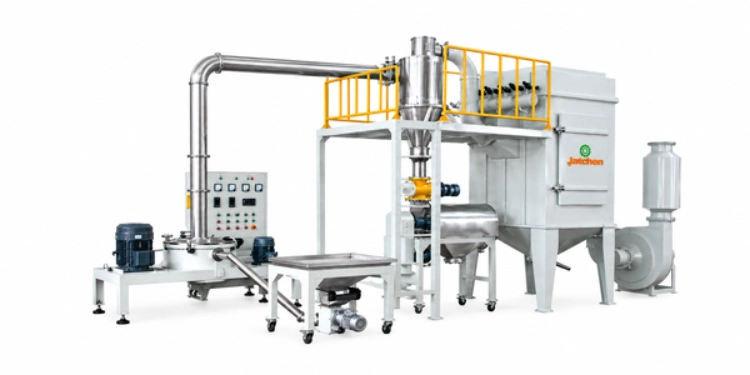
Why Packing Becomes a Line Bottleneck
Manual Weighing Repeats the Same Work
When operators place cartons, tare them, add powder, check the weight, and move each carton by hand, the process can become slow during higher output. Small variations also make it harder to keep the packing rhythm aligned with the qualified powder leaving the sifter.
The Packing Stage Receives Variable Material
Grinding and classification may send powder forward in a changing flow when the line changes formulas or particle-size settings. The packing system needs a stable collection and transfer route. Review the ACM GRINDING SYSTEM and sifter together with the weighing system rather than sizing the packing unit alone.
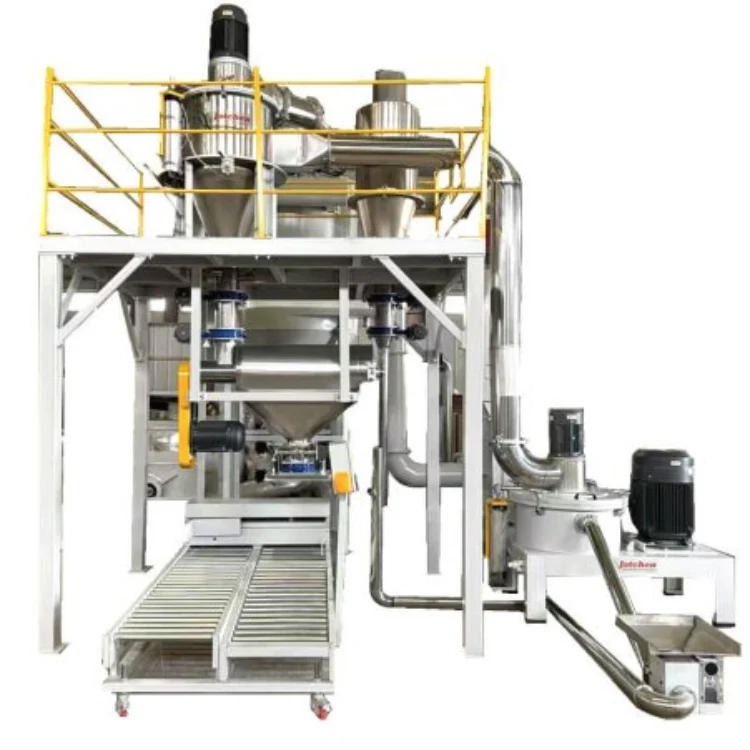
Dust Appears at the Final Transfer
Fine powder can escape around carton openings, transfer points, and collection bins. A low-dust packing layout and clear dust-removal route make the automatic weighing process easier to maintain. Upstream sealed material transfer and automatic dust vacuum, where supported, also help reduce loss before the powder reaches packing.
What the AW-E Automatic Weighing System Does
Automatic Carton Supply
The AW-E supplies empty cartons as part of the packing sequence. This removes one repeated manual step and gives the operator a clearer responsibility: monitor the material supply, carton condition, and machine status instead of performing every carton movement by hand.
Automatic Taring and Weighing
Automatic taring establishes the empty-carton reference before powder is added. The programmed weighing step then works toward the selected net amount. The stated carton range is 10-30 kg, so confirm the package size, powder flow, and target line rate before selecting the configuration.
Touch Screen and Data Handling
A programmable touch screen supports setting and operating control, while data storage and transmission can help keep a clearer packing record. PLC/HMI control should be coordinated with the upstream grinding and sifting route so a stop at packing does not leave unplanned material accumulating in the line.
Match Weighing With Grinding and Sifting
Check Qualified Powder Flow
The packing system should be sized for qualified powder, not only total mill output. Fine powder, oversize material, and material held for inspection should be accounted for. The particle-size control guide explains why classification and sifting influence the amount that actually reaches packing.
Keep the Transfer Route Short and Clear
Long or poorly arranged transfer paths can create buildup and make cleaning harder. Use a sealed leak-proof route where the equipment supports it, keep collection points accessible, and plan low-dust removal around the weighing and carton area. The Jatchen product range can help when comparing weighing with grinding and auxiliary equipment.
Coordinate Stops and Restarts
If packing stops, the grinding and sifting route may need to slow or pause. Define the sequence in the PLC/HMI plan, then test the restart routine with an empty carton, a normal powder stream, and a formula change. The operator should know whether material is held, diverted, or cleaned before restart.
Use Automatic Weighing Without Losing Control
Set the Package Size Clearly
Confirm net weight, carton type, carton supply, sealing or closing method, and the daily packing target. The AW-E listed range is 10-30 kg per carton, so the final specification should reflect the package sizes actually used on the line.
Keep a First-Pack Check
At startup or after a formula change, check the first packed carton for net weight, material identity, powder condition, and transfer cleanliness. Automatic taring supports repeatability, but an operator still needs to confirm that the correct formula and package setting are active.
Maintain the Weighing and Collection Areas
Clean powder buildup around the hopper, weighing point, carton support, transfer connection, and dust-removal route. A complete line also needs cleaning access at the mixer, extruder, cooling belt, and grinder. Automatic lifting upstream and low-shear extrusion help the route stay organized, but packing maintenance remains necessary.
Connect Packing to the Full Production Line
Upstream Capacity Must Match
The mixer batch size, TSK extruder output, cooling belt, and grinder should supply packing at a rhythm the AW-E can handle. A large automatic weighing system cannot fix a line that produces qualified powder in irregular surges. Review the TWIN SCREW EXTRUDER with the target output and packing plan.
Formula Changes Need a Clean Route
Packing can carry residue from the previous formula through bins, transfer pipes, and carton supports. Include the final collection and weighing areas in the color-change checklist. If metallic powder is produced, keep its route separated or use an offline bonding plan according to the production arrangement.
Plant Layout Still Matters
Leave room for carton storage, operator movement, dust collection, weighing maintenance, and finished-carton movement. The layout should also preserve access to the grinding area, where complete lines may need at least 5 m of height. A clean packing route is part of the line design, not an afterthought.
Decide Whether Automatic Weighing Is Worth Adding
Measure the Current Packing Loss
Record cartons per hour, manual weighing time, rechecks, powder spillage, queue length after sieving, and the number of operators assigned to packing. These figures show whether the problem is weighing, carton handling, material flow, or an upstream capacity mismatch.
Define the Required Integration
List the current sifter, fine powder collector, hopper, conveyor, carton type, dust-removal equipment, and control cabinet. Ask how the AW-E connects to the existing line and what space is needed for cleaning and service.
Review the Configuration With Jatchen
Use Jatchen service to review the packing route and contact Jatchen with package size, target output, layout, and current equipment. Jatchen can discuss weighing together with mixing, extrusion, cooling, grinding, sieving, and low-dust material handling.
Measure Packing Performance After Installation
Compare the Complete Packing Cycle
Measure the time from an empty carton entering the system to the carton leaving for closing or storage. Include carton supply, taring, powder filling, weight confirmation, discharge, and the next carton. This cycle shows the real packing capacity. A weighing machine may be technically fast while the line remains slow because cartons, powder supply, or finished-carton movement are not organized.
Check Weight Stability During Formula Changes
Different powder formulas can flow differently through the hopper and weighing valve. Check the first cartons after a formula change and compare the actual net weight with the selected setting. If the flow becomes irregular, inspect buildup, transfer pressure, powder level, and the collection route. Automatic taring provides a reference for the carton, but it cannot correct a material stream that is interrupted or poorly fed.
Define the Operator’s Daily Checks
Daily checks can include carton supply, hopper cleanliness, weighing platform condition, valve movement, touch-screen settings, dust-removal points, and the first-pack result. Keep these checks short and specific so they are completed before full production. A written checklist also helps identify whether a problem belongs to the weighing unit, the sifter, the collector, or the upstream grinding route.
Set a Clear Packing Release Check
After installation, confirm the first carton, the first carton after a formula change, and the first carton after a restart. Check carton identity, net weight, powder cleanliness, label information, and transfer condition. Keep the result with the packing record so operators can distinguish a weighing adjustment from an upstream grinding or collection issue.
Automatic weighing can improve powder coating line packing by organizing carton supply, taring, net weighing, operating control, and packing records. The AW-E should be selected by carton size, qualified powder flow, grinding and sifting capacity, dust collection, formula changes, and layout. Jatchen can connect the weighing stage with PLC/HMI production control, low-shear extrusion, sealed material transfer, automatic lifting upstream, and low-dust collection so the final packing step supports the whole line.
FAQ
What Does an Automatic Weighing System Do?
It can supply empty cartons, tare them, weigh the selected net amount, and support programmable operation and packing records.
What Carton Sizes Does the AW-E Support?
The listed net carton range is 10-30 kg, but the final configuration should be confirmed against the actual package and powder flow.
Can Automatic Weighing Fix a Grinding Bottleneck?
No. It can organize packing, but grinding, sifting, collection, and weighing capacity must be matched as one route.
Does Automatic Taring Remove All Weight Checks?
No. It supports repeatability, while operators should still check the first pack and verify the active formula and package setting.
What Information Should I Send Before Adding AW-E?
Send package size, output target, sifter and collector details, current hopper and conveyor layout, dust-removal plan, and formula-change frequency.


