

How High Speed Mixers Improve Powder Coating Raw Material Pre-Mixing
How High Speed Mixers Improve Powder Coating Raw Material Pre-Mixing
Raw material pre-mixing looks like a simple first step, but in powder coating production, it decides a lot of things later. If resin, curing agent, pigment, filler, and additives do not spread evenly before extrusion, the next machines will receive an unstable feed. Then you may spend more time adjusting the line, checking batch quality, or cleaning material left in the wrong place.
Yantai Jatchen Powder Coating Processing Equipment Co., Ltd. is a professional supplier of powder coating production equipment. The company has built practical experience in high-quality machines and full production lines, from mixing and extrusion to cooling, grinding, particle size control, and packaging. For factory buyers, this matters because a mixer should not be chosen alone. It must match your formula, batch size, downstream capacity, cleaning habit, and workshop rhythm. That is also why the company can plan customized lean production lines based on real production needs, not only sell one machine and leave the rest for you to solve.
Why Raw Material Pre-Mixing Changes Powder Coating Quality
Pre-mixing is the first point where you can reduce later trouble. Once the raw materials enter extrusion, poor distribution becomes harder to correct. A high speed mixer gives you a stronger start, especially when the formula includes several solid components.
Uneven Formula Distribution Before Extrusion
Powder coating formulas usually contain several materials with different roles. Resin gives the base. Curing agent supports the final reaction. Pigment affects color. Fillers and additives adjust performance and processing behavior. If these materials stay uneven in the first step, later processing will carry that issue forward.
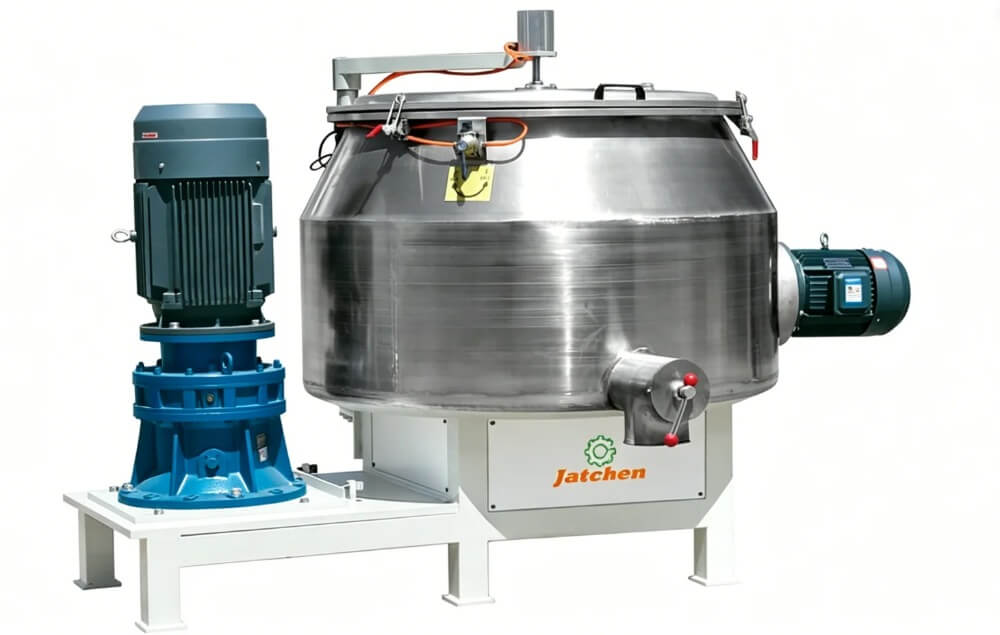
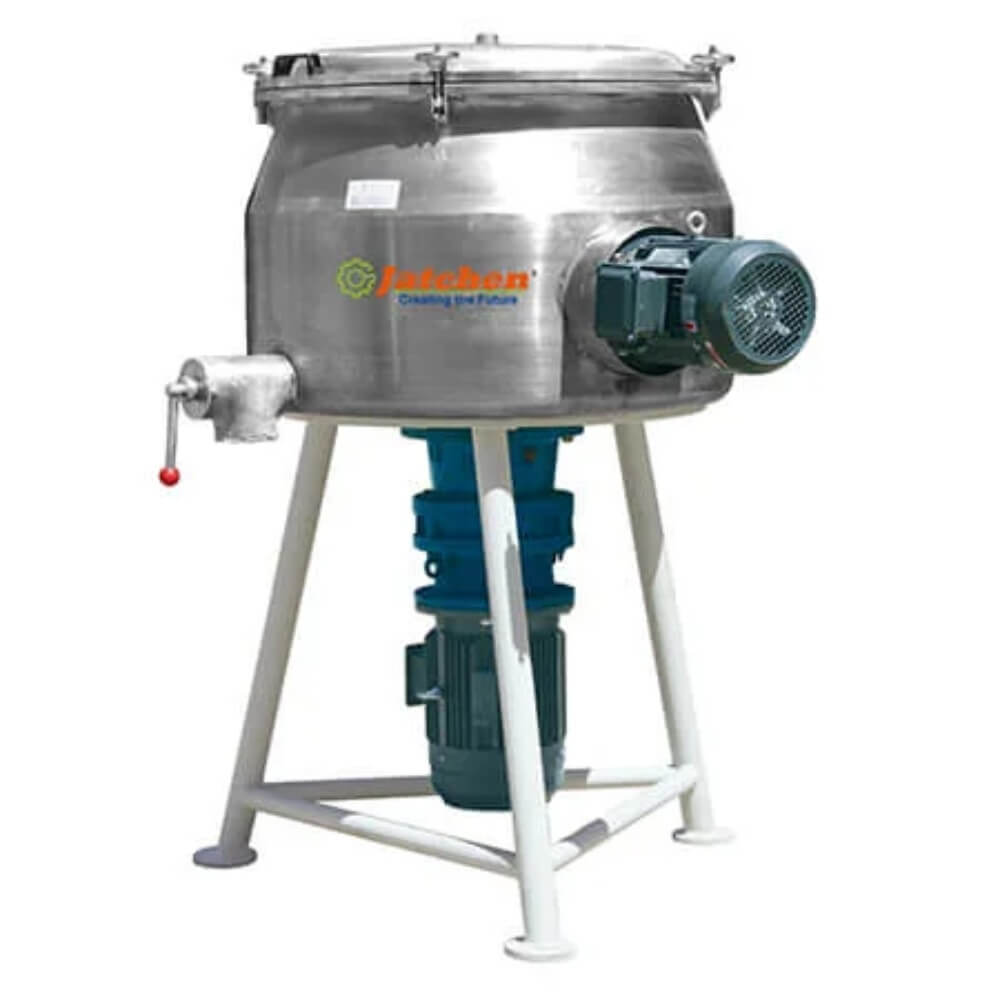
A good pre-mixing step makes the raw material base more even before extrusion. This is where Mixer – HIGH SPEED MIXER fits well. It is designed for crushing and mixing solid coarse and lumpish multi-component material, so it is useful when your formula needs both mixing and material breaking before the next process.
Batch Differences That Start From Small Mistakes
In daily production, batch differences do not always come from big mistakes. Sometimes the reason is simple. One batch was mixed longer. Another batch had more coarse material left inside. One operator changed timing without noticing. These small things may later show as color shift, uneven gloss, or unstable flow.
The high speed mixer helps reduce this kind of human variation. Its automatic timer for mixing and crushing makes the process clearer. When the same formula needs repeated production, you can keep the pre-mixing cycle more stable.
Pressure on Downstream Equipment
If pre-mixed material is not even, the extrusion and grinding sections may work harder. The line may still run, but it may not run smoothly. Operators may need more checks, more adjustments, or more cleaning between batches.
That is why the first mixer should match the whole production plan. You can review more line-related options through the product center when checking how mixing connects with extrusion, cooling, and grinding.
How a High Speed Mixer Improves Raw Material Preparation
A high speed mixer is not only a fast rotating machine. In powder coating production, its real value is how it moves and breaks the raw materials before extrusion. This makes the next step easier to control.
Mechanical Crushing and Stirring
The high speed mixer works through mechanical crushing and stirring. Raw materials move inside the container and contact each other again and again. Through this movement, different components spread more evenly across the batch.
This is useful when your material contains coarse or lumpish solids. Instead of sending these materials directly forward, the mixer gives them a better preparation step. The result is a more even feed for the next machine.
Efficient Mixing for Multi-Component Materials
The high-efficiency and homogeneous mixing feature is important for plants that run regular powder coating batches. You are not only trying to mix fast. You need each material to be placed more evenly inside the same batch.
For a factory, that means fewer surprises later. The mixing step becomes easier to repeat. The material is better prepared. The whole line has a cleaner starting point.
A Better Base Before Extrusion
Pre-mixing should support extrusion, not create extra pressure for it. When the high speed mixer gives a more uniform blend, the downstream process receives material with better consistency.
This also helps when you produce the same formula again. The closer each batch starts, the easier it is to keep daily production stable. This is one reason many powder coating plants treat the mixer as a core machine, not a small support unit.
What Makes Mixer – HIGH SPEED MIXER Practical for Factory Use
The product should solve real workshop problems. Speed alone is not enough. You also need clean handling, simple timing, and model options that match your output.
Double Seals for Cleaner Powder Handling
Powder leakage is not just messy. It creates waste, cleaning work, and possible material mix-up near the machine. The high speed mixer uses double seals for the shaft, helping reduce powder leakage and solidified particles.
This detail becomes more valuable after long daily use. Less leakage means fewer stops for cleanup. It also helps workers keep the mixing area easier to manage.
Optional Cooling Water Jacket and Safety Switch
The product can be equipped with a cooling water jacket as an option. This gives factories more room to handle different production needs during mixing and crushing.
The safety switch is also a practical feature. Operators work around moving parts and solid powder materials every day, so basic protection matters. It supports safer daily operation without making the machine complicated.
Model Range From HLJ10 to HLJ1000
Not every factory needs the same capacity. The high speed mixer series includes HLJ10, HLJ50, HLJ150, HLJ300, HLJ500, HLJ800, and HLJ1000. The output range covers small batches through larger production needs.
HLJ10 is suitable for lower output work, while HLJ1000 can support higher pre-mixing demand. The mixing time is usually 3–5 minutes across the series, which helps plants keep a clear production rhythm. If you want to see how this machine fits a complete layout, the solution center is a useful page to check.
Which Production Need Fits a High Speed Mixer
A high speed mixer is best when you need strong front-end preparation. If your raw material condition, batch volume, or line speed creates pressure, this machine can help you build a better pre-mixing step.
Small-Batch and Flexible Formula Work
For smaller batches, models such as HLJ10, HLJ50, and HLJ150 can be more practical. They help you avoid buying a machine that is too large for your real output.
This type of setup suits factories that need flexible formula work or controlled batch production. You still get efficient mixing, but the machine size stays closer to your actual need.
Medium Production With Stable Output
Models such as HLJ300 and HLJ500 fit plants with stronger daily production demand. They support larger batch work while keeping the same 3–5 minute mixing rhythm.
This is useful when your order volume grows, but you still need flexible production planning. A mixer that is too small may slow the line. A mixer that is too large may waste workshop space and energy.
Larger Pre-Mixing Before Continuous Processing
HLJ800 and HLJ1000 are better for plants with higher raw material preparation needs. If the extrusion and grinding sections are ready for higher output, the mixer must not become the slowest part of the line.
This is where correct model selection matters. You can compare existing production setups or practical project references through the case center before deciding which model makes sense for your plant.
Conclusion: A Stronger First Step for Powder Coating Production
Pre-mixing is not the most visible part of powder coating production, but it is one of the easiest places to prevent later trouble. If the first mix is uneven, extrusion and grinding must work with unstable material. If the first mix is stable, the rest of the line has a better chance to run smoothly.
Product Value for Daily Production
Mixer – HIGH SPEED MIXER gives you efficient and homogeneous mixing, mechanical crushing and stirring, double shaft seals, no powder leakage, fewer solidified particles, optional cooling water jacket, automatic timer, safety switch, and a full model range from HLJ10 to HLJ1000.
For powder coating manufacturers, these are not decorative features. They answer daily needs: better formula distribution, cleaner handling, less material waste, and a steadier production rhythm.
Better Line Matching, Not Just One Machine
The mixer should match the whole production process. After pre-mixing, your material still needs extrusion, cooling, grinding, classification, and packaging. If the mixer capacity does not match the next machines, the line may still lose time.
That is why it helps to work with a supplier that knows full powder coating production equipment. You can also read updates from the news center if you want more process and equipment information before planning a line.
Service and Contact for Model Selection
If you are choosing a mixer for domestic powder coating production, this product is worth checking first. It is practical for raw material pre-mixing, especially when your formula includes coarse or lumpish multi-component solids.
For support, you can review service details or use the contact page to discuss model selection, output matching, and complete production line planning.
FAQ
Q1: Why does raw material pre-mixing matter in powder coating production?
A1: Pre-mixing helps resin, curing agent, pigment, filler, and additives spread more evenly before extrusion. A stable first mix can reduce batch differences later.
Q2: What is Mixer – HIGH SPEED MIXER used for?
A2: It is used for crushing and mixing solid coarse and lumpish multi-component materials in powder coating production.
Q3: Which models are available in the high speed mixer series?
A3: The series includes HLJ10, HLJ50, HLJ150, HLJ300, HLJ500, HLJ800, and HLJ1000, covering small to larger pre-mixing needs.
Q4: How long does the mixing process usually take?
A4: The listed mixing time for the series is generally 3–5 minutes, depending on the model and production setup.
Q5: How does this mixer help reduce cleaning pressure?
A5: Double seals for the shaft help reduce powder leakage and solidified particles, so the mixing area is easier to keep clean during daily production.


