

How Automatic Mixing Systems Support Consistent Powder Coating Quality
How Automatic Mixing Systems Support Consistent Powder Coating Quality
Powder coating quality is often judged at the final powder stage, but the real problem may start much earlier. Before extrusion, cooling, grinding, and sieving, your raw materials need to be mixed in a steady and repeatable way. Resin, curing agent, pigment, filler, and additives all need to sit in the right proportion across the whole batch. If the first mixing step is not stable, the later process has to carry that mistake.
For powder coating plants that run mass production, this is not a small issue. One batch may look fine, while the next batch shows color difference, weak flow, uneven gloss, or unstable performance. That is why automatic mixing systems matter. They do not just save labor. They help you keep each batch closer to the same starting point.
Yantai Jatchen Powder Coating Processing Equipment Co., Ltd. is a professional supplier of powder coating production equipment. The company has practical experience in developing and manufacturing high-quality powder coating machines and complete production lines, and it can also plan lean production lines based on actual plant needs. What makes it more useful for factory buyers is not only one single machine, but the way its equipment can connect mixing, extrusion, cooling, grinding, particle size control, and packaging into a clearer production flow. If you are planning a new powder coating line or upgrading an old one, this kind of process-based equipment thinking is more valuable than buying machines one by one.
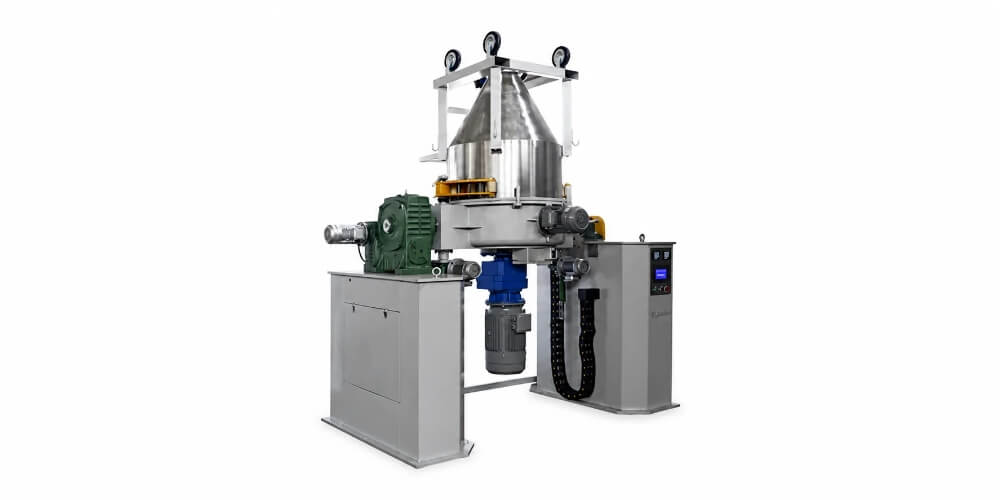
Why Powder Coating Quality Starts With Raw Material Mixing
A stable powder coating process does not begin at the end. It starts when the first solid materials enter the mixer. If you want fewer surprises later, you need to look closely at this step.
Formula Balance Across the Whole Batch
Powder coating raw materials are not simple. A normal formula may include resins, curing agents, pigments, fillers, and additives. Each material has a different role, and each one needs to be spread evenly before the next process.
If some parts of the batch carry more pigment or filler than others, the problem may follow the material through extrusion and grinding. You may still get powder at the end, but the coating quality can shift from batch to batch. A good automatic mixing system helps reduce this risk by making the raw material movement more even.
Less Batch Variation From Manual Operation
Manual or semi-automatic mixing depends heavily on operator habits. One person may load materials faster. Another may stop the mixer a little earlier. These small differences are easy to ignore when output is low, but they become obvious in mass production.
An automatic system gives you a more repeatable operation path. With PLC&HMI control, the same mixing time and process logic can be used again and again. This helps you keep production steady even when different workers run the line.
Better Preparation for the Next Process
Mixing is not an isolated step. The material after mixing will move to extrusion, then cooling, grinding, and classification. If the mixer gives the next machine a more uniform material, the whole line runs with less pressure.
This is why the mixer should be selected together with the production line plan. You can check more related equipment options through the product center when matching mixer capacity with downstream machines.
How Automatic Mixing Systems Keep the Formula More Stable
Once you know why mixing affects quality, the next question is simple: what kind of mixer can keep the formula stable in daily production? For this topic, the Mixer – AUTOMATIC CONTAINER MIXER is a strong product to look at.
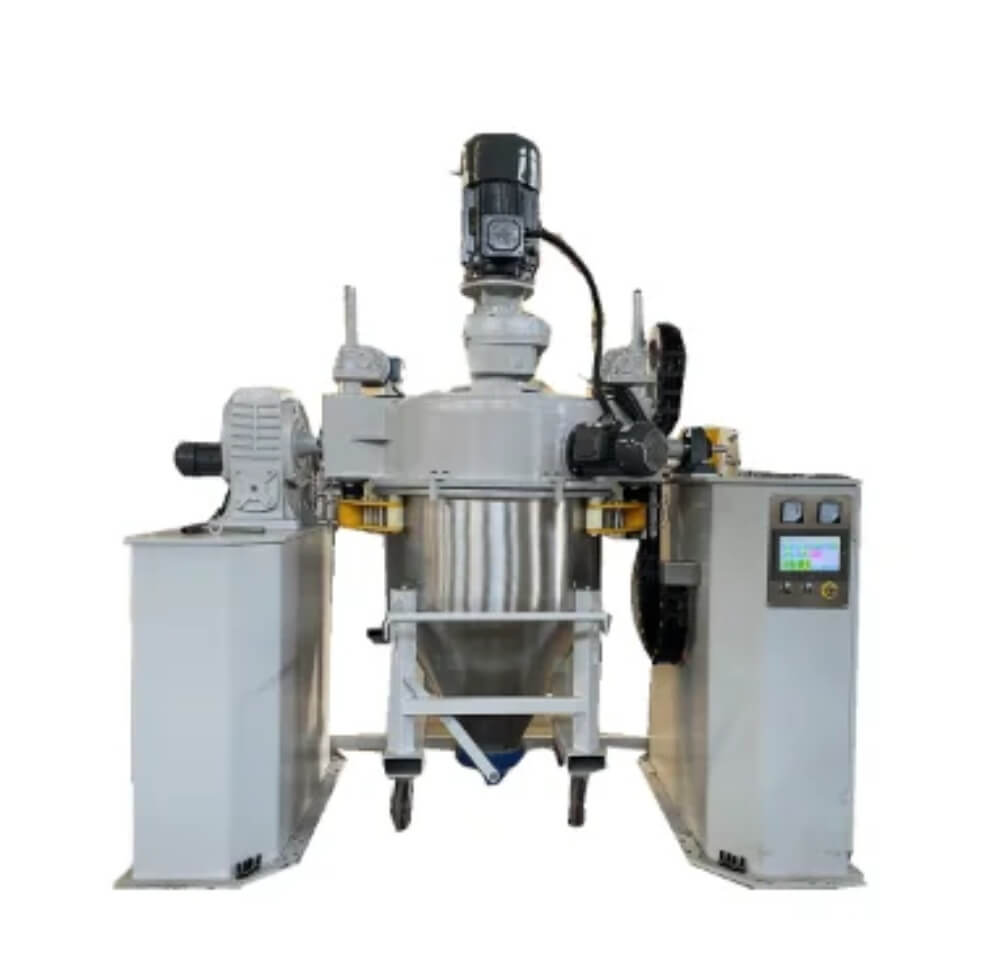
PLC&HMI Control for Repeatable Mixing
The Mixer – AUTOMATIC CONTAINER MIXER uses PLC&HMI control. For a production manager, this means the process is easier to repeat. You are not only relying on memory or manual timing.
Repeatable control helps keep each tank closer to the same result. In a powder coating plant, that is important because quality is not only about one good batch. You need the same result during long production runs, repeated orders, and regular formula changes.
Tilting Movement and Tight Connection
This machine is a container movable mixer. The trolley filled with raw material is lifted and connected tightly with the mixing parts. Then the material is mixed automatically during tilting. After mixing, the trolley returns to its original position.
That movement is useful because it helps the materials move inside the container instead of staying in weak mixing areas. Mechanical stirring and material movement work together, so each component has a better chance to spread through the batch.
Homogeneous Material Before Extrusion
The main job of this equipment is to mix solid powder raw materials in precise proportions. After mixing, the material becomes a more homogeneous feed for the extrusion process.
That is the simple value of the automatic mixing system. It gives the next process a cleaner starting point. You do not need to treat mixing as a small support step. In many powder coating lines, it is the first quality control point.
Which Mixer Capacity Fits Mass Production Better?
Factories do not all need the same mixer size. A small plant, a medium production line, and a larger batch operation need different tank volumes. This is where model selection matters.
CM-300 and CM-600 for Flexible Batch Work
The CM-300 has a 300 L volume and an output of 150 kg per tank. Its mixing motor is 11 kW, and its mixing time is 3–5 minutes. This model is useful when you need controlled batch output without choosing an oversized unit.
The CM-600 gives you 600 L volume and 300 kg per tank. Its mixing motor is 22 kW, with the same 3–5 minute mixing time. If your plant handles more regular batch work but still needs flexibility, this model is easier to fit into a growing production line.
CM-1000 for Higher Daily Output
The CM-1000 has a 1000 L volume and 500 kg per tank output. It uses a 30 kW mixing motor and PLC control. For many domestic powder coating manufacturers, this model fits the middle point between capacity and practical workshop operation.
It is also commonly matched with higher-output production line settings. If your downstream extruder and grinding system can handle a stronger production rhythm, the CM-1000 gives the mixing section enough capacity to avoid slowing the whole line.
CM-2000 for Large Batch Demand
The CM-2000 has a 2000 L volume and 1000 kg per tank output. It uses a 55 kW mixing motor, with tilting, crushing, and lifting motors arranged for larger batch operation.
This model suits plants that need high-volume raw material mixing in one tank. If your order structure is stable and your production schedule needs larger batches, the CM-2000 can reduce repeated loading and help keep mass production smoother.
How the Mixer Helps With Cleaning and Color Change
In real factory work, mixing quality is only one part of the concern. You also need to think about cleaning time, powder leakage, and color change. These points affect your daily output more than many buyers expect.
Multi-Trolley Operation for Easier Changeover
The Mixer – AUTOMATIC CONTAINER MIXER supports multi-trolley operation. This is practical when your plant produces different formulas or colors. Instead of stopping too long between batches, different trolleys can be used for easier changeover.
For domestic plants that handle customer orders with different colors, this can save a lot of production time. It also helps keep the workshop workflow cleaner, since material handling is more organized.
Double Shaft Seals for Cleaner Handling
Powder leakage is a common headache in powder coating production. It creates waste, cleaning work, and possible mixing area contamination. This machine uses double seals for the shaft, helping reduce powder leakage and solidified particles.
This is not a fancy feature on paper. It is the kind of detail that matters after months of production. Cleaner handling means fewer interruptions and less time spent dealing with avoidable residue.
Automatic Dust Vacuum for a Better Work Area
The machine is equipped with automatic dust vacuum. For powder coating raw material mixing, this helps keep dust under better control during operation.
A cleaner work area also helps workers manage production more easily. It does not replace daily cleaning, but it can reduce the amount of loose powder around the mixing section. For plants that care about stable operation, this detail is worth checking during equipment selection.
When Should You Choose Mixer – AUTOMATIC CONTAINER MIXER?
Not every factory needs the same mixing system. You should choose based on production scale, formula change frequency, workshop space, and the output of downstream machines. The Mixer – AUTOMATIC CONTAINER MIXER is more suitable when your mixing step needs both capacity and repeatability.
You Run Repeated Batch Production
If you produce powder coating in repeated batches, a manual-heavy process may start to slow you down. Even when the formula is the same, small changes in material movement and mixing time can affect consistency.
An automatic container mixer helps make the batch process more stable. For production managers, this means fewer uncertain points during daily operation.
You Change Colors or Formulas Often
If your plant often changes colors or formulas, cleaning and changeover time become part of your real cost. Multi-trolley operation, easy cleaning, and reduced leakage all matter here.
The automatic container structure gives you a more practical way to handle different batches. It is especially helpful when you do not want one formula to affect the next one.
You Want a Mixer That Fits a Full Line
A mixer should not be selected alone. It needs to match the extruder, cooling belt, grinding system, and particle size control setup. You can review possible line planning ideas through the solution center before deciding the mixer model.
For example, a 500 kg/h line may use CM1000 in the mixing section, while larger lines need different matching. This kind of matching helps prevent one machine from becoming the weak point in the line.
Conclusion: A Better Start for Stable Powder Coating Production
Consistent powder coating quality needs a steady beginning. If the raw materials are not mixed evenly, the rest of the line has to work with an unstable feed. That is why an automatic mixing system should be treated as a key production decision, not a small supporting machine.
The Mixer – AUTOMATIC CONTAINER MIXER gives you PLC&HMI control, automatic tilting mixing, multi-trolley operation, double shaft seals, automatic dust vacuum, optional cooling water jacket for the mixing head, and a full safety protection design. More importantly, it gives your production line a more repeatable way to prepare raw materials before extrusion.
If you are choosing equipment for domestic powder coating production, this product is worth serious attention. The company behind it can also help with production line planning, not just a single machine purchase. You can learn more through its case center, check support details through service, or use the contact page to discuss a mixer model and production line plan that fits your plant.
FAQ
Q1: What does an automatic mixing system do in powder coating production?
A1: It mixes resins, curing agents, pigments, fillers, and additives more evenly before extrusion. This helps the next process receive a more stable material feed.
Q2: Why is Mixer – AUTOMATIC CONTAINER MIXER suitable for mass production?
A2: It offers PLC&HMI control, automatic tilting mixing, multi-trolley operation, and model options from CM-300 to CM-2000. These features help factories manage repeated batch production with better consistency.
Q3: How long does the CM series mixing process take?
A3: The CM series has a typical mixing time of 3–5 minutes, depending on model and production needs.
Q4: Which model should you choose for higher batch output?
A4: CM-1000 offers 500 kg per tank, while CM-2000 offers 1000 kg per tank. The right choice depends on your daily output target, downstream equipment capacity, and workshop layout.
Q5: Can this mixer help reduce color change downtime?
A5: Yes. Multi-trolley operation, easier cleaning, and double shaft seals help reduce downtime during formula or color change, especially in plants with frequent batch switching.


