

How to Maintain a Water Cooling Belt for Optimal Performance in Powder Coating Lines
How to Maintain a Water Cooling Belt for Optimal Performance in Powder Coating Lines
In a powder coating production line, the water cooling belt is not the biggest machine, but it is one of those parts you notice right away when it does not work well.
After extrusion, the material comes out hot and soft. It cannot go straight into grinding. It first has to be pressed, cooled, and formed into sheets or chips that are easier to handle. If this step is stable, the next process runs much more smoothly. If the cooling is not even, the grinding section will feel it very quickly.
Many factories look at the extruder and grinding system first when they have output problems. That is normal. These machines are more obvious. But in real production, the water cooler belt often has a direct effect on sheet quality, grinding speed, and the whole line rhythm. A small issue here can slowly turn into more waste, more downtime, and more unstable powder quality.
For companies using powder coating production equipment, regular care of the water cooling belt is not complicated. It just needs to be done in a steady way.
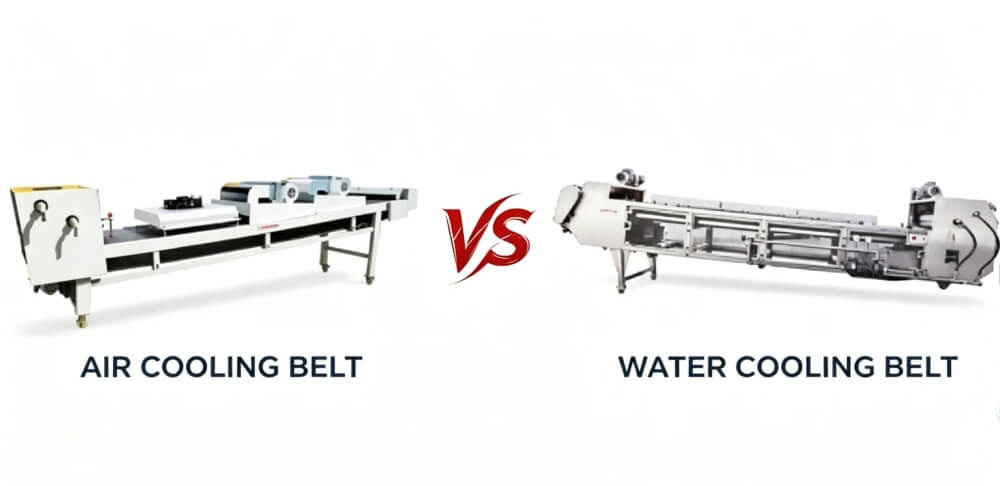
Why the Water Cooling Belt Needs Regular Care
The main job of the water cooling belt is simple. It cools the extruded material and helps form it into sheets before grinding. But this simple job affects several later steps.
When cooling is even, the material sheet thickness is easier to control. The sheet surface looks more stable. The crusher can break it into chips more easily, and the grinding system does not need to fight with uneven material.
If cooling becomes weak or uneven, problems show up fast. Some sheets may be too soft. Some may be too brittle. Some areas may stick to the belt. Sometimes the sheet thickness changes across the width. Once this happens, grinding becomes less stable, and particle size control also becomes harder.
This is why many production managers pay close attention to the water cooler belt during daily operation. It is not only about keeping one machine clean. It is about keeping the whole powder coating line running in a steady way.
Yantai Jatchen Powder Coating Processing Equipment Co., Ltd. focuses on powder coating production equipment and production lines. Their water cooling belt systems are designed for actual workshop use, where stable cooling, easy cleaning, and long service life matter more than fancy wording on paper.
Keep the Water Circulation Stable
The first thing to watch is water circulation.
A water cooling belt depends on steady water flow. If the water flow is not balanced, cooling will not be balanced either. One side of the belt may cool faster than the other side. Some parts of the material may stay too hot for too long. This can lead to uneven sheet formation.
Operators should check water flow, pressure, and temperature during routine production. It does not need to be overcomplicated. The point is to know what normal operation looks like. Once the numbers or visible cooling result start to change, the operator can react early.
Pipelines and spray systems also need cleaning from time to time. In many factories, impurities slowly build up inside the water system. At first, the effect is not obvious. Later, cooling speed drops, or certain areas on the belt no longer cool as well as before. By that time, production may already be affected.
So it is better to clean the water path before blockage becomes serious. This is a small job compared with stopping the full line for repair.
Clean the Belt Surface Every Day
The belt surface touches the material directly. If residue stays on it for too long, it can affect material release.
In normal production, a small amount of material may stick to the belt surface. If operators clean it daily, this is not a big problem. But if the residue is left there, it can build up layer by layer. Then the sheet may not form cleanly. Some material may stick, tear, or break in an uneven way.
A clean belt surface gives more stable sheet transfer. It also helps avoid color contamination when the line changes production batches.
For factories that produce different powder coating colors, this part becomes even more important. Cleaning should not only be quick. It should be complete enough to avoid old material affecting the next batch.
Check Belt Alignment and Tension
The water cooler belt should run straight and smoothly. If the belt starts drifting, even slightly, it can cause uneven contact and extra wear.
Belt alignment is one of those things that operators sometimes ignore until the problem becomes visible. But when the belt runs off position for a long time, it may affect sheet thickness, belt edge wear, and roller condition.
Tension also matters. If the belt is too loose, movement may become unstable. If it is too tight, the mechanical parts carry more stress than needed. Both cases can reduce the service life of the equipment.
A simple routine check can prevent many of these problems. Watch the belt movement during operation. Listen for unusual noise. Check whether the sheet comes out evenly across the full width. These signs often tell you more than a long report.
Look After Rollers and Drive Parts
The water cooling belt is not only the belt itself. Rollers, bearings, drive parts, and the crusher section all need attention.
Rollers help press and guide the material. If the roller surface is dirty or worn, sheet thickness may become harder to control. If the gap setting is not suitable, the sheet may come out too thick or too thin.
Drive parts should also be inspected regularly. Loose parts, abnormal vibration, or worn components can create bigger failures later. It is usually cheaper to replace a small worn part early than to wait until it damages nearby components.
The crusher section should not be forgotten either. After cooling and sheet forming, the material needs to be crushed into chips before moving to grinding. If the crusher is not working well, the grinding system may receive uneven material. This affects output and may increase energy use.
Watch for Uneven Cooling
Uneven cooling is one of the most common problems on a water cooling belt.
The cause can be water flow instability, partial blockage, wrong temperature setting, poor belt condition, or roller issues. Sometimes it is not caused by one big fault. It is caused by several small things happening together.
The signs are easy to notice if operators pay attention. Sheet thickness may vary. Surface texture may look different from one side to the other. Chips may break differently. Grinding may become less smooth than usual.
When this happens, do not only adjust the grinding system. Check the cooling stage first. Many times, the problem starts before grinding.
Do Not Wait Until Cooling Efficiency Drops Too Much
Cooling efficiency usually does not drop all at once. It often gets worse slowly.
Maybe the water system has more impurities than before. Maybe the belt surface is not as clean. Maybe rollers are not in the best condition. Production still runs, so nobody stops to check. But the line may already be using more time and energy than necessary.
This is why preventive maintenance is useful. It helps the factory find small problems while the line can still run normally.
A basic maintenance plan can include daily surface cleaning, regular water system checks, belt alignment inspection, roller condition checks, and scheduled replacement of worn parts. The exact schedule depends on production load, material type, and working hours. A line running one shift a day and a line running almost nonstop will not need the same maintenance rhythm.
Equipment Design Also Makes Maintenance Easier
Good maintenance is important, but equipment design also decides how easy maintenance will be.
A water cooling belt with a clear structure, accessible parts, and stable water distribution is easier for operators to manage. If cleaning points are hard to reach, maintenance will take longer. If parts are difficult to remove, operators may delay cleaning. In real factories, this matters a lot.
Yantai Jatchen Powder Coating Processing Equipment Co., Ltd. designs powder coating processing equipment with production use in mind. For the water cooling belt system, practical points like cooling effect, adjustable sheet thickness, roller speed control, and stable conveying all matter.
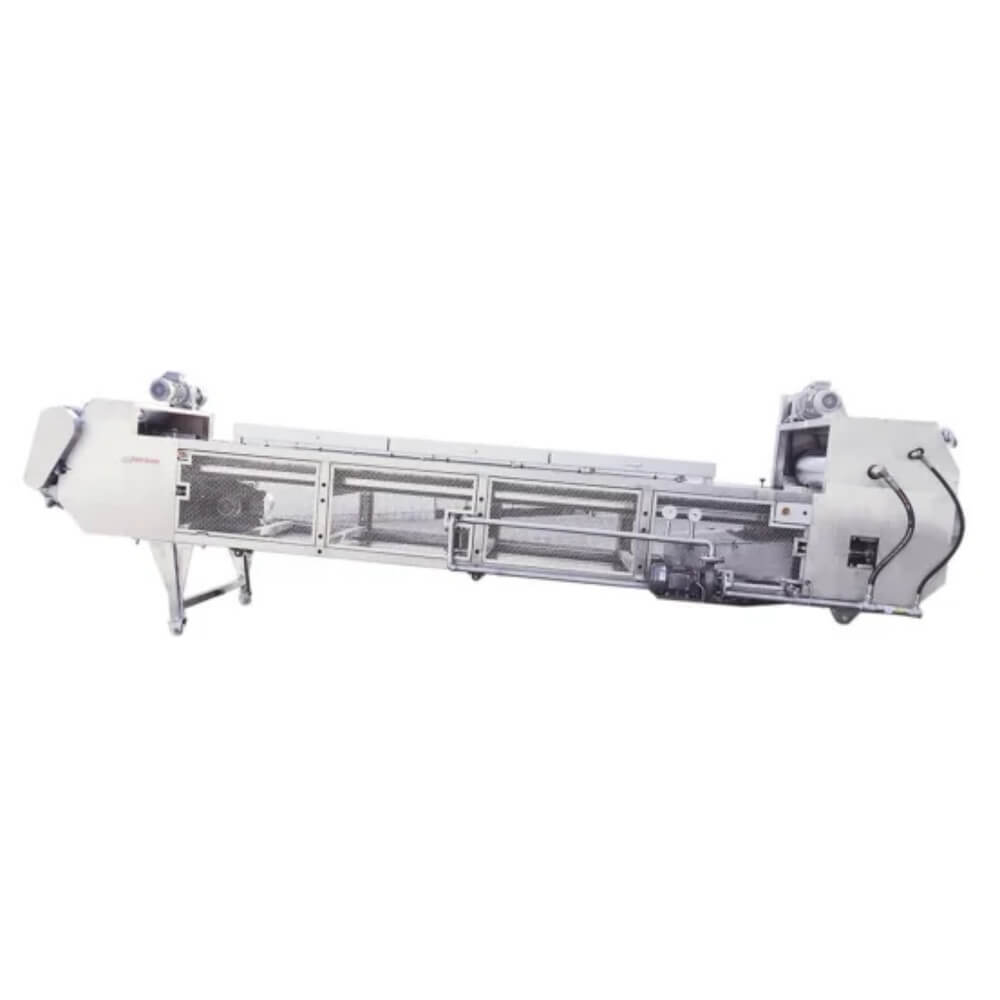
For example, in a water cooling belt, the cooling rollers, stainless steel conveyor, crusher, and cooling-water spraying system need to work together. The extruded material is pressed into thin sheets, cooled on the conveyor, crushed into chips, and then discharged. If each part is easy to adjust and maintain, the operator has better control over the process.
Stable Cooling Helps the Grinding System
The grinding system works better when the material chips are stable.
If the chips are too soft, they may not break cleanly. If they are too hard or uneven, the grinder may need more energy. If chip size changes too much, feeding may become unstable. These issues can affect particle size distribution and output.
So the water cooler belt is not just a cooling machine. It prepares material for the grinding stage. A stable cooling process helps the ACM grinding system or other grinding equipment work under better conditions.
This is also why maintenance should not be seen as a small separate task. It is part of line management.
How Often Should You Maintain It?
There is no single answer for every factory, but a simple rule works well.
Do basic checks every day. Clean the belt surface. Look at water flow. Watch the sheet condition. Listen for abnormal noise.
Do deeper checks on a fixed schedule. Inspect rollers, belt tension, belt alignment, water pipelines, spray parts, drive components, and crusher condition.
For lines with heavy production, checks should be more frequent. For factories that often change colors or formulas, cleaning should be stricter. If the cooling result changes, do not wait for the next scheduled inspection. Check it right away.
Final Thoughts
A water cooling belt does not need complicated maintenance, but it does need regular attention.
When the belt surface is clean, the water system is stable, rollers are in good condition, and the belt runs straight, the cooling process becomes much easier to control. Sheets form better. Chips are more suitable for grinding. The whole powder coating production line runs with fewer surprises.
For factories trying to improve output and reduce production problems, the cooling stage is worth checking carefully. Sometimes the reason for unstable grinding or uneven powder quality is not in the grinder itself. It may come from poor cooling before the material even reaches that stage.
Yantai Jatchen Powder Coating Processing Equipment Co., Ltd. provides powder coating production equipment and line solutions for customers who need stable operation, easier cleaning, and practical production support. If your current line often has uneven sheet formation, cooling problems, or unstable grinding performance, reviewing the water cooling belt system is a good place to start.
FAQ
Q1: What does a water cooling belt do in powder coating production?
It cools the extruded material, presses it into sheets, and prepares it for crushing and grinding.
Q2: Why does uneven cooling affect powder quality?
Uneven cooling can create unstable sheet thickness and uneven chips. This makes grinding harder to control.
Q3: How often should the belt surface be cleaned?
In normal production, daily cleaning is recommended. If the line changes colors often, cleaning should be more careful.
Q4: What should operators check during daily maintenance?
They should check belt cleanliness, water flow, water temperature, belt alignment, roller condition, and any unusual noise or vibration.
Q5: Why choose a well-designed water cooling belt system?
A good design makes cooling more stable, cleaning easier, and long-term operation more reliable.


