

What Is the Best Extruder Temperature for Powder Coating Production
What Is the Best Extruder Temperature for Powder Coating Production
Powder coating production depends on accurate extrusion management to secure steady quality and effectiveness. Among various settings, extruder temperature holds a key position in shaping how well substances soften, combine, and create a even output. Suitable temperature adjustment influences not only the movement characteristics of the blend but also its spread and reliability in later stages of handling.
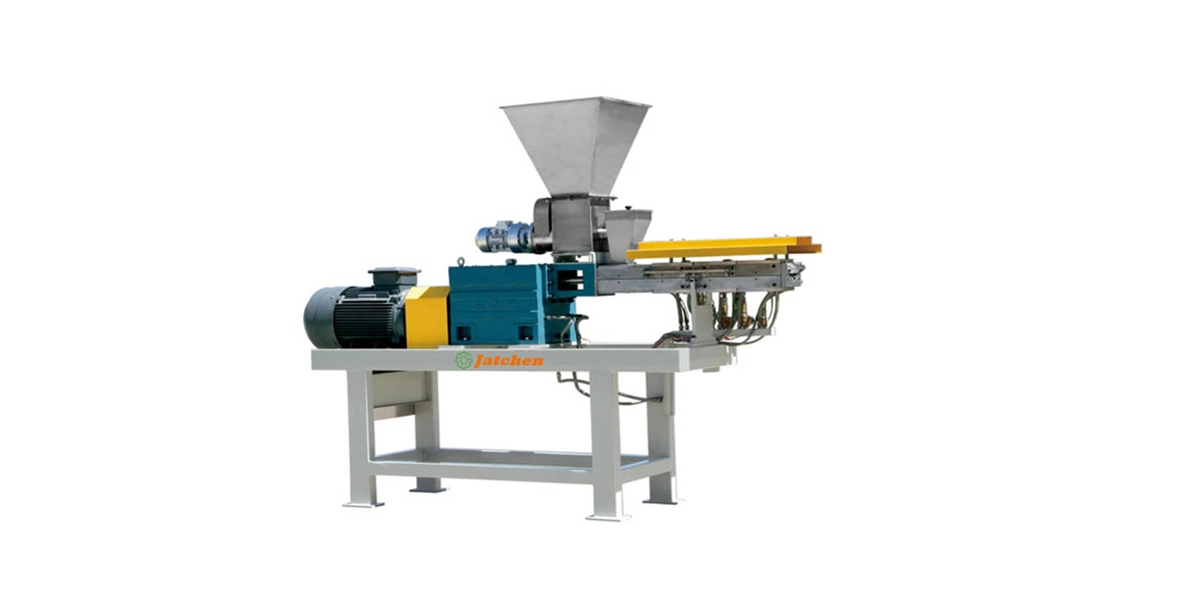
With sophisticated setups like the Extruder – TWIN SCREW EXTRUDER, operators benefit from exact temperature oversight and superior blending functions. This piece examines the way temperature works with substance traits, the reasons twin screw extruders improve powder coating standards, and how Yantai Jatchen Powder Coating Processing Equipment Co., Ltd. offers customized approaches for production setups.
What Factors Determine the Optimal Extruder Temperature for Powder Coating Production?
The ideal extruder temperature hinges on the makeup of the powder coating recipe, which includes resin kind, hardening agent, additives, and colorants. It needs to reach a level sufficient to soften and merge all elements smoothly. However, it should not go so far as to modify their chemical makeup or lead to irregular blending.
The Influence of Temperature on Material Consistency
Temperature impacts directly the shift of substances from solid forms to liquid states within the extruder chamber. The engine powers the screw to turn. Once the substances arrive from the feeder, they advance under the transport and cutting effects of the screw. If temperature regulation varies across sections, issues like incomplete softening or grouping might arise. Such problems can interrupt the steady flow of materials.
Effects on the Flow and Mixing Properties
As substances warm up, their thickness drops, which permits improved scattering of colorants and extras. Under the pressure and blending effects of the screw parts and mixing parts, the softened substances get thoroughly combined and pushed out from the device outlet to create a steady flow. A reliable heat pattern makes sure of smooth transport through screw paths without any holdups.
Relationship Between Temperature and Final Product Quality
The evenness gained in the extrusion phase shapes the surface appearance, shine degree, and physical durability of the hardened layers. Through warming and cutting forces, it softens and shapes the blended substances. This process allows complete joining of all parts to produce an even flow. Steady temperature oversight results in foreseeable hardening actions in subsequent production steps.
How Does the Twin Screw Extruder Enhance Powder Coating Production?
Twin screw extruders serve as common tools in current powder coating operations. They merge effective blending with adaptable process handling. Moreover, they manage various recipes with little interruption while upholding reliable output rates.
Benefits of Using a Twin Screw Extruder
Improved Homogeneity in Mixing
In the course of running, pre-blended powder coating inputs enter the chamber through the supplier. Powered by the turning screws, substances travel along the screw paths toward the outlet end. The overlapping screws generate strong cutting powers that separate color groups for uniform shade spread.
Enhanced Throughput and Efficiency
Dependable transport guarantees steady substance progress in the chamber. It avoids slips or stoppages. Ongoing supply paired with accurate speed adjustment supports large-scale production without sacrificing uniformity.
Versatility in Processing Different Formulations
Screw parts, such as transport, kneading, and cut elements, can be grouped or swapped according to recipes and methods. This adaptability allows changes in cutting strength or stay duration based on resin variety or color load.
Why Is Yantai Jatchen’s Twin Screw Extruder Recommended for Optimal Results?
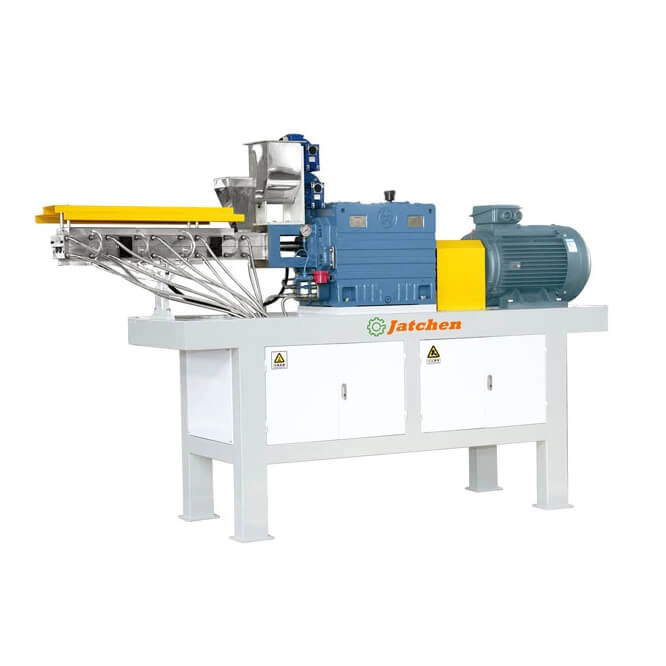
Yantai Jatchen has gained acknowledgment as a leading provider of powder coating tools in China. This status comes from its technical accuracy and focus on client needs. The firm has built extensive hands-on knowledge in the study, creation, and building of superior powder coating production tools and lines.
Key Features of Jatchen’s Twin Screw Extruder
Advanced Temperature Control Systems
The effective warming and cooling setup ensures that temperatures in several areas stay accurately managed within ±2℃. This level of precision maintains process details steady even over extended manufacturing periods.
Robust Design for Industrial Applications
The high-power, quiet-running, efficient transmission unit includes integrated oiling and cooling mechanisms. Its build supports nonstop work in tough settings while cutting down on upkeep demands.
Customizable Configurations for Diverse Needs
Every production setup can incorporate various types, such as TSK35 or TSK55, according to volume needs outlined at Jatchen’s product page. Choices can match specific output goals or recipe intricacy.
What Are the Advantages of Precise Temperature Control in Extrusion?
Temperature exactness goes beyond just stopping excess heat. It shapes process reliability over multiple runs in a direct way.
Impact on Process Stability and Consistency
Minimizing Variations in Product Quality
By holding each area within ±2 °C range as planned in Jatchen setups, uneven softening gets prevented. This avoidance stops issues like shade marks or surface differences.
Ensuring Uniformity Across Batches
Reliable heat patterns provide repeatable outcomes in every work period. Such reliability proves essential when meeting big-order deals where appearance steadiness counts highly.
Reducing Waste and Increasing Yield
Consistent extrusion lowers the need for corrections.
How Do Industry Standards Influence Extruder Temperature Settings?
Powder coating makers need to follow firm quality checks that require process repetition.
Compliance with Industry Regulations and Standards
Adhering to Quality Assurance Protocols
Temperature tracking fits with ISO-related rules that call for followable oversight of main details in mixing phases.
Meeting Safety and Environmental Guidelines
Well-adjusted warming units stop vapor releases during extrusion. This helps fulfill both work safety rules and eco-friendly standards.
What Role Does Technology Play in Optimizing Extruder Performance?
Current extrusion operations link smart automation that changes detailed tasks into reliable patterns handled via electronic displays.
Integration of Advanced Monitoring Systems
Real-Time Data Collection and Analysis
The PLC and HMI program-managed error avoidance allows workers to follow current patterns for power strain or heat shifts right from control screens.
Automation for Improved Precision and Control
Automatic response cycles modify warmer power right away if shifts happen. This keeps the flow thickness steady all through operations.
Predictive Maintenance to Prevent Downtime
Included checks spot usage signs early. Thus, repair groups can plan fixes before failures occur. This stands as a trait backed by Jatchen’s aftersales service team.
How Can Yantai Jatchen Support Your Powder Coating Production Needs?
Aside from delivering equipment, the company supplies full project organization, from test lab arrangements to ready-to-use factory lines globally.
Comprehensive Solutions Offered by Jatchen
Expert Consultation and Technical Support Services
Technical aid comes in remote or in-person forms. Repairs and renewal services also available. Professional advice arrives at each phase, from startup to fixing tricky recipes.
Tailored Solutions for Specific Production Requirements
Custom line plans displayed at Jatchen’s solution center show expandable choices from 50 kg/h small-scale units to 1500 kg/h factory-scale plants. These integrate blenders, extruders, cooling strips, and crushers in a smooth way.
Ongoing Innovation to Meet Evolving Industry Challenges
The company sticks to its core goals and works toward building safe, smart, productive, and energy-saving tools for powder coating makers worldwide.
FAQ
Q1: What is considered an ideal temperature range for powder coating extrusion?
A: It generally changes with the recipe but ought to permit full softening without harming any part. Multi-area oversight within ±2 °C gets suggested using developed setups like those in twin screw extruders.
Q2: Why use a twin screw instead of a single screw design?
A: Twin screws deliver firmer kneading power for superior color scattering. At the same time, they keep reliable output across varied recipes.
Q3: How does precise temperature control reduce waste?
A: Steady heat spread stops incomplete softening or excess hardening in chambers. This cuts down on flawed runs that might require reworking otherwise.
Q4: Can these extruders handle frequent color changes?
A: Yes. Fast-open chamber builds speed up cleaning between runs. Little leftover sticks around due to self-cleaning traits in up-to-date types.
Q5: Where can technical assistance be requested?
A: Support contact happens via Jatchen’s official contact page for straightforward talks by phone or message whenever help with operations needed.


