

Jatchen ACM vs ICM Grinding Systems: Which Boosts Production Efficiency More
Jatchen ACM vs ICM Grinding Systems: Which Boosts Production Efficiency More
Powder milling holds a vital position in various contemporary sectors. In powder coating fabrication, chemical handling facilities, and food component creation, the ultimate standard of the item frequently hinges on the exactness with which initial substances get milled into powder form. A minor shift in granule dimension can alter covering evenness, substance movement, or merging execution in subsequent fabrication phases.
Within a standard powder coating fabrication line, initial substances pass through multiple phases before turning into completed powder. Following blending and extrusion, the substance chills and shapes slim layers or fragile bits. These layers subsequently move into the milling phase, where they undergo crushing and sorting into fine powder featuring managed granule dimension. When this phase performs effectively, the whole fabrication line proceeds without hitches. However, when milling proves unsteady, the standard of the ultimate powder might vary.
Producers thus direct keen interest toward milling methods. Current setups merge crushing, sorting, and particle gathering within a unified procedure to enhance fabrication effectiveness and powder uniformity. Among the options present nowadays, two methods surface often in plant powder fabrication lines: ACM grinding systems and ICM grinding systems.
Machinery providers possessing broad background in powder handling typically craft complete fabrication resolutions that blend milling with prior machinery like blenders, extruders, chilling units, and sorters. One instance involves Yantai Jatchen Powder Coating Processing Equipment Co., Ltd., a firm dedicated to powder coating handling machinery and unified fabrication line resolutions. Their technical background in milling and powder handling machinery has aided numerous producers in establishing firm, extensive scale fabrication setups.
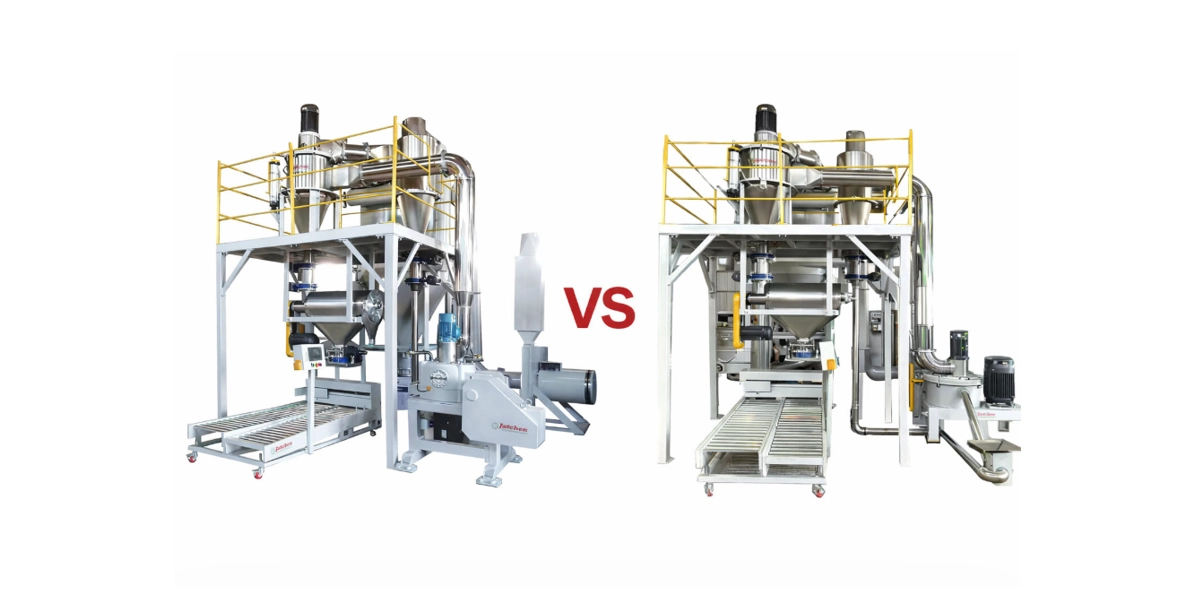
Even though both ACM and ICM grinding systems execute the identical main duty, their inner framework and execution traits vary. Selecting the appropriate setup can advance fabrication volume, cut upkeep pauses, and uphold steady powder standard.
Why Is Powder Grinding So Important in Modern Manufacturing?
Milling represents more than mere dimension lessening. In numerous plant uses, it decides the ultimate execution of the item.
When layer-like substances generated post-extrusion access the milling phase, they require milling into fine powder with reliable granule dimension spread. Merely powders falling within the needed scope can progress to the final fabrication phase. Excessively large granules need returning for additional milling.
This procedure influences directly the covering uniformity, substance flow patterns, and item steadiness. Within powder coating fabrication, uniform granule dimension assists powders in spraying evenly across surfaces, and it enhances hardening execution during the ultimate completion phase.
Plant milling machinery thus executes two duties simultaneously. It crushes the initial substance into tinier granules, and it divides granules according to dimension. These two roles must stay firm amid ongoing fabrication. Should sorting exactness decline or milling effectiveness lessen, the complete fabrication line decelerates.
For producers managing hundreds of kilograms of powder each hour, even a modest gain in milling effectiveness can markedly raise general output.
What Makes the ACM Grinding System Suitable for Precision Powder Production?
ACM grinding systems gain broad employment when fabrication demands exact granule dimension oversight and reliable powder standard.
Product Overview
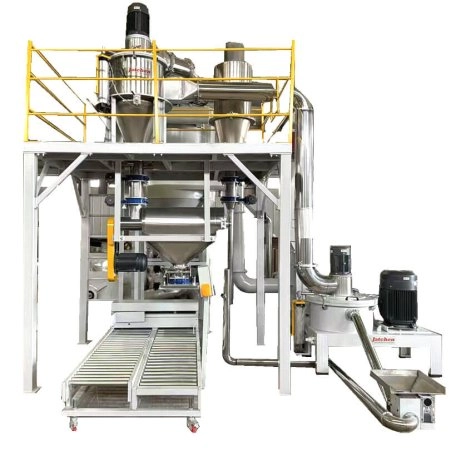
An ACM grinding system merges swift mechanical milling with an air sorting procedure. Substances accessing the milling space encounter rotating parts that fracture them into tinier granules. Concurrently, an embedded air sorter divides granules according to their dimension.
This framework permits milling, sorting, and powder gathering to happen within one ongoing procedure. Since sorting occurs right after milling, granules satisfying the needed dimension proceed straight to the gathering setup, whereas bigger granules return to the milling space.
Plant ACM grinding systems can function over a broad array of volumes. Based on machinery setup, per-hour output can attain several hundred kilograms or approach one ton in extensive setups.
How Does the ACM Grinding System Work?
Within the unit, initial substances access a swift milling area where rotating parts generate robust collision forces. These forces fracture the layer-like bits into tinier segments.
Air movement created inside the setup transports the granules upward toward a sorter wheel. The sorter turns at swift velocity and functions as a granule barrier. Tinier granules traverse the sorter and advance to the cyclone divider and particle gatherer. Bigger granules get directed back into the milling area for more milling.
Since the sorter velocity allows adjustment, handlers can oversee the ultimate granule dimension spread with fairly high exactness. This adaptability enables producers to generate powders featuring varied details using identical milling machinery.
Key Features and Advantages
Various traits clarify why ACM grinding systems enjoy popularity in high exactness powder fabrication.
The integrated air sorting setup permits accurate granule dimension oversight amid ongoing operation. Fabrication lines necessitating reliable powder standard gain considerably from this trait.
Power use stays comparatively modest when set against earlier milling units. The setup framework moreover aids in preserving a firm air movement design inside the space, which advances milling effectiveness.
Numerous ACM setups incorporate current regulation boards that retain handling details for distinct items. Handlers can alter fabrication settings swiftly without tweaking each detail by hand.
Yet another benefit involves high substance retrieval. Effective division and particle gathering setups assist in lessening initial substance depletion and maintaining a cleaner operational setting.
Due to these traits, ACM grinding systems commonly serve in powder coating fabrication and additional sectors where exact powder attributes prove essential.
How Does the ICM Grinding System Handle High Volume Material Processing?
ICM grinding systems adhere to a distinct creation approach. Rather than depending chiefly on air movement sorting, they emphasize robust mechanical collision to attain effective milling.
Product Overview
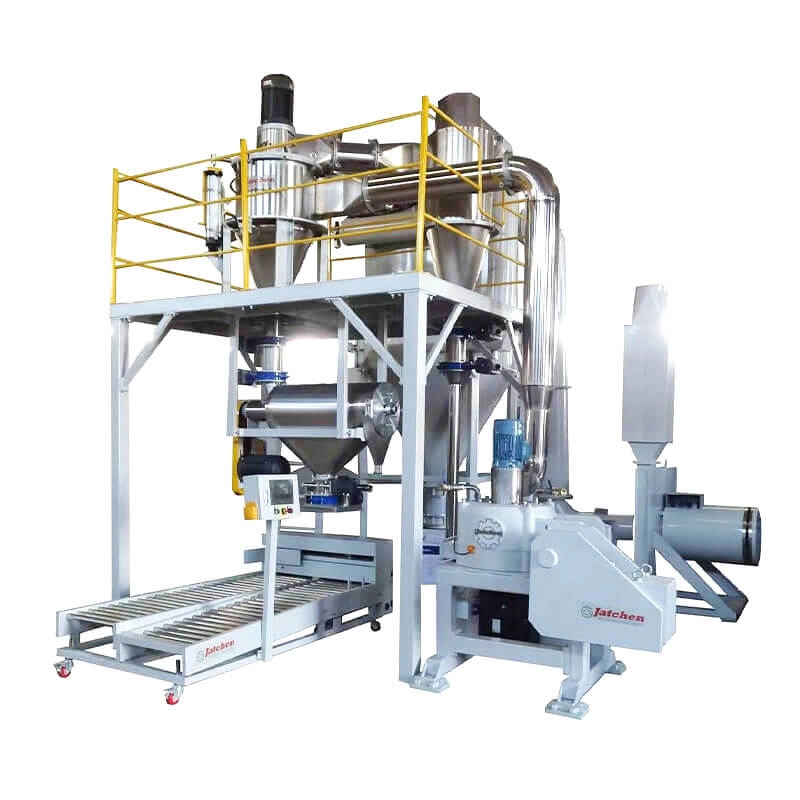
An ICM grinding system gets crafted for efficient crushing of fragile substances and layer-like bits generated in plant procedures. The unit framework remains compact yet sturdy, permitting it to function continuously in challenging fabrication settings.
These setups can encompass a broad fabrication scope. Smaller units manage lab or trial fabrication, whereas extensive types can handle hundreds of kilograms of substance per hour.
Working Principle
In an ICM setup, substances access a milling space containing swift rotating collision parts. These parts strike the substance repeatedly, steadily fracturing it into tinier granules.
Throughout this procedure, a sorting unit divides granules that already satisfy the needed dimension scope. Bigger granules stay inside the milling space and persist in getting crushed until attaining the desired dimension.
Since the setup depends largely on mechanical collision, it functions especially well with fragile substances that break readily under repeated strikes.
Key Features and Advantages
One remarkable trait of the ICM grinding system involves its robust crushing ability. Collision parts produce high energy strikes that fracture substances rapidly and effectively.
The inner framework of the unit remains fairly straightforward when compared to air movement founded setups. This straightforwardness lessens mechanical intricacy and can render upkeep more direct.
Erosion resistant parts prolong the service duration of the machinery. In plant settings where milling setups operate for extended hours daily, lasting quality emerges as a key element.
ICM setups moreover uphold firm execution even during handling of extensive substance volumes. This dependability renders them fitting for fabrication lines that emphasize high throughput.
How Should You Choose Between ACM and ICM Grinding Systems?
Selecting a milling setup demands thoughtful assessment of various practical elements.
Substance traits often form the initial concern. Substances that necessitate exact granule spread and reliable powder attributes usually align better with ACM grinding systems owing to their advanced air sorting ability.
Fabrication volume stands as yet another element. Should the primary aim involve handling extensive substance volumes swiftly, the robust collision method of ICM grinding systems may deliver superior execution.
Granule dimension demands likewise shape machinery choice. Uses that require extremely narrow granule dimension scopes tend to gain from ACM sorting oversight. Conversely, procedures that permit marginally broader granule spread may function effectively with an ICM setup.
Fabrication line creation moreover holds importance. Milling machinery must blend seamlessly with prior phases like extrusion and chilling. When all machinery collaborates as a complete setup, fabrication effectiveness rises notably.
What Are the Key Differences Between the Two Grinding Technologies?
Even though both setups execute powder milling, their creation and execution traits vary in multiple manners.
Milling method
ACM setups merge swift milling with air sorting to oversee granule dimension.
ICM setups depend on repeated mechanical collision merged with granule sorting.
Substance suitability
ACM setups suit ideally substances requiring fine granule oversight and reliable powder spread.
ICM setups manage fragile substances and bigger bits efficiently.
Granule dimension oversight
ACM setups furnish highly exact granule dimension modification via sorter velocity alterations.
ICM setups concentrate more on firm milling execution and high handling volume.
Plant uses
Both setups emerge in sectors like powder coating and chemical substance handling, although their strengths vary based on fabrication demands.
How Is Powder Grinding Technology Moving Toward Smarter Manufacturing?
Plant milling methods persist in developing. Current fabrication lines depend increasingly on mechanization and digital oversight to advance effectiveness and firmness.
Numerous milling setups now incorporate programmable regulation boards that retain handling details for varied items. Handlers can alter fabrication settings rapidly without intricate modifications.
Mechanized cleansing setups moreover assist in lessening pause periods between fabrication batches. Briefer cleansing durations permit producers to sustain higher everyday fabrication levels.
Ecological safeguarding has turned into yet another crucial domain of advancement. Sophisticated particle gathering setups seize airborne granules during milling operations, safeguarding workers and upholding a cleaner facility setting.
These gains illustrate how milling methods gradually integrate into a broader intelligent fabrication setup.
Why Can the Right Grinding System Improve Production Efficiency?
Selecting the proper milling setup can affect numerous facets of fabrication.
Firm milling execution permits the fabrication line to function for longer durations without pauses. Fewer interruptions signify higher practical output amid each operational period.
Reliable granule dimension spread lessens the necessity for rehandling substances that fail to satisfy item details. This preserves power and diminishes substance depletion.
Dependable milling setups moreover advance subsequent procedures. When powders possess firm granule attributes, covering, merging, and packing operations proceed more seamlessly.
In extensive scale fabrication settings, these gains convert straight into elevated productivity and reduced operating expenses.
FAQ
Q1: What Is the Main Difference Between ACM and ICM Grinding Systems?
A: The main difference resides in their milling methods. ACM setups merge mechanical milling with air sorting to oversee granule dimension with exactness. ICM setups depend chiefly on swift collision crushing merged with sorting.
Q2: Which Grinding System Is Better for High Precision Powder Production?
A: ACM grinding setups generally align more suitably for uses demanding highly exact granule dimension oversight because the sorter velocity allows adjustment to regulate granule spread.
Q3: Are Both Systems Suitable for Large Industrial Production Lines?
A: Yes. Both ACM and ICM setups can function in extensive scale fabrication settings. The selection typically hinges on substance traits and granule dimension demands.
Q4: Is Maintenance Difficult for Industrial Grinding Systems?
A: Most current milling setups get crafted for fairly direct upkeep. Erosion resistant parts and reachable inner frameworks assist in reducing upkeep duration.
Q5: What Factors Should Be Considered When Selecting a Grinding System?
A: Crucial elements encompass substance kind, needed granule dimension spread, fabrication volume, and the manner in which the milling machinery blends with the remainder of the fabrication line.


