

How Do You Clean a Twin Screw Extruder Between Powder Coating Formulas?
How Do You Clean a Twin Screw Extruder Between Powder Coating Formulas?
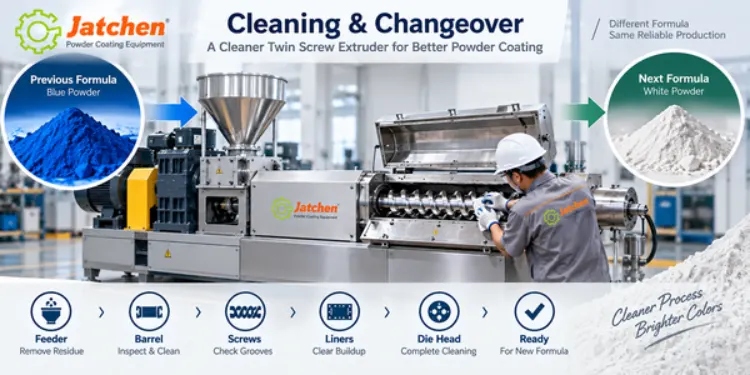
Cleaning a twin screw extruder between powder coating formulas is not limited to wiping the die head. Residue can remain in the feeder, screw grooves, barrel, liner inserts, discharge area, and nearby transfer points. If the next formula starts before these areas are checked, the first extruded material may contain carryover from the previous batch.
For powder coating production, a twin screw extruder for powder coating sits between premixing and cooling, so a changeover affects more than the extruder itself. The feeder must be ready, the barrel and screws must be inspected, the correct PLC/HMI parameters must be loaded, and the downstream cooling route must be prepared before normal production resumes.
This cleaning sequence is especially important when one line handles frequent color or formula changes. A repeatable routine helps operators separate three different issues: residual material, incorrect process settings, and downstream contamination.
Why Does a Powder Coating Extruder Need a Full Cleaning Sequence?
Residue Can Remain Along the Entire Material Route
The material route begins before the screws. Powder enters through the feeding system, moves through the barrel, is conveyed and kneaded by the screws, and exits through the discharge section. Residue can therefore remain at the feed inlet, in screw grooves, around liner edges, inside accessible barrel areas, or near the die head.
A clean discharge surface does not prove that the complete powder extrusion route is clean. For frequent formula changes, operators should inspect the route in the same order every time so hidden residue is less likely to be missed.
Color Changes Make Carryover Easier to Detect
When the next batch has a visibly different color, carryover is often easier to notice in the first output. Formula changes without a strong color difference can be less obvious, which makes written cleaning records more important. Record the previous formula, cleaning action, next formula, and first-output result.
Process Settings Must Be Checked Separately from Cleaning
A new powder coating formula may require different feeding, screw-speed, heating, cooling, or discharge settings. PLC/HMI parameter storage can help operators recall a known program, but cleaning and parameter adjustment should remain separate checklist items. Otherwise, a process change may be mistaken for a cleaning problem.
What Is the Practical Cleaning Route for a Twin Screw Extruder?
Run Out the Previous Material Before Opening the Equipment
At the end of the previous batch, allow material already in the process to move through the normal route as far as practical. Reduce feeding in the planned sequence and note unusual pressure, feeding, or discharge behavior. Keep the next formula away from the feeder until the inspection is complete.
Inspect the Feeder, Barrel, Screws, Liners, and Die Head
Stop the machine according to the operating procedure before inspection. The Jatchen TSK design uses a clamshell barrel, liner inserts, and a self-cleaning structure to support access and routine maintenance. These features can make inspection more manageable, but they do not remove the need for physical checking during a formula change.
The inspection should follow the actual material path: feeder and feed inlet, accessible barrel area, screw surfaces and grooves, liner areas, die head, discharge route, and connection points. Any removal or opening work should follow the equipment-specific maintenance procedure.
Clean Transfer Points Before the Next Formula Arrives
Powder buildup around sleeves, hoppers, feeder connections, and discharge points can re-enter the material stream after the extruder itself has been cleaned. Treat the feeder-to-extruder and extruder-to-cooling sections as part of the same changeover route.
Which Extruder Features Help with Frequent Formula Changes?
Clamshell Barrel Access and Liner Inserts
Access matters when a plant changes formulas frequently. A clamshell barrel can provide a more direct route for inspection than a closed structure that is difficult to reach. Liner inserts also make it easier to define which working surfaces require inspection and maintenance.
Before choosing a powder coating extruder, ask how the barrel opens, which screw and liner areas can be inspected, what components are removable, and how much maintenance space is required around the machine.
Low-Shear Screw Design and Uniform Feeding
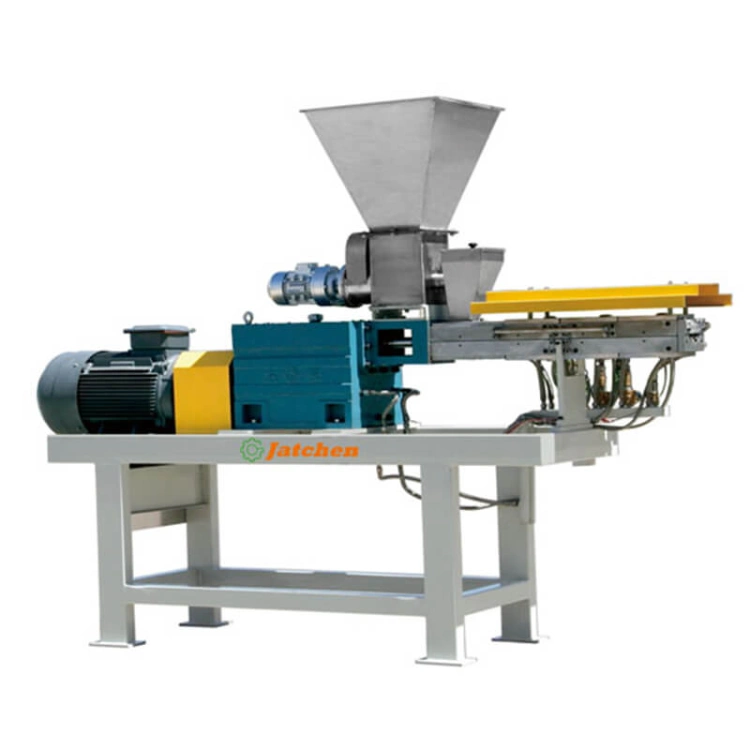
The TSK uses a deep-groove low-shear screw design for powder coating extrusion. Anti-bridge screw feeding and uniform feeding help maintain a more consistent material stream. These features support controlled conveying, kneading, and dispersion, but they should not be treated as substitutes for changeover cleaning.
For broader process context, the existing guide on the processo de extrusão de revestimento em pó explains how twin screw extrusion fits between premixing and cooling.
PLC/HMI Control Helps Separate Recipe Settings
PLC/HMI control allows operators to store and recall process parameters more clearly. During a changeover, confirm the formula name, feeding setting, screw speed, temperature zones, and discharge arrangement before restarting. A saved program is a starting point, not a replacement for checking the current material and line condition.
How Do You Verify the Next Powder Coating Formula?
Check the First Extruded Material Before Full Production
Do not send the first output directly through the complete cooling and grinding route without inspection. Check color, appearance, discharge consistency, and visible signs of previous-formula carryover. If the first material does not meet the changeover requirement, continue the cleaning and verification process before releasing normal production.
Keep the Cooling Route Ready for Approved Material
Once the first output is accepted, the extrudate must move into a compatible cooling stage. Depending on line design, Jatchen provides a cinto de refrigeração de água and an correia de resfriamento a ar for the cooling and crushing stage before grinding.
Keeping the downstream route clean matters because residue in a cooling belt, chip transfer point, grinder, or sifter can create contamination even when the twin screw extruder has been cleaned correctly.
Use a Changeover Record for Repeatability
A practical record should include the previous formula, cleaning start and finish, inspected points, parameter changes, first-output observation, and release decision. This makes repeated color changes easier to compare and helps distinguish equipment residue from process-setting variation.
What Cleaning Mistakes Should You Avoid?
Do Not Clean Only the Visible Die Area
A quick wipe around the die head can leave residue in the feeder, screw grooves, liner edges, barrel access points, or discharge connection. Use a fixed route and sign off each inspection point rather than relying on what is easiest to see.
Do Not Change Several Parameters Without a Record
If operators change feed rate, screw speed, temperature, and discharge settings at the same time, later troubleshooting becomes difficult. Record what was cleaned and what was adjusted. This is especially important when the same powder extruder handles several formulas in one shift.
Do Not Ignore Dust and Residue Outside the Barrel
Loose powder around transfer points can become part of the next batch if housekeeping and dust collection are weak. Review the complete Jatchen powder coating equipment range when the contamination problem extends beyond the extruder to mixing, cooling, grinding, or packing.
How Should You Plan Extruder Cleaning Before Purchase?
Discuss Formula and Color-Change Frequency
Tell the equipment supplier how many formulas the line runs, how often colors change, which residues are difficult to remove, and which parts operators expect to inspect. These details can affect barrel arrangement, die-head setup, maintenance access, spare-parts planning, and the overall line layout.
Leave Enough Maintenance Space Around the Machine
Cleaning requires room to inspect the feed area, open accessible barrel sections, check screws and liners, reach the discharge area, and move removed parts safely. A complete powder coating line also needs workable access around cooling and grinding equipment rather than placing machines edge to edge.
Confirm Training, Service, and the Changeover Procedure
Before installation, review the cleaning sequence, operation records, spare parts, and operator training plan. Jatchen’s serviço de equipamentos can be used to discuss operation and maintenance requirements, while the página de contato can be used to provide formula, output, layout, and changeover information for a project review.
Conclusão
Cleaning a twin screw extruder between powder coating formulas works best as a complete material-route procedure. Run out the previous material, inspect the feeder and accessible barrel areas, clean screws, liners, die head and transfer points, confirm the correct PLC/HMI settings, and approve the first output before normal production continues.
The TSK twin screw extruder supports this routine with clamshell access, liner inserts, a deep-groove low-shear screw design, anti-bridge feeding, uniform feeding, and PLC/HMI control. The key is to use those equipment features inside a repeatable cleaning and verification sequence rather than treating any one feature as a substitute for maintenance.
FAQ
How Do I Clean a Twin Screw Extruder Between Powder Coating Formulas?
Run out the previous material, stop the equipment according to procedure, inspect and clean the feeder, barrel access, screws, liners, die head, discharge and transfer points, then verify the first output of the new formula.
Does a Self-Cleaning Structure Eliminate Manual Cleaning?
No. A self-cleaning structure can support routine operation, but accessible areas still need inspection and cleaning during formula and color changes.
Why Should the Feeder Be Included in the Cleaning Checklist?
Powder can bridge or remain around the feed inlet, so the feeder is part of the same material route as the screws and barrel.
Should Extruder Settings Change with the Formula?
They may need adjustment. Confirm the correct PLC/HMI program and check feeding, screw speed, temperature zones, and discharge settings for the new formula.
What Should I Ask Before Buying a Powder Coating Extruder for Frequent Changeovers?
Ask about barrel access, screw and liner inspection, die-head cleaning, maintenance space, parameter storage, training, spare parts, and how the extruder connects with cooling and grinding equipment.


