

What Is the Difference Between a Grinder and a Grinding Mill? Size Reduction vs Particle Classification in Powder Coating
What Is the Difference Between a Grinder and a Grinding Mill? Size Reduction vs Particle Classification in Powder Coating
A grinder mainly performs size reduction. It breaks larger material into smaller particles through impact, crushing, friction, or shearing. A grinding mill used in powder coating production usually does more. It combines size reduction with airflow, classification, separation, and collection so that only powder within the required particle-size range becomes finished product.
This difference matters after extrusion and cooling. Cooled powder coating chips do not only need to become smaller. Their final particle-size distribution also needs to stay within a usable range for spraying, flow, recovery, and coating quality.
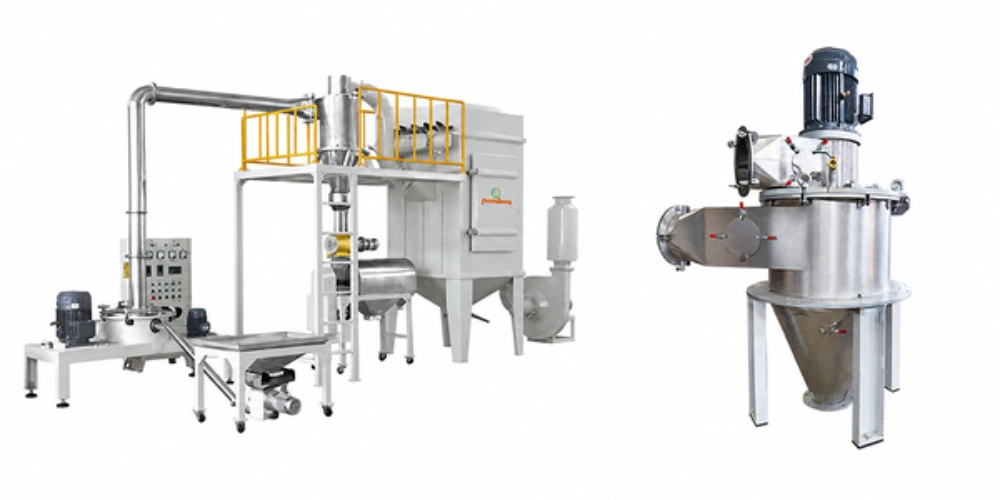
Yantai Jatchen Powder Coating Processing Equipment Co., Ltd. supplies grinding and particle-size-control equipment for powder coating production. Its product center includes ACM and ICM grinding systems for different production requirements. These systems show why industrial powder grinding is more than simple crushing: grinding, classification, airflow, and finished-powder collection all work together.
What Is the Practical Difference Between a Grinder and a Grinding Mill?
The simplest difference is process scope.
| Question | Grinder | Grinding Mill / Grinding System |
|---|---|---|
| Primary job | Break material into smaller pieces | Reduce size and control the accepted particle range |
| Typical process scope | One size-reduction step | Grinding, classification, separation, and collection |
| Best fit in powder coating | Coarse or auxiliary crushing | Final powder production |
| Main buying concern | Breaking ability and feed size | Particle-size distribution, qualified output, recovery, and cleaning |
Industrial terminology can overlap, so the equipment name alone should not decide the purchase. A machine called a grinder may perform only one crushing step, while a powder coating grinding mill normally needs to control which particles leave the system as qualified product.
A Grinder Mainly Changes Particle Size
A grinder focuses on reducing the physical size of the feed material. Impact, shearing, friction, and crushing forces break larger pieces into smaller particles.
This may be enough for coarse preparation or intermediate crushing. However, it does not automatically mean the finished powder has a controlled upper particle-size limit or a narrow distribution.
A Grinding Mill Also Controls Which Particles Become Finished Powder
A grinding mill for powder coating production normally combines grinding with classification. Buyers can learn more about how a grinding mill works before comparing classification, airflow, and particle-size control. After particles are reduced in size, airflow and the classifier separate material according to the operating conditions.
Particles that meet the target range continue toward collection. Material outside the accepted range is separated rather than being treated automatically as finished product.
This is why buyers comparing the main types of grinding mills should look at classification, airflow, particle-size distribution, and recovery instead of only motor power or grinding speed.
Why Does Powder Coating Need Particle Classification After Grinding?
Grinding makes cooled chips smaller, but classification determines which fraction becomes useful powder.
Cooled Extrudate First Has to Be Reduced from Chips to Fine Powder
After the powder coating formula is mixed and extruded, the molten material is cooled and pressed into sheet-like material. It is then crushed into smaller chips before entering the grinding stage.
Inside the grinding chamber, the chips are subjected to impact, grinding, and shearing. This creates fine particles, but the material leaving the chamber does not automatically have one uniform size.
Air Classification Separates Qualified Powder from Out-of-Range Particles
The classifier works with the process airflow to separate particles according to the selected operating conditions. Classifier speed and airflow affect the particle range that passes through the system.
This makes particle classification a separate control step rather than just an extension of crushing. For powder coating buyers, the important question is not only “Can this machine grind the chips?” but also “Can the system repeatedly produce the particle-size distribution my application needs?”
Fine-Powder Handling Affects Recovery and Final Yield
Too much ultra-fine material can reduce usable yield and change powder behavior. Oversize particles can also interfere with spraying or create a less consistent finished coating.
Jatchen lists a recovery rate of at least 97% for its ACM grinding system. Its Classifier Cyclone PSD Optimization System is designed to reduce ultra-fine powder while providing adjustable cutting accuracy.
The company’s powder coating process information also refers to a D97 production range of 40-100 μm. This illustrates why particle-size control belongs in the grinding-system decision rather than being treated as a later quality check.
How Do Industrial Grinding Systems Combine Size Reduction and Classification?
A complete grinding system normally combines several functions instead of relying on one chamber alone.
Grinding Provides the Initial Size Reduction
High-speed moving components subject the cooled material to impact, grinding, and shearing. The design of the grinding chamber, rotor, impact elements, and airflow affects how efficiently the chips are reduced.
The objective is to create particles small enough for the classifier to separate efficiently without generating unnecessary heat or excessive fines.
Classification Defines the Accepted Particle Range
After size reduction, the classifier separates powder according to the selected operating conditions.
Jatchen’s ACM and ICM classifiers both list adjustable speeds from 0 to 2800 rpm. These figures are useful comparison points, but classifier speed should not be treated as an isolated performance guarantee. It works together with airflow, feed characteristics, and grinding conditions.
Separation and Collection Complete the Grinding Process
A powder coating grinding system may also include cyclone separation, sifting, fine-powder collection, and downstream weighing.
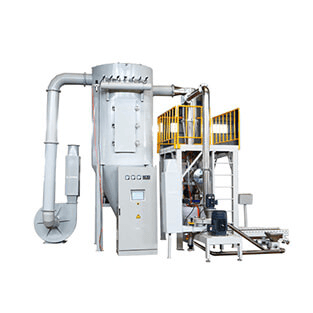
Jatchen’s ACM GRINDING SYSTEM combines high-speed grinding, air classification, cyclone separation, sifting, and fine-powder collection. This gives buyers a practical example of how a grinding mill extends beyond simple particle breaking.
Where Do ACM and ICM Fit in Powder Coating Grinding?
ACM and ICM are two examples of industrial grinding systems, but they should not be treated as the definition of grinder versus mill.
The ACM system is positioned as an integrated grinding and air-classification route with cyclone separation, sifting, fine-powder collection, recipe management, and optional particle-size optimization.
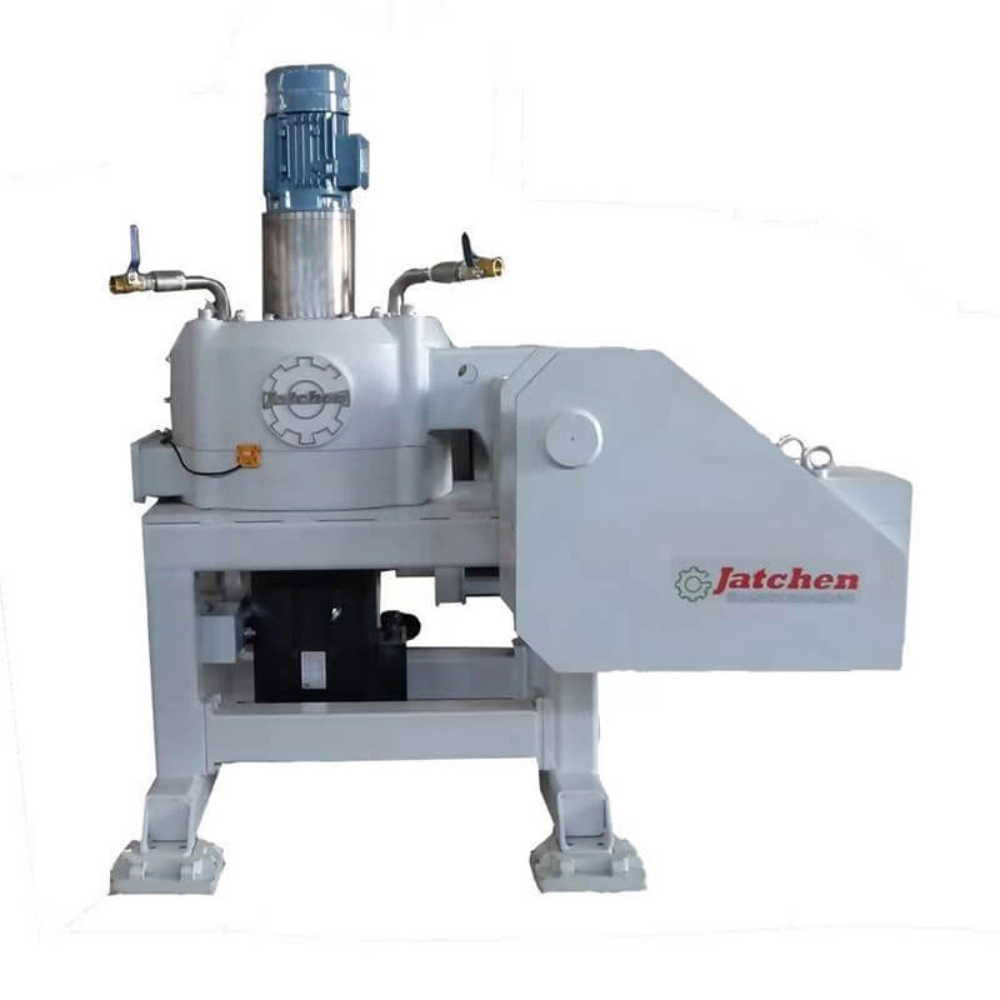
The ICM system is positioned as a compact fine-crushing system for brittle materials. Jatchen highlights a precise upper particle-size limit, steep particle-size distribution, direct drive, low vibration, low noise, and suitability for temperature-sensitive materials.
If your purchasing decision is specifically between these two systems, the dedicated guide on ACM vs ICM grinding systems gives that comparison in more detail. In this article, the key point is that both are examples of systems where size reduction and classification need to work together.
What Should You Check Before Buying a Powder Coating Grinding Mill?
Feed Form and Target Particle-Size Distribution
Start with the actual feed entering the system. In powder coating production, this normally means cooled and crushed extrudate.
Then define the finished particle-size requirement. Discuss the accepted range, upper limit, fines, oversize, and how classifier settings will be adjusted for the intended formula.
Different formulas may respond differently to grinding because brittleness, heat sensitivity, resin type, and filler content can change the operating window.
Classifier Speed, Airflow, Recovery, and Qualified Output
Do not compare grinding systems only by feed capacity.
Ask for the expected qualified output for your formula, proposed classifier operating range, airflow, recovery, and fine-powder handling method. A machine may process a large amount of feed while producing less qualified finished powder than expected.
The better comparison is not simply a machine’s kg/h rating. It is the relationship between feed input, grinding, classification, and qualified finished-powder output.
Cleaning Access, Wear, and Full-Line Capacity
Frequent color changes make cleaning an important production issue. Grinding chambers, classifiers, cyclones, pipes, sieves, and collection points can all retain residual powder.
Wear also matters because changes in grinding surfaces may gradually affect particle behavior.
Finally, compare the grinding mill with the cooling equipment before it and weighing or packing equipment after it. A high-output mill that waits for cooled material or overloads downstream packing does not improve the complete line.
For a broader production-line view, Jatchen’s solution center shows how grinding equipment fits with mixing, extrusion, cooling, and other process stages.
When Should You Search for a Grinder, Grinding Mill, or Grinding System?
Use grinder when your requirement is mainly coarse or basic size reduction.
Use grinding mill when you are evaluating final powder production where particle-size distribution and classification matter.
Use grinding system when the requirement includes the complete route of grinding, airflow, classification, cyclone separation, sifting, fine-powder handling, and collection.
This distinction helps buyers search for equipment according to process scope instead of assuming that every machine using the word “grinder” or “mill” performs the same job.
Conclusion
The main difference between a grinder and a grinding mill in powder coating production is not simply the machine name. It is the amount of process control around particle size.
A grinder mainly reduces material size. A grinding mill or grinding system reduces size and then controls which particles become qualified finished powder through classification, airflow, separation, and collection.
For powder coating buyers, the most useful comparison points are target particle-size distribution, qualified output, classifier control, recovery, fine-powder handling, cleaning access, and full-line capacity.
Jatchen’s ACM and ICM systems are practical examples of classified grinding equipment, but the purchasing decision should begin with your finished-powder requirement rather than choosing between machine names first. If you are planning a new grinding section or upgrading an existing line, you can review Jatchen’s product range or contact the company with your formula, target particle size, output requirement, and current line configuration.
FAQ
Is a Grinder the Same as a Grinding Mill?
No. The terms can overlap, but a grinder normally emphasizes size reduction, while a grinding mill may also include classification, airflow, separation, and product collection.
Why Does Powder Coating Need Classification After Grinding?
Grinding creates particles of different sizes. Classification separates powder so only material within the required particle-size range continues as qualified product.
What Does a Powder Coating Grinding System Include?
A complete system may include grinding, air classification, cyclone separation, sifting, fine-powder collection, and weighing or downstream handling.
What Should I Compare Besides Grinding Mill Output?
Compare target particle-size distribution, classifier control, airflow, recovery, fines, cleaning access, wear points, and how the mill matches cooling and packing capacity.
Where Do ACM and ICM Fit in This Process?
Both are examples of grinding systems that combine size reduction with particle-size control. ACM emphasizes an integrated grinding and classification route, while ICM emphasizes compact fine crushing and controlled upper particle size.


