

How to Choose the Right Container Mixer for Powder Coating?
How to Choose the Right Container Mixer for Powder Coating?
To choose the right container mixer for powder coating, match output per tank to the extruder, then compare color-change frequency, cleaning method, workshop height, automation, and dust control. The best mixer is not the largest model. It is the one that prepares a homogeneous premix without forcing extra batches, long waits, or difficult cleaning into the production schedule.
This selection order prevents a common purchasing mistake: choosing by tank volume before checking the rest of the line. The mixer must combine resin, curing agent, pigments, fillers, and additives before the material enters the low-shear twin screw extrusion stage, so its real value depends on both premix quality and downstream fit.
What Should a Container Mixer Do Before Extrusion?
Produce a Repeatable Premix
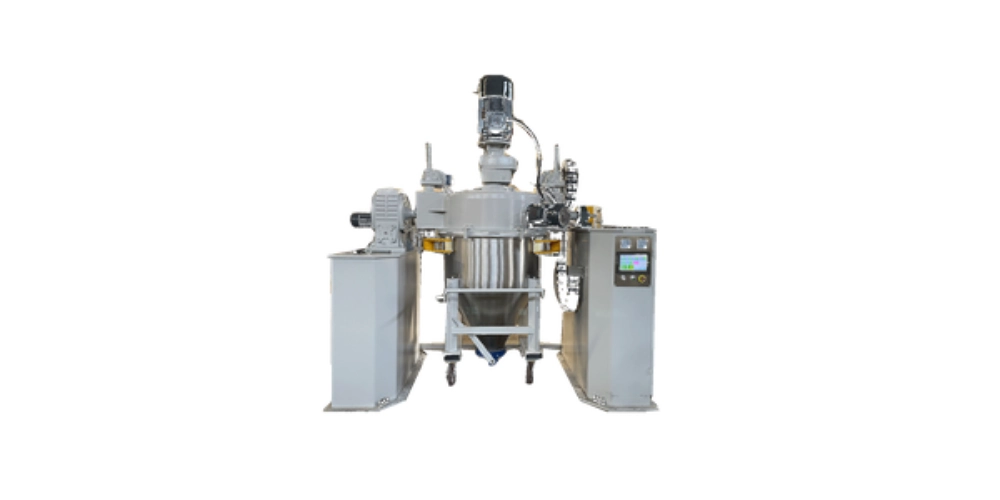
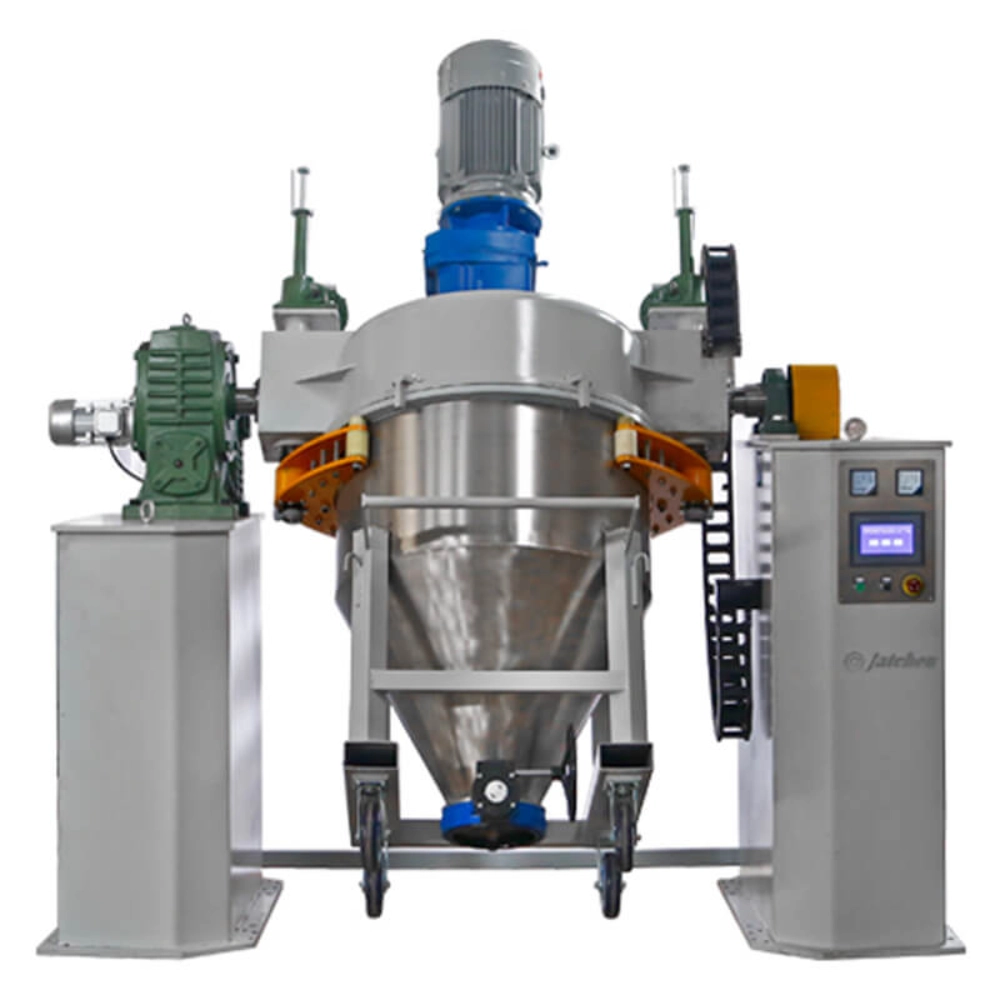
A container mixer for powder coating should distribute solid ingredients evenly before melt mixing. Jatchen’s AUTOMATIC CONTAINER MIXER lifts the trolley, connects it tightly to the mixing head, mixes during tilting, and returns the container after the cycle. PLC/HMI control keeps mixing time and machine actions consistent between batches.
Feed the Extruder at a Steady Rhythm
Mixer output is rated per tank, while extruder output is rated per hour. Convert both to the same hourly basis. Include filling, mixing, discharge, trolley exchange, and cleaning time. The line should have enough prepared material to feed the extruder without creating surges or long idle periods.
Support the Real Cleaning and Color-Change Routine
Multiple trolleys allow one container to be cleaned offline while another supports production. This matters when colors change often. Review the applications of containerized powder mixers against your own batch schedule instead of treating quick cleaning as a general promise.
Which Production Problems Should the Mixer Solve?
Too Much Manual Material Handling
Repeated lifting and transfer add work around every batch. Automatic lifting and tilting organize the movement from filling to mixing and return. The trolley still needs a clear route and safe access, so automation must be checked together with the workshop layout.
Powder Leakage and Difficult Cleanup
Escaped powder wastes material and extends cleaning. The CM series uses double shaft seals and a sealed, leak-proof connection at the mixing section. Automatic dust vacuum supports lower-dust operation, but the full line still needs planned collection at mixing, grinding, and packing points.
Batch Settings Change Between Operators
PLC/HMI control gives operators a repeatable base for time and machine actions. It does not correct a poor formula or wrong batch size, but it reduces random operating changes when several shifts run the same product. Keep the approved recipe, fill level, sequence, and inspection points consistent.
How Does a Container Mixer Compare with Other Powder Coating Mixers?
CM Versus High Speed Mixer
An HLJ high speed mixer combines mixing with active crushing of coarse or lumpy components. A CM container mixer is stronger when movable trolleys, automatic lifting, large repeatable batches, and offline cleaning are more important. The high speed powder mixer guide is useful when material condition is the main decision point.
CM Versus Twin Cone Blender
A twin cone blender suits finished powder remixing and other gentle blending duties. Its rotating container, smooth stainless-steel interior, and sealed butterfly discharge support cleaning and low dust. For active raw material premixing before extrusion, the CM design usually fits better because it combines container movement with a dedicated mixing head.
CM Versus a Lab Mixer
A lab mixer handles 1-5 kg per batch for formula and process trials. It is not a production-capacity substitute. Use lab results to confirm the formula, then select a production mixer by tank output, filling behavior, cleaning, and downstream line capacity.
What Selection Factors Matter Most Before Purchase?
Match CM Model Output to Daily Production
Jatchen CM300, CM600, CM1000, and CM2000 models have listed outputs of 150, 300, 500, and 1000 kg per tank. Typical mixing time is 3-5 minutes, but the real cycle also includes loading, connection, return, discharge, and trolley handling. Use daily qualified output divided by effective hours as the baseline, then calculate the number of complete mixer cycles needed each hour.
| Production Condition | Selection Direction | Reason |
| Frequent color changes | CM with multiple trolleys | Allows offline cleaning and keeps the mixing head available |
| Coarse or lumpy raw material | Compare CM with HLJ | Active crushing may be more important than container movement |
| Small formula trials | Lab mixer | Production-size equipment is unnecessary for 1-5 kg tests |
| Large repeat batches | Larger CM model after line check | Tank output must still match extrusion and cooling capacity |
Check Height, Trolley Routes, and Utilities
Allow space for lifting, tilting, trolley movement, operator access, and offline cleaning. A complete powder coating line normally needs at least 4.5 m of plant height, while the grinding area normally needs at least 5 m. Confirm power, dust collection, cooling-water needs for selected options, and the transfer route to the extruder before the workshop drawing is fixed.
Ask the Supplier to Prove Full-Line Compatibility
Prepare formula type, output per tank, daily output, color-change frequency, cleaning routine, plant dimensions, and extruder capacity. Then compare the full Jatchen product range and ask how the AUTOMATIC CONTAINER MIXER will connect to feeding, low-shear extrusion, cooling, grinding, and packing. A complete answer should explain material flow, control points, access, and service.
Conclusion
Choose a container mixer by the production problems it must solve. Tank output, batch rhythm, color changes, offline cleaning, automatic lifting, PLC/HMI control, sealed handling, and low-dust operation should all fit the extruder and the rest of the line. A larger tank is useful only when downstream equipment and the workshop can support its real cycle.
Yantai Jatchen Powder Coating Processing Equipment Co., Ltd. can support model matching, plant layout, installation, training, spare parts, and line upgrades. Review Jatchen service and send the required production details through the contact page before final selection.
FAQ
How Do I Choose the Right Container Mixer for Powder Coating?
Match output per tank to effective hourly production, then compare cleaning, color changes, automation, workshop height, trolley access, dust control, and downstream extruder capacity.
Is a Larger Container Mixer Always Better?
No. Oversizing can waste floor space and create poor batch rhythm. Select the smallest model that can feed the line reliably after loading, discharge, and cleaning time are included.
When Is a CM Mixer Better Than an HLJ Mixer?
CM is usually better when large batches, frequent color changes, movable trolleys, and offline cleaning matter. HLJ may fit better when active crushing of coarse raw material is required.
Can a Container Mixer Support Lower-Dust Production?
Yes. Double shaft seals, a tight connection to the mixing head, and automatic dust vacuum reduce escaped powder at premixing. The surrounding line still needs suitable dust collection.
What Information Should I Send Before Model Selection?
Send formula type, target kilograms per tank, daily output, color-change frequency, cleaning routine, plant height, available utilities, and downstream extruder capacity.


