

Can a Container Mixer Be Integrated with Other Powder Coating Equipment? A Full-Line Compatibility Guide
Can a Container Mixer Be Integrated with Other Powder Coating Equipment? A Full-Line Compatibility Guide
Yes. A container mixer can work with raw material feeding, extrusion, cooling, grinding, classification, weighing, and packing equipment. Reliable integration depends on material transfer, capacity balance, control signals, cleaning access, and workshop layout. Machines placed beside one another are not automatically a working production line.
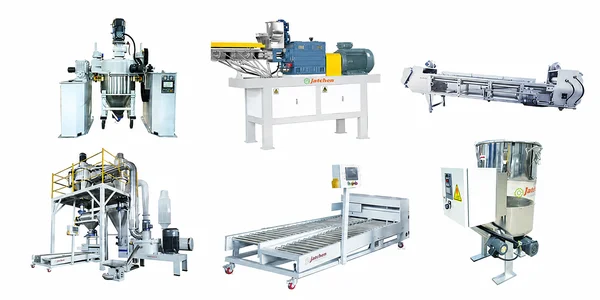
Yantai Jatchen Powder Coating Processing Equipment Co., Ltd. develops powder coating production equipment and complete line plans for domestic manufacturers. Its range covers mixing, twin screw extrusion, cooling, grinding, particle size control, and automatic weighing. The company can match equipment to your formula, output target, workshop size, and color-change routine. The Mixer-AUTOMATIC CONTAINER MIXER uses movable containers, PLC and HMI control, double shaft seals, automatic dust vacuum, and four available batch sizes.
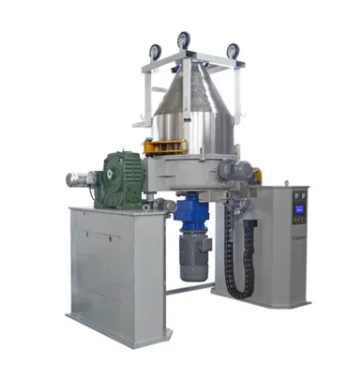
Can a Container Mixer Fit into a Complete Powder Coating Production Line?
The mixer sits near the start, so its performance affects every machine that follows. First place it in the full process, then decide how it will connect.
Where the Mixer Sits in the Production Process
The normal route is raw material preparation, mixing, extrusion, cooling and crushing, grinding and classification, sieving, weighing, and packing. The container mixer for powder coating prepares resin, curing agent, pigment, filler, and additives in the required ratio before extrusion.
Why Stable Pre-Mixing Supports Later Equipment
Uneven premixing creates local differences in pigment, filler, or additive content. The extruder then receives an inconsistent batch. A more even premix supports steadier feeding, cooling, and grinding. A powder coating mixer should therefore be judged by its effect on the whole line.
What Full-Line Compatibility Requires
Full-line compatibility covers outlet height, transfer method, hourly capacity, PLC communication, dust control, cleaning access, safety interlocks, and floor space. It must also define what happens when a hopper is full or a downstream machine stops.
Which Powder Coating Equipment Can Work with a Container Mixer?
Some machines connect directly with the mixer. Others follow later in the same process. Plan them by following the material from weighing to packing.
Raw Material Feeding and Additive Dosing Equipment
Upstream equipment may include weighing stations, vacuum loading, controlled feeders, and additive dosing devices. These systems place each ingredient into the container. The mixer distributes them, but it cannot correct a wrong ratio.
Twin Screw Extruders and Controlled Feeding Systems
The mixer works by batch, while the twin screw extruder needs a controlled supply. A trolley, buffer hopper, screw feeder, or enclosed conveying system can turn fast batch discharge into steady feeding.
The company’s powder coating line solutions show these stages planned as one route.
Cooling, Grinding, Classification, Weighing, and Packing
After extrusion, the material enters a cooling belt or compact roller, becomes chips, and moves to an ACM or ICM grinding system. Classification separates the target powder, followed by weighing and packing. These machines still depend on mixer timing and batch consistency.
How Can Material Transfer Avoid Production Bottlenecks?
Many line problems begin at the transfer point. Poor outlet height, limited trolley access, or a difficult cleaning area can slow production even when the mixer itself works well.
Match the Discharge Height with the Receiving Point
Check the mixer outlet, hopper inlet, trolley lifting range, ceiling height, floor space, and maintenance area before approving the layout. Use gravity transfer where possible. If the building does not allow it, consider trolley, vacuum, or screw transfer.
Use Trolleys, Buffer Hoppers, or Enclosed Conveying
A buffer hopper can hold one batch and feed the extruder at a controlled rate. Movable trolleys let one container enter production while another is loaded or cleaned. This setup separates preparation, mixing, waiting, and cleaning.
Keep the Transfer Route Easy to Clean
Sleeves, hoppers, feeders, and pipes can retain powder. Plan the mixer outlet and extruder feeder as one cleaning path. Enclosed connections reduce loose dust, while removable parts and reachable corners help shorten color changes.
How Do PLC and HMI Controls Keep the Line in Step?
Mechanical parts move material, while control logic decides when movement starts and stops.
Build a Clear Automatic Mixing Sequence
The PLC can manage lifting, position confirmation, tilting, mixing, crushing, timing, discharge, and return. The receiving hopper should confirm available space before the mixer discharges, which prevents overflow and repeated manual checks.
Use Interlocks Between Connected Machines
Useful signals include run, stop, ready, high level, discharge permission, and safety-door status. A full hopper can block discharge, while a stopped feeder can pause transfer. Simple interlocks keep connected equipment in the correct order.
Store Recipes and Batch Records
The HMI can store mixing time, sequence, speed settings, and discharge steps. Operators can call the correct recipe instead of entering each value again, while batch records help compare shifts.
How Should Mixer Capacity Match the Rest of the Line?
Mixer output is normally stated per tank, while extrusion, cooling, and grinding are stated per hour. Convert that difference before selecting a model.
Compare Batch Output with Hourly Consumption
Do not calculate capacity from the 3–5 minute mixing time alone. Include loading, lifting, positioning, discharge, trolley replacement, inspection, and cleaning. Multiply batch weight by completed batches per hour, then compare the result with the real extruder feed rate.
Avoid Material Starvation and Excess Premix
An undersized mixer leaves the extruder waiting. An oversized mixer creates excess premix, more work-in-process, and greater loss if a formula is wrong. A suitable buffer should cover short timing gaps without becoming permanent storage.
Select a CM Model Around the Full Line
CM300 produces 150 kg per tank, CM600 produces 300 kg, CM1000 produces 500 kg, and CM2000 produces 1,000 kg. All use PLC control and have a stated mixing time of 3–5 minutes.
The best choice depends on formula density, output, color-change frequency, downstream capacity, and space. These factors also affect the overall powder coating machine setup cost, including equipment capacity, material transfer, automation, and workshop installation. The wider powder coating equipment range helps you compare the mixer with the machines that will receive each batch.
Why Is the Mixer – AUTOMATIC CONTAINER MIXER Suitable for Integration?
Its movable-container design supports repeated batch work, cleaner changeovers, and easier coordination with downstream equipment.
Combined Tilting and Mixing Improve Batch Uniformity
The loaded trolley is lifted and connected with the mixing section. The container tilts while the internal parts mix and crush the materials. This keeps resin, pigment, filler, curing agent, and additives moving through the batch before extrusion.
Multi-Trolley Operation Reduces Waiting Time
Several trolleys can support loading, mixing, standby, and cleaning at once. Double shaft seals reduce leakage and residue, while automatic dust vacuum keeps the area cleaner.
These features make the PLC-controlled automatic container mixer useful for frequent production and color changes.
Four Models Cover Different Production Scales
The CM series ranges from 300 L to 2,000 L and 150 kg to 1,000 kg per tank. You can match a domestic line without buying unnecessary capacity and still leave room for expansion.
How Can Yantai Jatchen Support a Reliable Integration Project?
A sound project starts with production data. The supplier needs the material route before recommending one machine.
Turn Equipment Selection into a Line Plan
Yantai Jatchen Powder Coating Processing Equipment Co., Ltd. can review formula type, batch weight, target output, extruder rate, cooling method, grinding capacity, workshop layout, and cleaning routine. Its production cases and technical news center provide further reference.
Use Service for Installation and Later Support
Installation, electrical connection, trial operation, and operator training should follow the same line plan. The company’s equipment service supports use and later production needs, especially when a mixer is added to an existing line.
Contact the Company with Real Production Data
Prepare your formula type, bulk density, batch weight, output target, existing equipment list, workshop dimensions, power supply, and transfer method. Then use the contact page to request a compatibility review.
The main advantage of the Mixer – AUTOMATIC CONTAINER MIXER is how its movable containers, PLC control, sealed mixing, dust handling, and four batch sizes can be matched with a complete powder coating production line.
FAQ
Q1: Can a Container Mixer Feed a Twin Screw Extruder Directly?
A1: It can work with a twin screw extruder, but a buffer hopper, feeder, trolley, or enclosed conveying system is often used to provide a steady feed.
Q2: Can One Container Mixer Serve More Than One Production Line?
A2: It may be possible when mixer capacity, trolley quantity, transfer routes, cleaning needs, and production schedules are planned together.
Q3: Which CM Model Is Suitable for a Medium-Capacity Line?
A3: CM600 or CM1000 may fit many medium-capacity projects, but the final choice should follow actual batch weight and downstream hourly consumption.
Q4: Does Multi-Trolley Operation Help with Color Changes?
A4: Yes. Separate trolleys let operators prepare, mix, wait, and clean at different times, which can shorten production gaps between colors.
Q5: What Information Should You Provide Before Requesting a Line Plan?
A5: Provide your formula type, bulk density, target output, current machines, workshop size, color-change frequency, power supply, and preferred automation level.


