

How Air Cooling Belt Systems Improve Powder Coating Production Efficiency
How Air Cooling Belt Systems Improve Powder Coating Production Efficiency
In powder coating production, many factories pay close attention to the extruder, grinder, or final powder quality. That is normal. These machines are easy to notice because they directly affect output and particle size. But there is one stage that often decides whether the whole line runs smoothly: cooling after extrusion.
When hot melt material leaves the extruder, it cannot go straight into grinding. It needs to be spread, cooled, shaped, crushed, and prepared for the next process. If this stage is slow or unstable, the whole production line may lose rhythm.
This is where the right cooling belt matters.
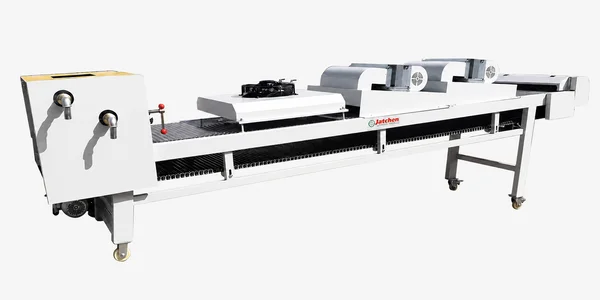
Yantai Jatchen Powder Coating Processing Equipment Co., Ltd. is a professional supplier of powder coating processing equipment, with practical experience in developing and manufacturing powder coating machines and lean production lines. The company focuses on safe, intelligent, efficient, low-energy equipment for powder coating manufacturers, and it can plan production lines based on real output needs, workshop layout, and process flow. Cooling Belt – AIR COOLING BELT is designed for factories that need a smoother cooling and sheeting stage. It cools extruded powder coating materials and prepares them for crushing and sieving.
Why Cooling After Extrusion Affects the Whole Line
Before choosing a cooling belt, you need to see this stage as part of the full production rhythm. It is not just a conveyor. It is the connection between extrusion and later size reduction.
Hot Melt Material Needs Stable Shaping
After extrusion, the material is still soft and not ready for crushing. It must be spread into a controlled layer and cooled until it becomes a shaped, rigid sheet.
If the material is not cooled well, it may stay uneven, soft in some areas, or difficult to break cleanly. This creates trouble later. Crushing becomes less stable, sieving becomes slower, and operators may need more time to handle blocked or irregular material.
Uneven Cooling Can Slow the Next Process
A powder coating line should move in a steady flow. When the cooling stage cannot match the extruder output, material starts to build up. Once that happens, the downstream process also waits.
This delay is not always obvious at first. You may only see lower output, more cleaning, or more manual work. But the cause may be simple: the material was not cooled and shaped in a way that supports smooth crushing.
A Good Cooling Belt Keeps the Process Moving
An air cooling belt helps keep the line moving because it combines feeding, conveying, cooling, and sheet preparation in one continuous stage.
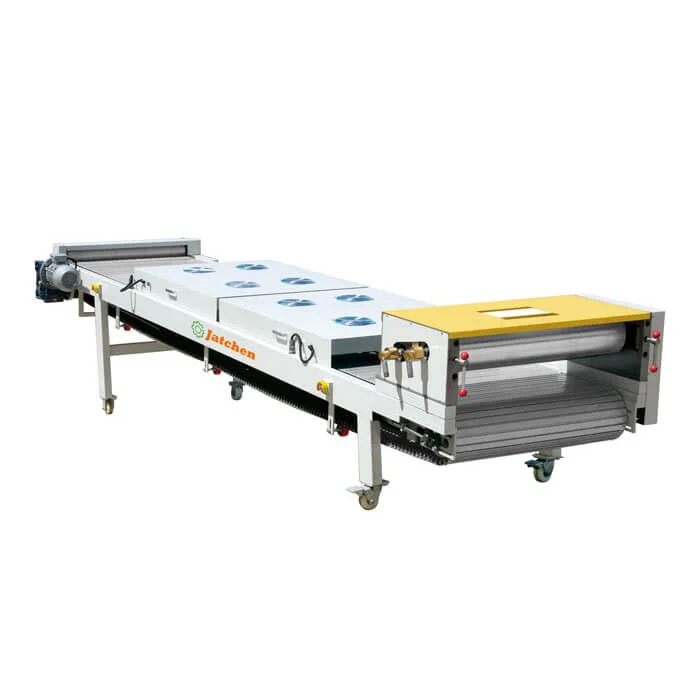
The air cooling belt system spreads molten powder coating material on the conveyor through a dedicated feeding device. Then cold air is blown onto the material as it moves forward. The goal is simple: make the material solid enough and shaped well enough for the next step.
How the AIR COOLING BELT Works in Powder Coating Production
The cooling conveyor working principle is easy to follow. Material leaves the extruder, enters the cooling belt, moves forward, cools, solidifies, and then goes to crushing and sieving. Each step must be stable. Each step must be stable.
Dedicated Feeding Helps Spread Material Evenly
The feeding device sends the molten material onto the belt surface. This matters because cooling starts from the way the material is spread.
If the layer is too thick in one place and too thin in another, cooling will not be even. A stable feeding structure helps form a more even sheet, which gives the following process a better starting point.
Multiple Air-Cooling Units Remove Temperature Faster
The equipment uses multiple air-cooling units. These units blow cold air onto the material while the conveyor carries it forward.
This design helps the material cool and solidify during movement, instead of sitting in one place. For a factory, this means less waiting and better continuity between extrusion and crushing.
Conveyor Movement Builds a Continuous Flow
The belt is not only moving material from one point to another. It controls the time that the material spends in the cooling area.
When belt speed, cooling force, and material thickness match well, the line becomes easier to manage. Operators do not need to stop and restart the process often. This is one reason air cooling belt systems are useful in practical powder coating production.
How It Improves Crushing and Sieving Efficiency
After cooling, the material needs to be broken and sieved. If the cooling stage is done poorly, these later steps become harder. If the sheet is stable, the downstream work becomes much easier.
Rigid Sheets Are Easier to Crush
A properly cooled sheet breaks more evenly. This helps the crushing device handle material with less fluctuation.
When the sheet is too soft, it may stick or deform. When it is too uneven, it may break into irregular pieces. A stable sheet reduces these problems and helps the crushing stage keep a smoother output.
Better Sheet Quality Helps Later Particle Preparation
The cooling belt does not replace grinding or classification. But it prepares material for them.
A well-shaped sheet gives the grinder a more consistent feed. That can help later particle size work become more predictable. If your factory wants better powder consistency, you cannot only look at the grinder. You also need to check what material enters the grinder.
Less Manual Handling Saves Time
Manual handling between processes often looks small, but it adds up fast. Every pause, adjustment, or transfer can lower line efficiency.
With a conveyor-based cooling belt, material moves through the cooling stage in a more controlled way. This reduces unnecessary handling and helps operators focus on process control instead of constant correction.
Why AIR COOLING BELT Is Suitable for Production Line Efficiency
For many powder coating factories, the real goal is not only faster cooling. The real goal is a more stable production line. The cooling belt helps by linking each process more smoothly.
It Fits the Stage After Twin Screw Extrusion
After extrusion, material has already gone through melting and mixing inside the extruder. At this point, it needs quick shaping and cooling before it can move to crushing.
The AIR COOLING BELT fits this exact position. It receives the extruded material, cools it, and turns it into sheets. This makes it a practical choice when you want the extrusion section and downstream section to work together instead of operating like separate islands.
It Supports Crushing and Sieving Instead of Replacing Them
This product should be seen as a process support machine. It does not do the work of a grinding system, and it does not control final particle size by itself.
Its value is earlier in the line. By preparing the material well, it helps the crushing and sieving stage run with fewer interruptions. That is often where production efficiency is won or lost.
It Works as Part of a Lean Production Layout
A good line layout should reduce repeated transfer, waiting time, and difficult cleaning points. A cooling belt can help with that because it creates a clear route from extrusion to the next stage.
If you are planning a new line or improving an old one, it is worth checking the full powder coating equipment product range instead of choosing each machine alone. The cooling belt should match output, belt width, cooling demand, and the capacity of downstream equipment.
How Buyers Should Choose an Air Cooling Belt
Choosing a cooling belt is not only about price. You need to match it with production needs. A belt that is too small becomes a bottleneck. A system that does not fit your layout creates extra work.
Match Belt Capacity with Extruder Output
The first thing to check is whether the cooling belt can keep up with the extruder. If the extruder produces faster than the belt can cool and move material, you will still face delays.
You should look at production output, belt width, belt length, and line speed. These details decide whether the whole line can run steadily.
Check Cooling Result and Sheet Condition
A good cooling result means the material becomes firm enough, shaped enough, and ready for the next process.
Do not only ask whether the machine can cool. Ask what kind of sheet it produces. Sheet thickness, shape stability, and surface condition all affect later crushing and sieving.
Consider Cleaning and Color Change Needs
Powder coating production often involves different colors and formulas. If the cooling belt is difficult to clean, every batch change costs more time.
You should choose a machine that supports practical operation in your workshop. For line planning, capacity matching, and process advice, the solution center can help you think through the equipment connection rather than only one machine.
Why This Product Is Worth Recommending
The value of Cooling Belt – AIR COOLING BELT is very clear: it handles the stage between extrusion and crushing, where many production lines quietly lose efficiency.
It Solves a Real Process Problem
This is not a decorative machine in the line. It solves the need to cool, solidify, and shape extruded material before the next process.
For factories that want stable powder coating production, this stage cannot be ignored. A better cooling belt can help reduce waiting, improve sheet preparation, and support a smoother production rhythm.
It Makes the Line Easier to Balance
Production efficiency comes from balance. The extruder, cooling belt, crusher, sieve, and grinder must work at a similar pace.
If one stage is weak, the whole line slows down. The AIR COOLING BELT helps improve the middle connection, so the line can move from hot melt material to crushable sheet in a cleaner way.
It Comes with Practical Service Support
A machine works better when it is selected for the right line. That means output, space, material flow, and downstream equipment should all be checked before purchase.
For factories that need product selection, equipment matching, or later support, the company provides service support and a direct contact channel for project discussion. You can also review real production references through the case center before planning your own line.
Conclusion
How Air Cooling Belt Systems Improve Powder Coating Production Efficiency is not a difficult question once you look at the full process. The cooling belt improves efficiency by making the stage after extrusion more stable. It spreads molten powder coating material, cools it with multiple air-cooling units, forms rigid sheets, and prepares the material for crushing and sieving.
The recommended product, Cooling Belt – AIR COOLING BELT, is a good fit when your production line needs smoother cooling, better sheet preparation, and a more stable connection between extrusion and downstream processing.
For a powder coating factory, this kind of equipment is not just about moving material. It helps protect the rhythm of the whole line. When the cooling stage runs well, the next stages become easier to manage. If you are planning a new powder coating production line or improving an existing one, it is worth checking this product together with the company’s full equipment and service support. For detailed selection help, you can visit the product page, check the service section, or contact the team for a suitable production solution.
FAQ
Q1: What does an air cooling belt do in powder coating production?
A1: An air cooling belt receives molten powder coating material after extrusion, spreads it on the conveyor, cools it with cold air, and forms rigid sheets for later crushing and sieving.
Q2: Why is the cooling stage important after extrusion?
A2: The material leaving the extruder is not ready for crushing. It needs stable cooling and shaping first. If this step is unstable, the next process may slow down or become harder to control.
Q3: Is Cooling Belt – AIR COOLING BELT a powder spraying machine?
A3: No. It is powder coating production equipment. It is used during manufacturing, after extrusion and before crushing and sieving.
Q4: Can an air cooling belt improve final powder consistency?
A4: It does not control final particle size directly, but it prepares a more stable sheet for crushing and later size processing. This can help the whole production line run more smoothly.
Q5: How should a buyer choose the right air cooling belt?
A5: You should check extruder output, belt width, cooling length, line speed, plant layout, sheet condition, and cleaning needs. The cooling belt should match the whole production line, not only one process.


