

What Materials Are Used in Powder Coating Cooling Belts? A Component-by-Component Guide
What Materials Are Used in Powder Coating Cooling Belts? A Component-by-Component Guide
Powder coating cooling belts are not made from one single material. A complete unit usually combines a smooth steel belt, cooling rollers, guide parts, a drive system, and a crusher. Air-cooled designs may use a stainless-steel slat-chain conveyor, while compact units can use a heat-resistant, antistatic artificial rubber belt.
Each material has a different job. The conveying surface carries hot material from the extruder. The rollers press it into a controlled sheet. The cooling structure removes heat, and the crusher turns the solid sheet into chips for grinding. When these materials and parts work well together, you get stable sheets, cleaner color changes, and more consistent feeding into the grinding system.
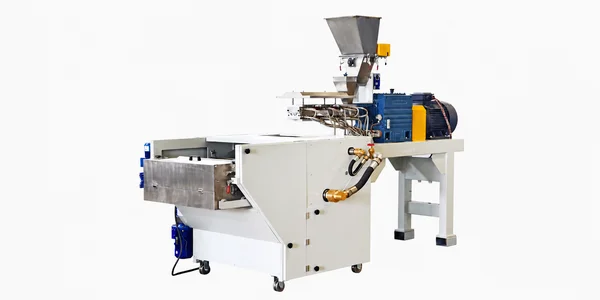
What Are Powder Coating Cooling Belts Made of?
The name “cooling belt” can make the equipment sound simple, but the actual structure contains several working surfaces. You need to judge the belt, rollers, guide system, crusher, and material-contact areas as one unit.
Steel Belt as the Main Contact Surface
A water cooling belt normally uses a steel belt as its main conveying and heat-transfer surface. The belt receives the hot compound from the extruder and carries it through the cooling section.
Steel gives you a flat and stable working surface. It also transfers heat from the sheet toward the cooling rollers and water system. A smooth surface helps the material release cleanly after solidification and leaves less residue during color changes.
Cooling Rollers and Guide Parts
Cooling rollers press the extruded compound into a sheet with a controlled thickness. Their surfaces need to remain smooth because scratches, wear, or poor alignment can affect sheet formation.
Guide parts keep the belt moving in the correct position. Without stable guidance, the belt may move sideways, sheet thickness can change across the width, and material may build up near the edges.
Crusher and Supporting Components
After cooling, the sheet enters a crusher. Crusher teeth and pins need enough strength and wear resistance to break the sheet continuously without creating unstable material flow.
Bearings, shafts, frames, and drive parts do not directly determine the coating formula, but they keep the whole process steady. A weak supporting structure can cause vibration, irregular movement, and uneven feeding into the next stage.
Why Does Material Choice Change Cooling Results?
Material selection affects more than equipment life. It changes how quickly the sheet cools, how easily it releases, and how consistently it reaches the grinding system.
Heat Transfer and Sheet Solidification
The hot compound leaves the extruder in a soft state. It must lose enough heat before it reaches the crusher. Steel works well because it provides a continuous surface between the material and the cooling structure.
The cooling rate also depends on belt speed, sheet thickness, water temperature, roller contact, and incoming output. A good belt material cannot solve an oversized process load by itself, so the full cooling capacity must match your production target.
Surface Flatness and Clean Release
A flat belt supports an even sheet. If one area is thicker than another, the thicker section may remain soft while the thinner section has already solidified.
This difference can cause sticking, irregular crushing, and fluctuating grinder feed. A smooth contact surface also makes residue easier to remove. That matters when you switch from a dark color to a light one.
Wear, Cleaning, and Color Change
Frequent production changes place extra pressure on the contact surfaces. Residue can remain near belt edges, rollers, guide parts, and the crusher inlet.
You should look for smooth surfaces, accessible cleaning points, and parts that can be removed without taking apart the whole machine. These details often save more production time than a small increase in nominal output.
Why Is the Water Cooling Belt the Main Recommendation?
For continuous powder coating production, the Cooling Belt – WATER COOLING BELT is the main configuration to consider when you need strong cooling and stable sheet formation.
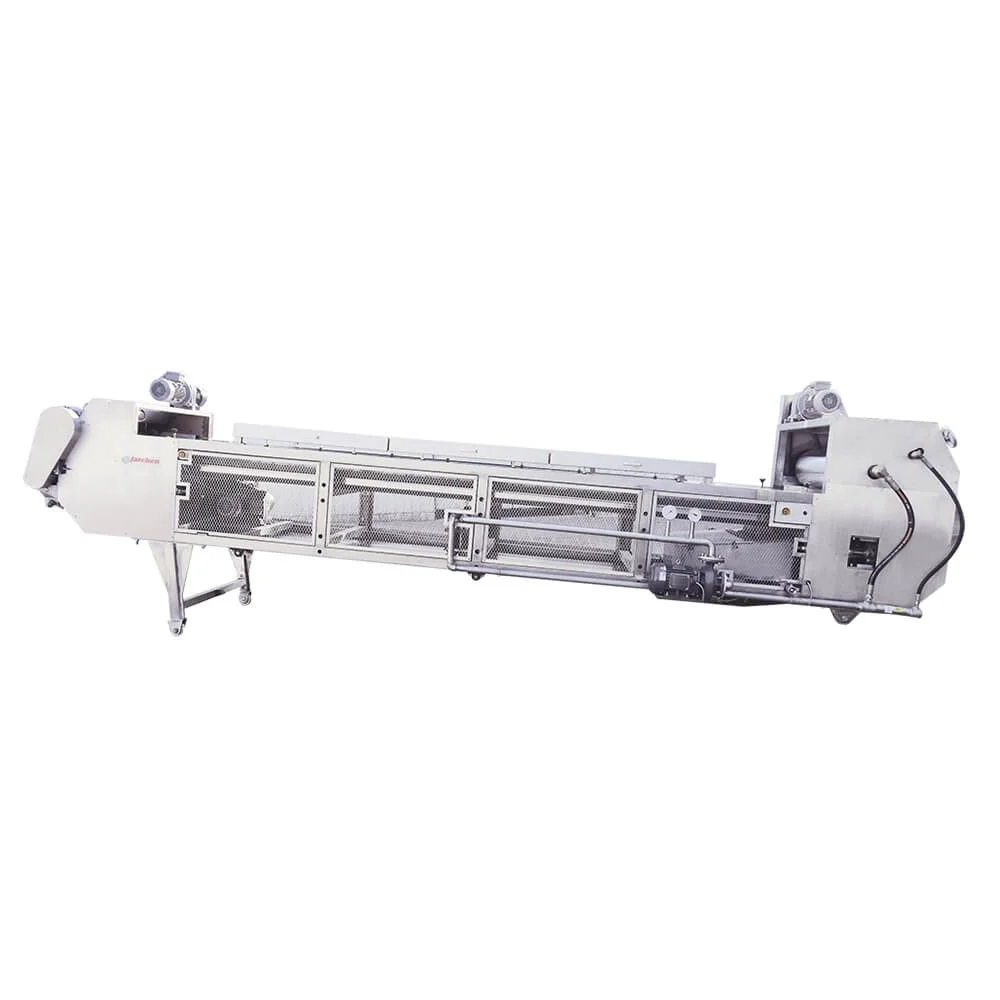
Continuous Cooling from Extrusion to Crushing
The process starts when hot material enters from the extruder. Cooling rollers press it into a thin sheet, and the running steel belt carries it through the water-assisted cooling section.
Once the sheet becomes solid, the crusher breaks it into chips. These chips are easier to feed into a grinding system than large blocks or partly cooled material. The full process remains continuous, so you do not need to stop between extrusion, cooling, and crushing.
Output Range and Line Matching
The GDJ series is available in several production capacities to match different powder coating lines. The GDJ406 handles 200–400 kg/h, while the GDJ410 supports 400–500 kg/h. For higher output, the GDJ510 covers 500–700 kg/h, the GDJ612 reaches 700–900 kg/h, and the GDJ712 is designed for production levels of 900–1200 kg/h.
The model should match the sustainable output of your extruder. Choosing a much larger cooling belt does not automatically improve quality, while choosing one that is too small creates a clear bottleneck. You also need to check whether the crusher and grinding system can process the cooled material at the same rate.
Practical Equipment Support
Yantai Jatchen Powder Coating Processing Equipment Co., Ltd. supplies powder coating production equipment for domestic plants. Its product range covers mixing, extrusion, cooling, grinding, particle-size control, weighing, and laboratory work.
The company’s value is not limited to supplying one machine. A cooling belt has to fit the extruder output, available floor space, required sheet thickness, crusher load, and downstream grinder. Its powder coating production equipment range allows those parts to be considered together instead of being purchased as isolated units.
This approach is useful when you are expanding an existing line or building a new one. You can compare equipment capacities before installation and avoid a situation where one slow section limits the whole process.
How Do Water Cooling, Air Cooling, and Compact Roller Designs Compare?
The main materials change with the cooling method. No design is automatically right for every workshop. Your choice should follow the available utilities, required output, floor space, and cleaning routine.
Water Cooling Belt for Strong Cooling Demand
The Water Cooling Belt uses a steel conveying surface, cooling rollers, a water cooling system, guide parts, and an integrated crusher. Belt speed and sheet thickness can be adjusted to suit different production conditions.
This configuration is suitable when you need continuous processing at medium or high output. The steel surface also gives you a clear advantage when flat sheets, steady cooling, and easier cleaning are important.
The water-assisted structure removes heat quickly, which helps the material become firm before crushing. This reduces soft chips, sticking, and irregular feeding into the grinding system.
Air Cooling Belt Where Water Circulation Is Limited
The Cooling Belt – AIR COOLING BELT uses cooling-sheeting rollers, a stainless-steel slat-chain conveying structure, air-cooling units, and a crusher.
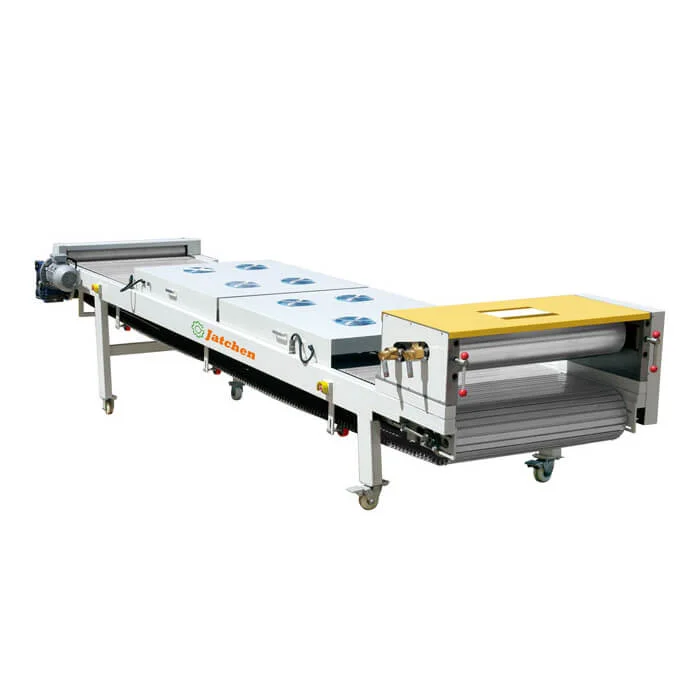
It is useful when you prefer an air-based cooling arrangement or do not want to depend heavily on a water circulation system. Its model range covers roughly 30–1000 kg/h, but the actual result still depends on the formula, sheet thickness, air volume, and conveyor speed.
Air cooling may require a longer cooling path or careful airflow adjustment. You should compare the available workshop area with the cooling time your material needs.
Compact Roller for Limited Floor Space
The Cooling Belt – COMPACT ROLLER combines a large cooling roller, cooling drum, artificial rubber conveyor, and crusher in a shorter structure.
Its conveyor uses heat-resistant, antistatic artificial rubber. This flexible material runs around the compact roller arrangement more easily than a long steel belt. The CR series covers about 250–1000 kg/h and suits workshops where floor space is tight.
A compact structure can reduce line length, but you still need enough access for roller adjustment, cleaning, and maintenance. The shorter footprint should not come at the cost of poor operator access.
How Should You Match Materials to Your Production Needs?
A material list helps, but your final choice should start with the actual production line. The same cooling structure may perform differently when the formula, output, or sheet thickness changes.
Match the Surface to the Formula
Check how the extruded compound behaves when it reaches the cooling section. Some materials release easily, while others need more careful control of sheet thickness, roller pressure, and belt speed.
You should also consider the incoming material temperature, viscosity, tendency to stick, and required cooling time. A setting that works for one formula may not work for another.
If the sheet remains soft at the crusher inlet, you may need more cooling time, a thinner sheet, a slower belt speed, or a cooling unit with greater capacity.
Match Cooling Capacity to the Whole Line
The cooling system should sit between the extruder and grinder without slowing either one down. If the extruder produces 700 kg/h but the cooling section can only handle 500 kg/h, material will accumulate or leave the belt before it is ready.
The grinder also needs to process the resulting chips at the same rhythm. The Solution Center is useful when you need to compare complete line configurations rather than one machine specification.
A balanced line usually gives you more reliable daily output than a line built around one oversized machine. Each section should support the same realistic production target.
Match the Design to Space and Cleaning Work
A long water cooling belt needs enough floor space and a suitable water system. An air cooling belt needs enough airflow and room for the cooling units. A compact roller reduces equipment length but still requires safe access for cleaning and maintenance.
Color-change frequency matters as well. When you change formulas often, smooth contact surfaces and easy access can be more valuable than a small output difference.
You should also check the belt edges, roller surfaces, guide areas, and crusher inlet. These are common places where residue can remain after production.
Why Does the Right Cooling Belt Matter to Your Production Line?
The correct material combination keeps the production line moving steadily from extrusion to grinding. It also reduces the small problems that often take up the most time.
Stable Sheets Support Stable Grinding
A fully cooled sheet breaks more cleanly and enters the grinder at a more consistent rate. This reduces soft material, oversized pieces, and unstable feeding.
For lines that need strong cooling, controlled sheet thickness, and continuous output, the Water Cooling Belt is the primary product to evaluate. Air Cooling Belt and Compact Roller remain practical alternatives when utilities or floor space point in another direction.
The cooling stage should prepare the material for grinding rather than simply reduce its temperature. Good sheet formation makes the next process easier and more predictable.
Service Based on Real Production Conditions
Equipment selection should start with your formula, planned kg/h output, extruder model, available workshop area, and preferred cooling method.
The company’s service support can help you review those details and match the cooling section with the rest of the powder coating production line. Existing project cases can also help you compare layouts and production levels.
Yantai Jatchen Powder Coating Processing Equipment Co., Ltd. can recommend the Water Cooling Belt as the main option when rapid cooling and steady sheet formation are the priority. It can also compare the Air Cooling Belt and Compact Roller when your water supply, space, or line arrangement requires a different design.
Contact for a Matched Cooling Configuration
A cooling belt should not be selected from belt width alone. Roller size, cooling length, sheet thickness, crusher structure, and downstream capacity all matter.
You can use the company’s contact page to provide your target output, current equipment, formula conditions, and workshop dimensions. That information makes it easier to recommend a practical Water Cooling Belt, Air Cooling Belt, or Compact Roller configuration.
FAQ
Q1: What Is the Main Material Used in a Powder Coating Water Cooling Belt?
A1: The main conveying and material-contact surface is usually a smooth steel belt. It carries the hot compound, transfers heat toward the cooling system, and supports stable sheet formation.
Q2: Why Is Steel Suitable for a Water Cooling Belt?
A2: Steel provides good flatness, stable movement, practical heat transfer, and a surface that is easier to clean than many softer conveyor materials.
Q3: Does an Air Cooling Belt Use the Same Conveyor Material?
A3: Not always. An air cooling design may use a stainless-steel slat-chain conveyor together with cooling rollers, air-cooling units, and a crusher.
Q4: Why Does a Compact Roller Use Artificial Rubber?
A4: Heat-resistant, antistatic artificial rubber is flexible enough to move around the compact roller and drum structure. It also supports shorter equipment layouts.
Q5: Which Cooling Design Should You Choose?
A5: Choose a Water Cooling Belt for strong continuous cooling, an Air Cooling Belt when you prefer air-based cooling, and a Compact Roller when floor space is limited. The final choice should match your formula, extruder output, cleaning needs, and grinding capacity.


