

What Are the Two Main Types of Extruders? Single Screw vs Twin Screw for Powder Coating Production
What Are the Two Main Types of Extruders? Single Screw vs Twin Screw for Powder Coating Production
The two main screw-based extruder types are single screw extruders and twin screw extruders. A single screw machine uses one rotating screw to convey and compress material. A twin screw machine is equipped with two screws which are used for conveying, kneading, mixing and discharging of the formula. For powder coating production however, twin screw extrusion is more appropriate since the resin, curing agent, pigments, fillers and additives have to be dissolved in a melt and then have to be cooled and ground.
Yantai Jatchen Powder Coating Processing Equipment Co., Ltd. develops powder coating production equipment for domestic plants, covering mixing, extrusion, cooling, grinding, weighing, and packing. The company can match an extruder with your formula, target output, workshop layout, upstream mixer, cooling belt, and downstream grinding system. Its powder coating equipment experience matters because a good extruder still causes delays when the rest of the line cannot keep the same pace.
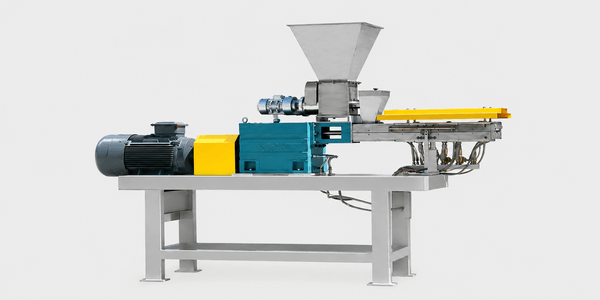
What Are the Two Main Types of Extruders?
Screw quantity changes more than the outer structure. It affects material flow, mixing frequency, discharge stability, and the kind of formula the machine can handle.
Single Screw Extruders
A single screw extruder consists of one screw rotating inside the barrel of the extruder. The screw is fed from the feeder section and then continuously pushed forward through the metering, mixing and compression section of the barrel until it reaches the die in the head section of the extruder. A single screw extruder is a simple machine which is at its best when it is merely conveying material in a constant and stable manner.
Twin Screw Extruders
The basic design of a twin screw extruder consists of two screws rotating within the barrel of the extruder. The unique interplay of these two screws, between the roots of the flights, conveys, compresses, kneads and finally redistributes all materials introduced into the feed ports to ensure complete intermingling of all ingredients before they are discharged from the die.
The Extruder – TWIN SCREW EXTRUDER uses a co-rotating twin screw structure, stable screw feeding, and several controlled working zones.
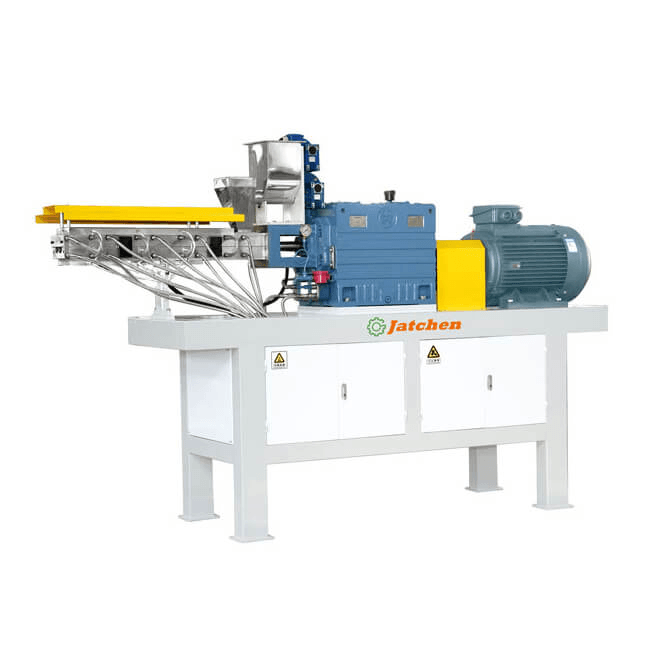
The Core Difference Beyond Screw Quantity
A single screw machine mainly moves and compresses material. A twin screw machine also performs stronger internal mixing. That difference matters when several ingredients must be combined in precise proportions before cooling and grinding.
How Do Single Screw and Twin Screw Extruders Work Differently?
Once the material enters the feeder, the two structures create different flow patterns. Feeding, kneading, and process adjustment are the three points worth comparing.
Material Conveying and Feeding Stability
A single screw depends mainly on one screw and friction between the material and barrel. Changes in bulk density can affect flow. Two working screws grip and redistribute the feed more often, helping the line hold a steadier output.
Kneading and Component Distribution
With a single screw, the components are less likely to change position in the barrel. Elements of a twin screw extruder repeatedly divide and recombine the material flow. This promotes a balanced distribution of all ingredients like pigments, fillers, curing agents and additives.
Process Adjustment and Formula Changes
Different powder coating formulas place different loads on the extruder. A twin screw system gives you more room to match feed rate, screw speed, and zone settings to the formula. The aim is stable output, not the highest possible speed.
Why Does Powder Coating Production Usually Favor Twin Screw Extrusion?
Powder coating production asks the extruder to do more than move material. It must turn a dry pre-mix into a continuous and even melt for the next stages.
More Even Pigment and Filler Dispersion
Poor pigment or filler distribution can create batch variation and uneven cooling sheets. Two intermeshing screws keep the formula moving through repeated mixing zones, helping break apart agglomerates and spread minor ingredients through the resin base.
More Consistent Melt Formation
The extruded material should leave the head at a steady rate and in a consistent condition. The TSK design uses a deep-groove screw arrangement, stable feeding, and multiple heating and cooling zones controlled within about ±2°C.
Better Coordination with Downstream Equipment
A normal process follows this order: mixer, extruder, cooling belt, crusher, grinding mill, sieving, and packing. Each stage should handle a similar practical output. The company’s production line solutions help match these stages around one target capacity.
What Problems Can the Wrong Extruder Create in Production?
Wrong sizing or the wrong screw structure often creates feeding changes, weak mixing, and line bottlenecks. These problems repeat every shift unless the root cause is corrected.
Stable Feeding for Irregular Output
When feeding rises and falls, discharge changes too. A stable screw feeder and correct capacity match reduce interruptions. The feeder should supply material at a rate the barrel can process continuously, not at a short peak.
Stronger Kneading for Uneven Formulation
A pre-mixer distributes dry ingredients, but extrusion still needs to bring them together as a uniform melt. Twin screws give the formula repeated contact and redistribution, though feed rate and screw speed still need to suit the recipe.
Full-Line Matching for Production Bottlenecks
An oversized extruder can overload cooling and grinding. An undersized machine limits the whole line. Select the extruder after checking the real output of the mixer, cooling belt, and grinding mill through the complete product range.
How Should You Choose a Twin Screw Extruder for Your Production Line?
After choosing the twin screw structure, you still need the right size. Rated output matters, but daily schedule, cleaning work, and floor space also shape the decision.
Output and Production Schedule
Start with normal hourly output, then check daily running hours, batch size, formula change frequency, and future expansion. A plant making many small batches may value easier cleaning more than maximum capacity.
Screw Diameter, Speed, and Motor Power
The TSK range uses screw diameters from 35 mm to 98 mm, with screw speeds from 420 to 600 rpm depending on the model. Read these values together because a larger screw cannot solve unstable feeding or poor line balance.
Cleaning Access and Line Layout
Color and formula changes require access to the feeder, barrel, screw area, and head. TSK series die heads are supplied complete with a clam-style barrel which is fitted with die liner inserts. They are self-cleaning and the space required to open, clean and connect to cooling belt must be left.
Which TSK Twin Screw Extruder Matches Your Required Output?
The TSK series covers a broad capacity range. Grouping the models by production scale makes selection clearer than comparing every number separately.
TSK35 and TSK40 for Lower Output Requirements
TSK35 handles about 50–80 kg/h, while TSK40 handles about 150–200 kg/h. These models suit smaller production units, new lines, or plants that run shorter batches and need a more compact setup.
TSK55 and TSK65 for Medium Production Lines
TSK55 covers about 300–500 kg/h, and TSK65 covers about 600–800 kg/h. At this scale, cooling belt width, crusher speed, and grinding mill output should be checked before the final order.
TSK75, TSK85, and TSK98 for Higher Output
TSK75 handles about 800–1000 kg/h, TSK85 about 1000–1200 kg/h, and TSK98 about 1200–1500 kg/h. The TSK series twin screw extruder specifications help you compare power, speed, working zones, and dimensions.
Why Choose Yantai Jatchen for a Twin Screw Extruder Project?
For powder coating production, twin screw extrusion usually gives you the stronger combination of feeding, kneading, component distribution, and steady discharge. The final model still needs to fit the whole line.
Powder Coating Equipment Experience
Yantai Jatchen Powder Coating Processing Equipment Co., Ltd. works around the full manufacturing process rather than treating the extruder as an isolated machine. Its team can review your formula, target output, working hours, workshop size, and existing equipment before recommending a TSK model.
TSK Series Product Advantages
The TSK series combines co-rotating twin screws, stable feeding, multiple controlled zones, a clam-style barrel, liner inserts, and PLC&HMI operation. Its 50–1500 kg/h range covers small, medium, and higher-capacity powder coating lines.
Service and Contact
A sound purchase also needs layout review, installation, commissioning, operator guidance, maintenance advice, and spare parts planning. Review the company’s service support, then send your formula, target kg/h, workshop drawing, and existing line details through Contact Us.
FAQ
Q1: What are the two main types of extruders?
A1: The two main screw-based types are single screw extruders and twin screw extruders.
Q2: Which extruder is better for powder coating production?
A2: A twin screw extruder is usually more suitable because the formula needs even mixing before cooling and grinding.
Q3: What is the main difference between the two structures?
A3: Single screw extrusion focuses more on direct conveying, while twin screw extrusion adds repeated kneading and redistribution.
Q4: How do you choose the correct TSK model?
A4: Match normal output with the mixer, cooling belt, crusher, grinding mill, daily schedule, and available floor space.
Q5: What information should you provide before ordering?
A5: Provide the formula type, target output, working hours, workshop layout, existing equipment capacity, and cleaning needs.


