

Eco-friendly Grinding Machines: Innovative Technologies to Reduce Dust Pollution and Waste
Eco-friendly Grinding Machines: Innovative Technologies to Reduce Dust Pollution and Waste
Industrial grinding frequently connects with dust creation, substance loss, and growing pressure from regulations. In various production areas, minor shortcomings can result in substantial waste as time passes. With stricter environmental rules and steadily increasing costs, environmentally conscious grinding setups are no longer just choices. Instead, they form essential elements of current factory layouts.
Among suppliers of such machinery, Yantai Jatchen Powder Coating Processing Equipment Co., Ltd. has created combined grinding approaches that emphasize clean manufacturing and resource effectiveness. The firm’s range of products includes grinding, sorting, transporting, and reclaiming functions. Consequently, it offers full system assistance for diverse industrial powder handling operations.
Why Dust Pollution Remains a Persistent Challenge in Grinding Systems?
Dust production during grinding goes beyond mere cleanliness concerns. It impacts employee safety, machine durability, and output uniformity. Tiny particles slip away readily if air movement planning lacks balance, or if separation mechanisms lack sufficient accuracy.
Airflow Imbalance and Fine Particle Escape
In numerous standard setups, air movement proves either excessively forceful or inadequately guided. As a result, this condition drives very small particles from the grinding area prior to adequate sorting.
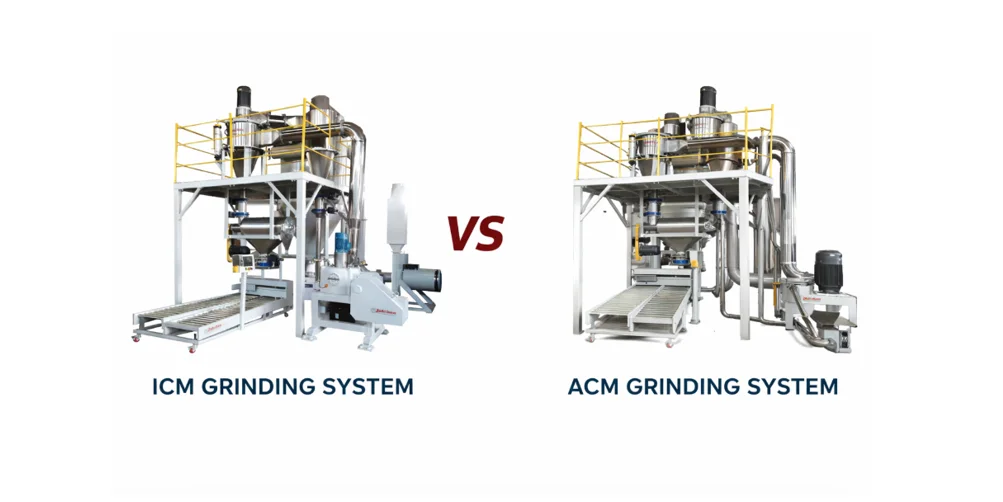
The ACM GRINDING SYSTEM handles this problem via a thoughtfully planned inner air flow arrangement. Through steadying air paths, it minimizes random particle release and decreases dust output right at the origin.
Meanwhile, Yantai Jatchen Powder Coating Processing Equipment Co., Ltd. incorporates effective dust gathering units into its overall system arrangement. This integration aids in preserving a tidier work setting without introducing too much extra gear.
Limitations of Traditional Dust Collection Methods
Fabric filters and cyclone separators by themselves frequently struggle to trap extremely fine particles. Eventually, such shortcomings cause noticeable dust buildup and resource depletion.
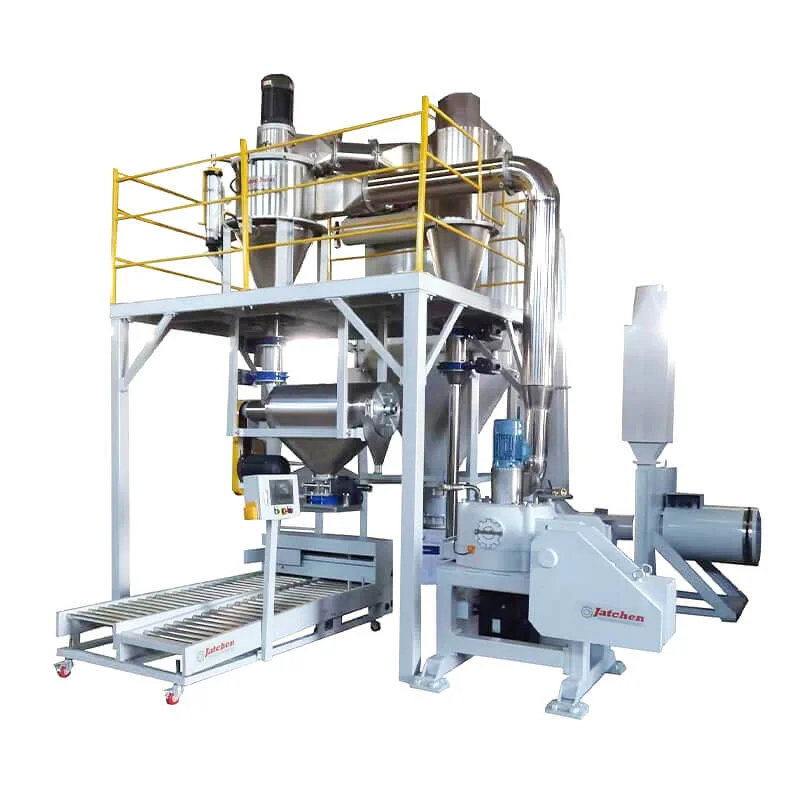
The ICM GRINDING SYSTEM merges impact-based grinding with built-in sorting processes. Therefore, it lightens the burden on outside dust gatherers and enhances total recovery percentages.
Further information regarding system merging appears in the company’s solution center, where full production setups appear tailored to actual manufacturing demands.
How Can Grinding Systems Reduce Material Waste Effectively?
Substance waste influences cost management directly. In extensive operations, a minor fraction of loss can convert into major economic consequences over periods.
Inefficient Classification Leads to Over-Grinding
When control over particle dimensions lacks precision, substances undergo repeated handling. Such actions not only squander power but also diminish practical results.
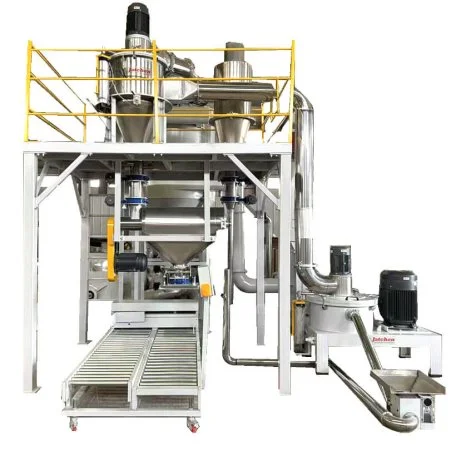
The ACM GRINDING SYSTEM employs a modifiable sorting wheel, which permits exact regulation of particle size spread. Hence, it cuts down on needless rehandling and boosts production efficiency.
Based on usage examples released by Yantai Jatchen Powder Coating Processing Equipment Co., Ltd., refined sorting can markedly raise proportions of completed goods while decreasing loads from internal cycles.
Closed-Loop Systems Improve Recovery Rates
Open configurations often forfeit small particles amid transport phases. A closed-loop arrangement avoids this difficulty by maintaining substances inside a managed route.
The ICM GRINDING SYSTEM functions with an enclosed framework. It combines grinding, sorting, and moving tasks into a single unit, which limits escape spots and heightens substance retrieval.
Extra setup options and assistance services exist via the company’s service page, where tailored approaches receive detailed descriptions.
What Role Does Energy Efficiency Play in Eco-friendly Grinding?
Power usage often receives less attention in talks about ecological results. Yet, ineffective devices demand greater electricity and produce higher indirect pollutants.
High Energy Consumption in Conventional Equipment
Earlier grinding devices depend on constant-speed engines and flawed mechanical setups. Consequently, this reliance causes extra electricity use, particularly during low-load scenarios.
The ACM GRINDING SYSTEM utilizes refined rotor designs and better air flow patterns. These modifications lessen internal opposition and cut power needs while running.
Intelligent Control Enhances Stability
Power conservation involves more than just physical parts. Management systems contribute significantly as well.
The ICM GRINDING SYSTEM facilitates reliable performance via matched oversight of input, grinding, and sorting stages. Reliable operations diminish variations, and thus reduce power squandering.
How Do Integrated Systems Simplify Environmental Compliance?
Achieving ecological guidelines typically demands several systems operating in unison. Isolated machinery heightens intricacy and upkeep challenges.
Fragmented Systems Increase Risk
Whenever grinding, transporting, and dust gathering occur independently, controlling outflows and ensuring steadiness grows more difficult.
Yantai Jatchen Powder Coating Processing Equipment Co., Ltd. delivers merged production chains in which every part receives design for cooperation. This method eases setup procedures and streamlines routine tasks.
Unified Design Improves Control
Both the ACM GRINDING SYSTEM and ICM GRINDING SYSTEM construct as components of comprehensive setups. This combined method enables superior oversight of air movement, particle motion, and dust gathering efforts.
For businesses considering fresh setups or improvements, the contact page offers straightforward entry to expert advice.
Why Equipment Design Matters for Long-term Sustainability?
Sustainability extends beyond mere outflows. Device longevity and upkeep practices also influence ecological effects.
Frequent Maintenance Leads to Downtime and Waste
Devices needing regular component swaps create extra refuse and heighten workflow pauses.
The grinding setups from Yantai Jatchen Powder Coating Processing Equipment Co., Ltd. prioritize robust parts and firm builds. As such, they lessen erosion and prolong upkeep periods.
Modular Design Supports Future Expansion
Manufacturing requirements evolve over time. Machinery unable to adjust frequently turns outdated soon.
Both the ACM GRINDING SYSTEM and ICM GRINDING SYSTEM accommodate modular enhancements. This feature permits output growth without full system replacement.
FAQ
Q1: How can a grinding system reduce dust at the source?
A: By controlling internal airflow and integrating classification within the grinding chamber, systems like the ACM and ICM reduce particle escape before it becomes airborne dust.
Q2: What is the main cause of material waste in grinding processes?
A: Inaccurate particle classification leads to over-grinding and repeated processing, which lowers overall yield.
Q3: Are integrated grinding systems more efficient than separate machines?
A: Yes. Integrated systems reduce transfer losses, improve coordination between processes, and simplify operation.
Q4: How does energy efficiency relate to environmental performance?
A: Lower energy consumption reduces indirect emissions and operating costs, making production more sustainable over time.
Q5: What should be considered when selecting eco-friendly grinding equipment?
A: Focus on airflow design, classification accuracy, system integration, and long-term operational stability.


