

How to Select the Best Powder Manufacturing Equipment
How to Select the Best Powder Manufacturing Equipment
Picking appropriate powder manufacturing equipment goes beyond a basic buying choice. It influences product uniformity, the pace of production, and costs over the long run. Within a standard powder coating production sequence, basic ingredients go through blending, extrusion, cooling, breaking down, and sorting phases. Every part carries its particular equipment demands. Even a minor mismatch can cause irregular particle dimensions or repeated halts in operation.
During actual operations, numerous production difficulties link back to choices made at the start regarding equipment. A production line might function smoothly at the initial setup stage. However, it could face challenges as the amount produced grows or when recipes shift. For this reason, a methodical method to picking equipment holds importance. Companies like Yantai Jatchen Powder Coating Processing Equipment Co., Ltd. have built up knowledge in creating full production setups. Such knowledge can act as a guide when arranging equipment setups for various sizes of production.
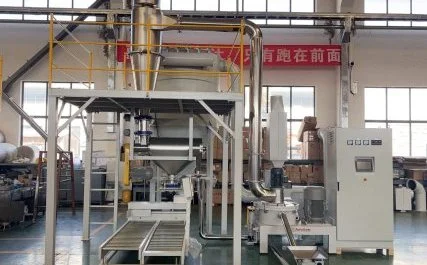
What Are the Key Factors When Selecting Powder Manufacturing Equipment?
The process of choosing equipment begins with a solid understanding of production aims and limitations. It involves more than just the amount it can handle. It also covers the way each device performs in everyday working situations.
Capacity and Scalability
The amount of production needs to align with present requirements as well as plans for growth in the short term. For instance, gear used in laboratories generally manages batches of 1–5 kg. This setup mainly serves the purpose of testing recipes. Such equipment proves helpful when changes happen often. Nevertheless, it fails to back ongoing production efforts.
In setups for industry, the yield might vary from 50 kg per batch up to more than 1000 kg each hour, based on the specific arrangement. Opting for equipment that features modular options for expansion prevents the need for total replacement down the line. This aspect often gets ignored in the initial phases of spending.
During this point, examining full line options like those outlined in the solution center can assist in matching equipment choices to genuine production contexts.
Material Characteristics and Compatibility
Various powders act in distinct ways during blending and milling. Factors such as density, ease of flow, and how particles interact all shape the outcomes of processing. If the blender cannot spread materials uniformly, the equipment that follows cannot make up for that lack of balance.
Blenders operating at high speeds, for example, depend on effects from convection and diffusion to reach even spread of parts in just a few minutes. When materials and equipment lack good compatibility, problems like uneven spread of particles often appear later in the sequence.
Further information on setups tailored to materials appears in the product overview. There, various types of equipment get designed for particular ways of processing.
Automation and Control Systems
Lines for production in today’s world depend greatly on systems like PLC and HMI. These setups manage the duration of blending, the rate of feeding, areas for temperature, and links for safety.
Control that runs automatically cuts down on mistakes made by people. It further permits the saving and retrieving of settings, which turns essential during switches between kinds of products. Based on data from real production, steady oversight of settings ranks as a primary element in keeping particle size spread reliable.
Companies such as Yantai Jatchen Powder Coating Processing Equipment Co., Ltd. combine control based on PLC throughout blending, extrusion, and milling systems. This integration allows for oversight from a central point over the whole procedure.
How Do Mixing Equipment Affect Powder Processing?
Blending serves as the initial vital phase. Should basic ingredients fail to distribute evenly at this point, the stages that come after merely heighten the issue.
Prior to picking a blender, examining the ways different blending methods affect material flow and end uniformity proves beneficial.
Types of Mixers
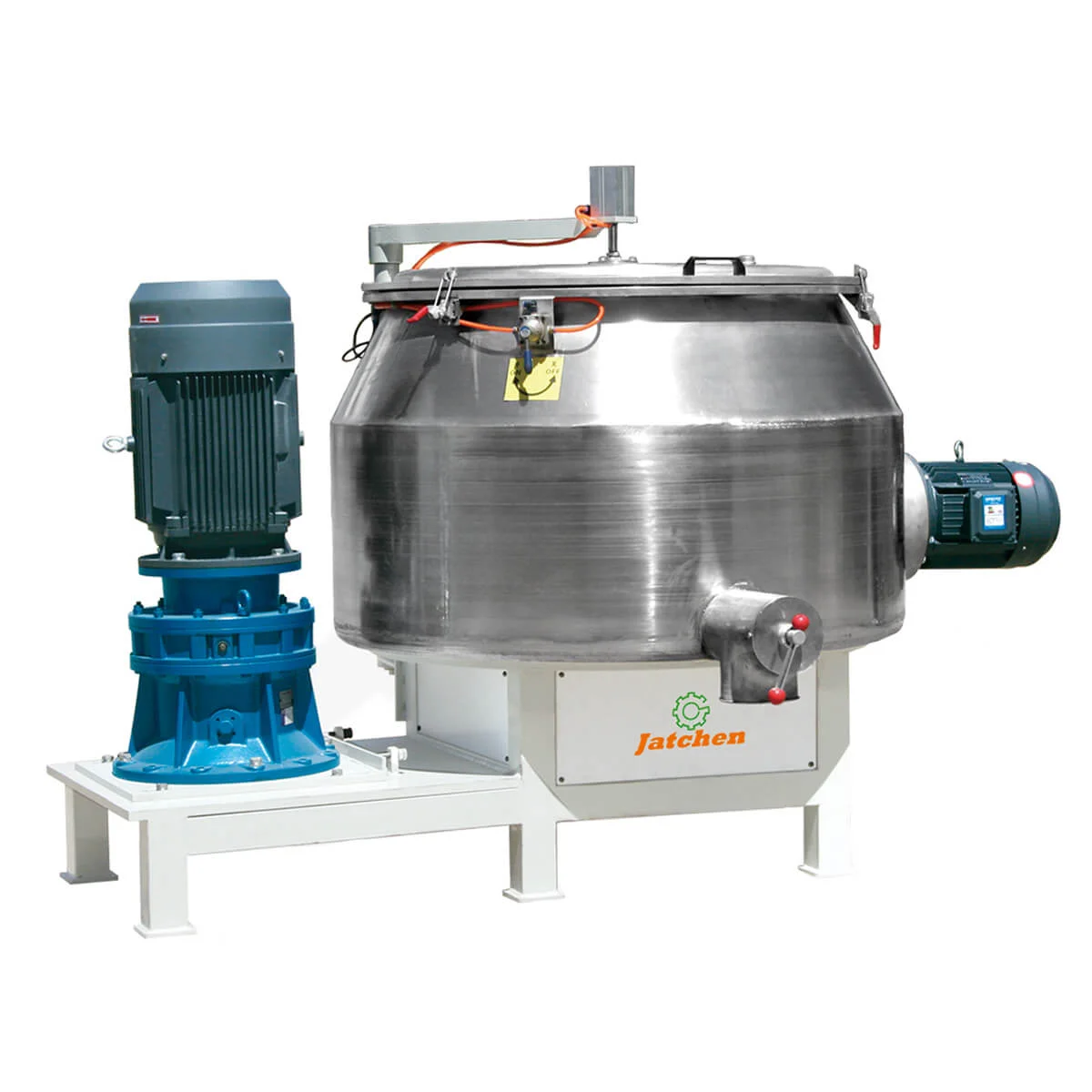
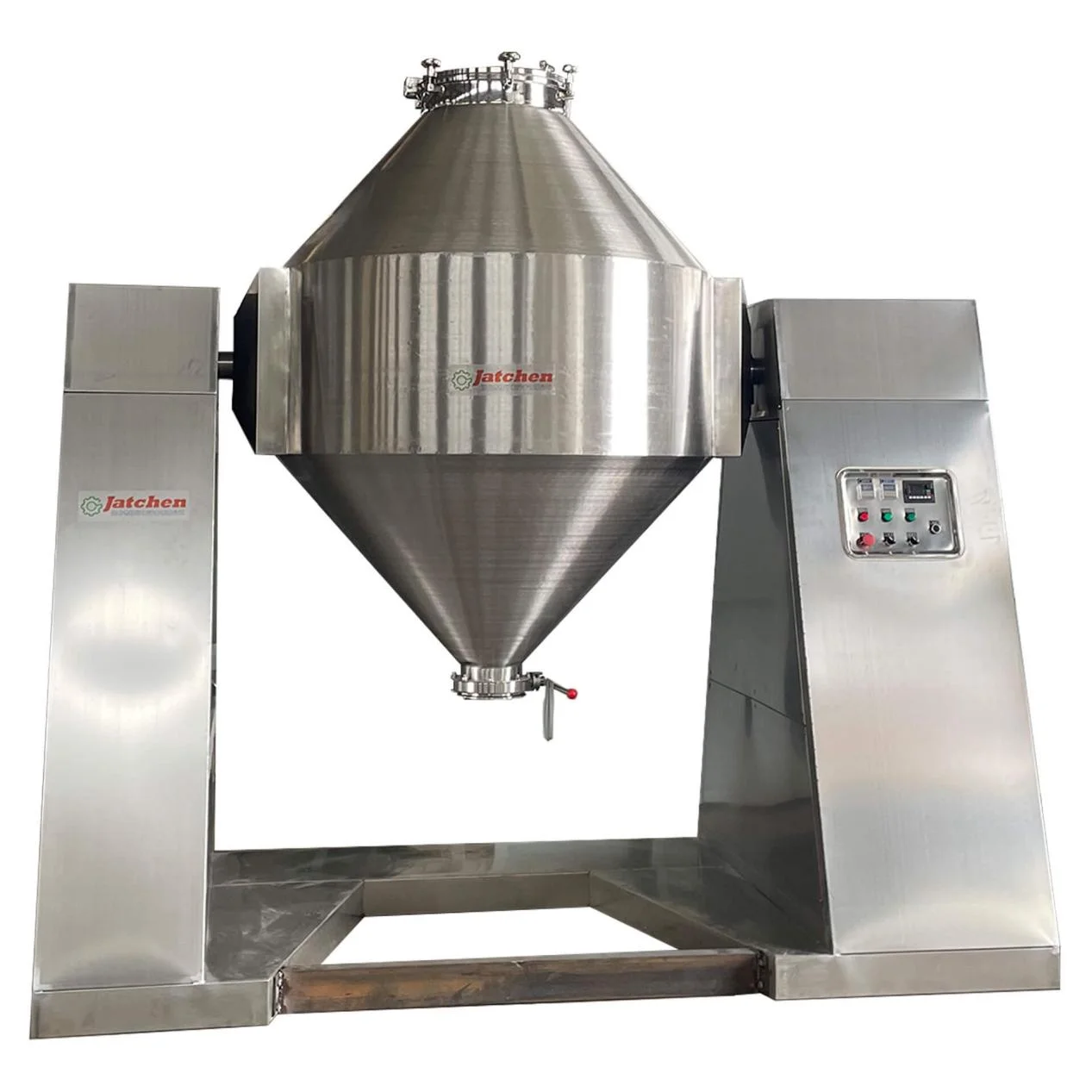
Frequent kinds of blenders cover high-speed blenders, container blenders, and twin cone mixers. Each kind fits varying needs in production.
Blenders at high speeds manage to finish blending in 3 to 5 minutes. Their yields span from 10 kg/h to 1000 kg/h. They align well with settings for production that run without breaks.
Blenders in containers, guided by systems of PLC and HMI, permit straightforward transfer of materials. They also shorten the time for cleaning between batches. Twin cone blenders offer rotation that remains steady. Moreover, they simplify the cleaning process, which aids when recipes switch often.
In actual workshop environments, the decision frequently hinges on the frequency of recipe changes rather than solely on the yield amount.
Matching Specifications to Production Needs
Aspects like capacity, speed of blending, and design for cleaning all carry weight. A blender that exceeds the right size might lower efficiency for smaller batches. Conversely, one that falls short in size could generate blockages.
Structures that detach easily, combined with inner surfaces that stay smooth, lessen the duration needed for cleaning. This feature gains significance when lines for production manage several types of products within one day.
Companies like Yantai Jatchen Powder Coating Processing Equipment Co., Ltd. create blenders equipped with elements for fast cleaning. These features help minimize periods of inactivity between batches.
Common Challenges and Solutions
Excessive blending might result in the breaking down of particles. On the other hand, inadequate blending leads to composition that lacks evenness. Both concerns impact the quality of the final product.
Timers that operate automatically, along with intensity of blending under control, assist in steering clear of these difficulties. Certain systems further incorporate features for vacuuming dust. These help keep the work area clean and orderly.
How to Choose Grinding Equipment for Particle Size Control?
Milling decides the ultimate particle dimensions, which bear a direct link to how the product functions. This phase calls for thoughtful choice of methods and arrangements for the system.
Before opting for equipment, establishing the desired range for particle size and the volume of production becomes essential.
Grinding Technologies
Regular choices encompass air classifying mills, impact mills, and jet mills. Each carries unique principles of operation.
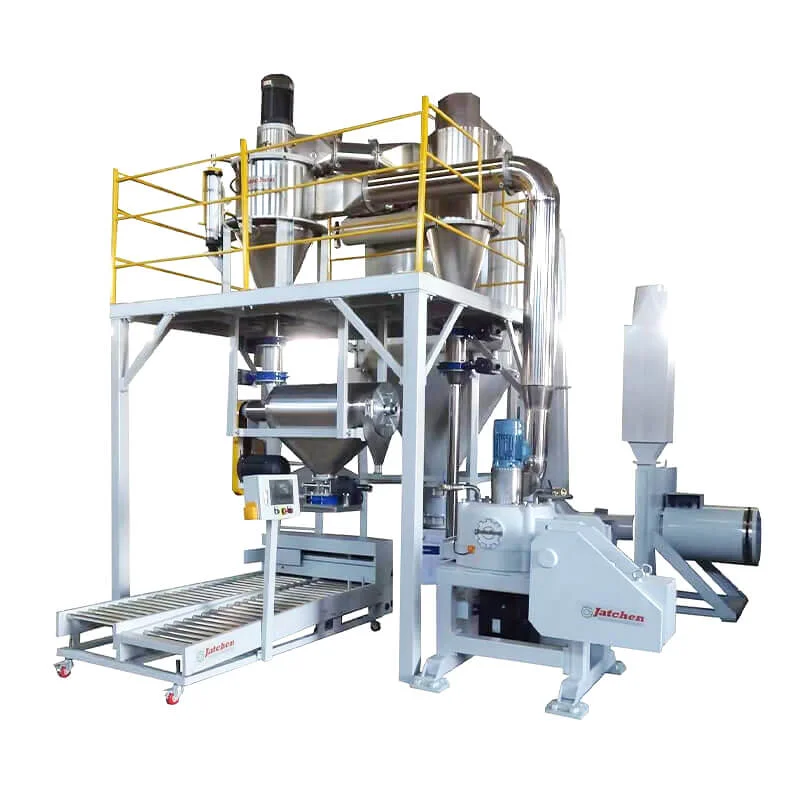
The ACM GRINDING SYSTEM merges milling and sorting within a single setup. It employs parts that rotate at high speeds and classification through airflow to attain particle size that adjusts easily. Additionally, it achieves rates of recovery exceeding 97 percent.
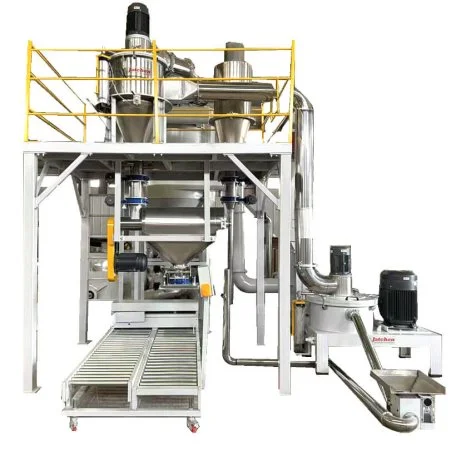
The ICM GRINDING SYSTEM concentrates on exact limits for upper particle size and spread that holds steady. Its design remains compact, and it features low levels of vibration. These qualities render it fitting for operations that run steadily over extended periods.
Factors Affecting Equipment Selection
Main elements cover the goal for particle size, the rate of throughput, and the draw on energy. Systems for milling must also blend smoothly with cooling from earlier stages and sorting that follows.
In a usual sequence, the substance first transforms into sheets. Then, it undergoes crushing, and ultimately, it gets milled into powder. Should the capacity for milling surpass the supply from upstream, the system stays unused. If it lags behind, blockages emerge.
Looking over actual instances from projects in case studies typically offers a sharper view of how systems for milling function within complete lines for production.
Why Is Cooling Conveyor Integration Important?
Cooling frequently receives less attention than it deserves. In truth, it fulfills a central function in upholding the steadiness of materials and readying them for milling.
Following extrusion, the substance exists in a state that remains molten or partly molten. Absent suitable cooling, further processing stays impossible.
Role of Cooling Conveyors
Belts for cooling change the molten substance into solid sheets. These sheets usually measure 1–2 mm in thickness. Afterward, they get broken into chips prior to milling.
The AIR COOLING BELT relies on airflow and conveyors of stainless steel to secure cooling that stays reliable. It fits settings where systems involving water face restrictions.
The WATER COOLING BELT employs water that circulates to speed up the cooling process. This approach boosts productivity and ensures that sheet thickness remains consistent.
Key Features to Consider
Vital measures include the width of the belt, the approach to cooling, and the gap in rollers that adjusts. These elements shape the quality of sheets and the productivity of milling that follows.
Equipment featuring thickness for chips that adjusts and systems for conveying that hold steady often yields particle size that stays more uniform after milling.
Companies such as Yantai Jatchen Powder Coating Processing Equipment Co., Ltd. offer solutions for both air and water cooling. This provision enables arrangements that flex according to conditions in the factory.
Why Does Equipment Compatibility Matter in a Production Workflow?
Machines with strong performance alone cannot offset weak blending within the system. The compatibility among equipment decides the efficiency of the overall line.
Prior to selecting machines on their own, considering the full flow of production proves useful.
Coordinated Operation
Blenders, extruders, belts for cooling, and systems for milling must function at levels of capacity that match. A lack of match causes time spent idle or buildup of materials.
To illustrate, if a belt for cooling manages 500 kg/h while the mill handles merely 300 kg/h, buildup takes place. This situation breaks the flow of production and heightens the work involved in handling.
Planning for complete lines, like those obtainable via Yantai Jatchen Powder Coating Processing Equipment Co., Ltd., aids in preventing these kinds of mismatches.
Benefits of Modular Design
Systems built in a modular fashion permit upgrades to separate sections without needing to swap the whole line. This quality holds particular value when the volume of production rises step by step.
In everyday use, design that follows modular principles also eases upkeep and shortens periods of inactivity.
What Certifications and Safety Standards Should Be Considered?
Aspects of safety and adherence to rules stand as non-negotiable elements. Environments for processing powders demand rigorous steps for control.
Before acquiring equipment, verifying alignment with pertinent standards becomes required.
Certifications
Frequent certifications encompass ISO9001 for oversight of quality, CE for standards of safety in Europe, and ATEX for areas carrying risks of explosion.
Such certifications signal that the equipment fulfills acknowledged demands for safety and function.
Safety and Ergonomic Design
Equipment in modern times incorporates elements like shutdown that happens automatically, buttons for stopping in emergencies, and systems for gathering dust.
Systems for collecting dust lessen effects on the surroundings and better the conditions at work. Systems for monitoring from a central location also support the keeping of conditions for operation that remain steady across the full line of production.
Companies like Yantai Jatchen Powder Coating Processing Equipment Co., Ltd. weave safety elements into the creation of equipment. This practice lowers dangers in operation while preserving efficiency in production.
FAQ
Q1: Which type of mixer is suitable for powder production?
A: High-speed mixers are suitable for continuous production, while container mixers are better for frequent material changes due to easier cleaning and flexibility.
Q2: How to choose between different grinding systems?
A: If adjustable particle size and high recovery are priorities, ACM systems are suitable. If precise particle size limits and stable distribution are required, ICM systems are more appropriate.
Q3: Why is a cooling conveyor needed after extrusion?
A: It converts molten material into solid sheets, making it possible to proceed with crushing and grinding stages.
Q4: What certifications should be considered when selecting equipment?
A: ISO9001, CE, and ATEX are key certifications that indicate quality, safety, and suitability for industrial environments.


