

How the Rapid Powder Coating Extrusion Process Improves Efficiency in Manufacturing
How the Rapid Powder Coating Extrusion Process Improves Efficiency in Manufacturing
Industrial powder coating production has transformed considerably over the last ten years. Facilities that previously depended on sluggish batch methods now require greater yields, reliable standards, and foreseeable expenses. The extrusion phase has slowly emerged as the vital element that determines output pace and item uniformity. When extrusion functions effectively, the subsequent parts of the line generally remain steady. When extrusion varies, subsequent activities like grinding, sorting, and packing all experience the consequences.
Numerous producers seeking to enhance operational speed begin assessing quick extrusion methods. A swifter and steadier extrusion procedure cuts down the complete manufacturing duration and minimizes pauses among processing phases. For businesses considering machinery improvements or constructing fresh assembly lines, device dependability and setup harmony turn into primary issues.
A single producer well-recognized in the powder coating machinery field is Yantai Jatchen Powder Coating Processing Equipment Co., Ltd. This firm specializes in full industrial powder coating manufacturing machinery and offers unified assembly line options. Their setups encompass blending units, extrusion devices, chilling apparatus, pulverizing setups, and sorting methods.
A thoughtfully planned extrusion phase links all these setups seamlessly. As the extrusion procedure grows quicker and firmer, assembly lines function with reduced halts and steadier results.
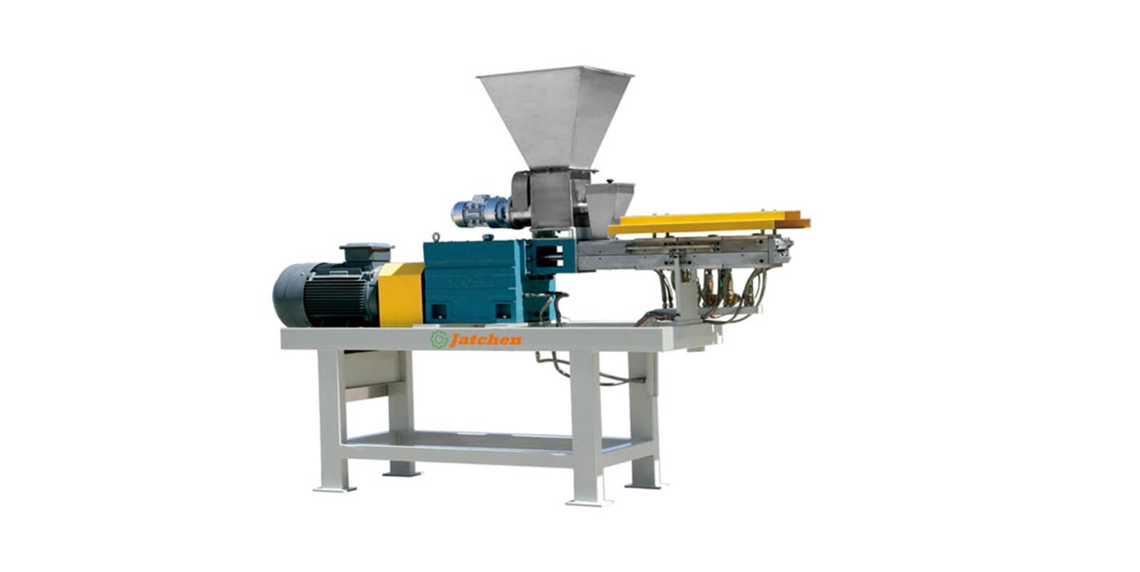
What Is the Rapid Powder Coating Extrusion Process in Modern Manufacturing?
Powder coating fabrication entails various phases that need to collaborate without issues. Quick extrusion method concentrates on advancing the most essential phase of the assembly line, so that substance handling turns quicker and more uniform.
Core Steps of Powder Coating Production
A standard powder coating assembly line consists of blending, extrusion, chilling, pulverizing, and sorting. Initial substances like resins, colorants, bulking agents, and supplements are initially combined in blenders. Following the blending, the combined substance shifts to the extrusion unit where it gets formed into an even condition. The extruded substance then gets chilled into slender layers, broken, and pulverized into fine particles with managed grain dimensions. These phases must proceed in order to sustain dependable item standards.
Role of Extrusion in Material Fusion and Processing
Extrusion serves as the heart of the fabrication procedure. Within the extruder container, turning screws propel the substance ahead while exerting robust mechanical blending powers. Colorants and supplements spread across the substance in this phase. If extrusion executes properly, later pulverizing turns simpler and more uniform.
In actual plant activities, technical staff frequently watch extrusion settings diligently because minor shifts in this phase can influence the whole assembly line.
Continuous Industrial Processing with Advanced Equipment
Contemporary extrusion units back ongoing fabrication rather than repeated batch rounds. Substance streams consistently from blenders to extruders and afterward proceeds straight to chilling and pulverizing setups.
Why Does Extrusion Play a Critical Role in Powder Coating Production Efficiency?
Many plants at first believe that pulverizing machinery decides fabrication speed. In truth, extrusion capability affects both pulverizing effectiveness and item uniformity.
Uniform Material Mixing and Dispersion
In extrusion, a pair of turning screws generate intense cutting powers inside the container. The substance compresses and blends over and over as it advances along the screw paths. This method spreads colorants and bulking agents equally through the full substance volume.
Effective spreading in this phase lessens flaws in pulverizing and enhances ultimate powder standards.
Continuous Production and Stable Throughput
Extrusion units built for plant powder coating fabrication run ongoing for extended durations. Firm screw turning permits substance to advance via the setup without abrupt pauses.
Plants commonly note that when extrusion firmness advances, later procedures such as pulverizing and sorting likewise turn more foreseeable.
Reduced Material Loss and Improved Production Consistency
When extrusion yields even substance layers, pulverizing units function more capably. Grain dimension spread turns firmer and less substance gets discarded in sorting.
In the long run, this advancement can lower fabrication expenses and raise the share of completed powder that satisfies requirements.
How Does a Twin Screw Extruder Improve Manufacturing Performance?
Current powder coating assembly lines regularly employ twin screw extruders since they deliver enhanced blending ability and elevated fabrication volume in contrast to basic units.
High Efficiency Co-Rotating Screw Mixing Structure
Twin screw extruders employ two interlocking screws turning in the identical direction. These screws form persistent blending areas that exert pressure and cutting powers on the substance.
Since the substance passes multiple blending areas, colorants and supplements spread more equally throughout the whole quantity.
Precise Temperature and Process Control System
Plant extrusion units feature several warmth regulation areas alongside the container. Users can observe and modify warmth situations during fabrication to keep firm handling.
Regulation displays also exhibit engine burden, screw velocity, and fabrication rate, aiding specialists in spotting unusual activity situations promptly.
Large Industrial Output Capacity
Current extrusion machinery accommodates a broad array of fabrication volumes. Compact setups might manage trial fabrication or minor batch operations, whereas substantial plant lines can handle hundreds or thousands of kilograms each hour based on setup.
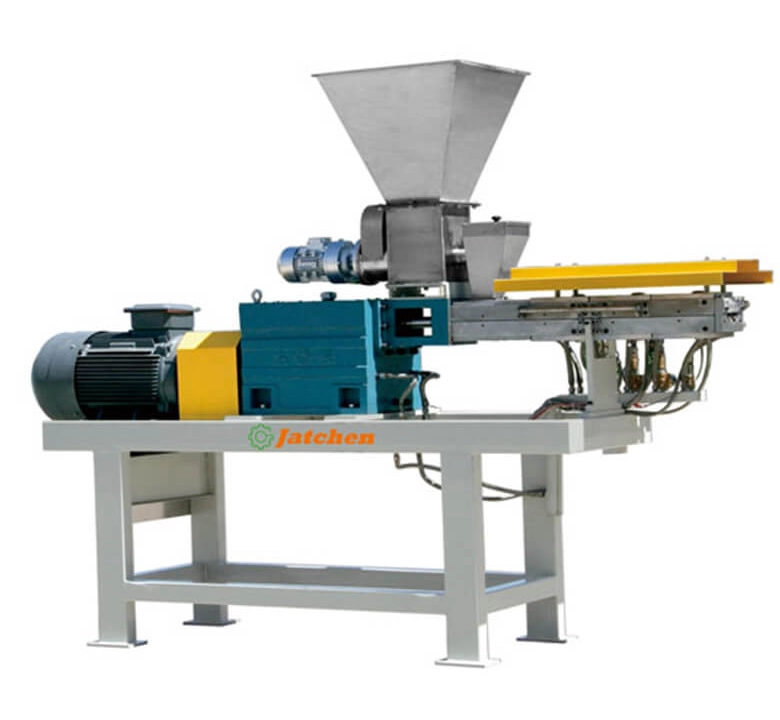
Why Is the Twin Screw Extruder Ideal for Powder Coating Production Lines?
Plants broadening fabrication volume frequently assess twin screw extrusion setups because they advance blending effectiveness and back firm extended operation.
One instance of such machinery is the TWIN SCREW EXTRUDER employed in plant powder coating assembly lines.
High Torque Gearbox and Stable Drive System
Twin screw extrusion units utilize high torque gear units to preserve firm screw turning even during handling of thick substance blends. This mechanical firmness proves crucial for ongoing plant fabrication.
Dependable propulsion setups cut the risk of abrupt closures during prolonged activity spans.
Efficient Heating and Cooling Control Design
Extrusion units incorporate multiple warming and chilling areas along the container. These areas uphold consistent activity situations so that substance advances effortlessly through the screw paths.
Firm heat regulation moreover assists in keeping uniform substance handling over substantial quantities.
Flexible Capacity Options for Different Production Scales
Plants differ widely in extent and fabrication aims. Certain ones manage compact lines centered on unique powder coatings, while others conduct high-volume lines providing to major building or device makers.
Adaptable unit setups permit producers to align machinery volume with fabrication needs.
How Do Integrated Powder Coating Production Lines Improve Overall Efficiency?
Extrusion machinery performs optimally when it functions within a unified fabrication framework. Present-day powder coating plants commonly utilize combined machinery lines crafted to sustain firm handling from beginning to end.
Automated Mixing Systems for Consistent Raw Material Preparation
Prior to extrusion starting, initial substances require blending into a uniform blend. Plant blenders merge powders swiftly so that colorants and supplements distribute equally.
As blending quality advances, extrusion units obtain more uniform substance entry.
Efficient Cooling and Flake Formation Technology
Following extrusion, handled substance shifts to chilling setups where it hardens into slim layers. Such layers prove simpler to break and pulverize in subsequent phases.
Capable chilling shortens the duration between extrusion and pulverizing, which aids in upholding a regular fabrication tempo.
Precision Grinding and Particle Size Control Systems
Pulverizing machinery transforms chilled layers into tiny powder grains. Sorters subsequently divide grains by dimension, enabling producers to fulfill rigorous item needs.
When prior extrusion and chilling function consistently, pulverizing setups attain superior grain dimension spread.
What Are the Key Advantages of Rapid Extrusion Technology for Manufacturers?
Producers who advance to present-day extrusion machinery typically observe various functional gains across the assembly line.
Higher Production Throughput
Quicker extrusion velocities permit additional substance to traverse the setup inside identical work hours. Assembly lines can attain elevated daily yields without incorporating extra units.
Better Particle Size Distribution
Uniform substance handling in extrusion backs more firm pulverizing execution. Completed powder grains turn more consistent, which advances item dependability.
Reduced Operational and Maintenance Costs
Present-day machinery outlines employ sturdy parts that endure prolonged activity rounds. Diminished erosion signifies fewer halts for substitute components and upkeep tasks.
Why Should Manufacturers Choose a Complete Powder Coating Equipment Supplier?
Picking machinery from several providers at times generates harmony issues among units. Numerous producers favor collaborating with a provider that delivers full fabrication resolutions.
Complete Powder Coating Production Line Solutions
Unified machinery setups enable blenders, extruders, chilling devices, and pulverizing units to function together capably. This harmony advances fabrication firmness.
Customized Engineering for Industrial Manufacturing Needs
Each plant possesses distinct fabrication objectives and workspace arrangements. Technical groups can craft assembly lines that align with area constraints and volume demands.
Global Experience in Powder Coating Equipment Manufacturing
Providers possessing broad project knowledge generally supply setup direction, machinery instruction, and sustained aid. These offerings assist producers in upholding firm operation once the assembly line gets placed.
FAQ
Q1: What Is the Most Important Machine in a Powder Coating Production Line?
A: The extrusion machine plays the central role because it performs the key material processing stage before cooling and grinding.
Q2: Why Are Twin Screw Extruders Often Used in Powder Coating Production?
A: Twin screw machines provide stronger mixing forces, which improves pigment and additive dispersion inside the material.
Q3: How Does Rapid Extrusion Improve Manufacturing Efficiency?
A: Faster extrusion shortens the production cycle and allows downstream equipment such as grinding machines to operate more consistently.
Q4: What Production Capacity Can Industrial Powder Coating Lines Reach?
A: Depending on machine configuration, production lines may process hundreds or even thousands of kilograms of material per hour.
Q5: How Can Manufacturers Improve Stability in Powder Coating Production?
A: Using integrated production equipment, maintaining stable extrusion conditions, and coordinating mixing, cooling, and grinding stages can significantly improve production stability.


