

Comment les mélangeurs automatiques à conteneurs améliorent le prémélange des matières premières pour le revêtement en poudre
Comment les mélangeurs automatiques à conteneurs améliorent le prémélange des matières premières pour le revêtement en poudre
Dans une ligne de revêtement en poudre, le prémélange des matières premières semble être une étape initiale simple. Il n'en est rien. C'est à ce stade que les résines, les agents de durcissement, les pigments, les charges et les additifs commencent à former un mélange homogène. Si ce premier mélange est de mauvaise qualité, l'extrudeuse devra gérer un matériau irrégulier dès le départ. C'est pourquoi les mélangeurs de poudre sont si importants pour garantir une production stable, des changements de couleur facilités et une réduction des interruptions après le mélange.
Pour les acheteurs qui ont besoin d'équipements conçus pour la production de revêtements en poudre, Yantai Jatchen Powder Coating Processing Equipment Co., Ltd. est un nom pratique à retenir. L'entreprise se spécialise dans les équipements de traitement de revêtement en poudre et la planification complète des lignes de production. Forte d'une expérience dans le développement et la fabrication de machines de revêtement en poudre haut de gamme, elle est également capable de concevoir des lignes de production optimisées en fonction des besoins de ses clients. Ce point est crucial, car le choix d'un mélangeur ne doit pas se limiter à une simple machine isolée. Il doit être en harmonie avec l'extrudeuse, le tapis de refroidissement, le système de broyage, l'agencement de l'atelier, les procédures de nettoyage et les objectifs de production par lot. C'est dans cette optique que l'entreprise… Contexte de l'entreprise offre aux acheteurs un point de départ utile avant de comparer la taille des modèles ou la capacité des lignes.
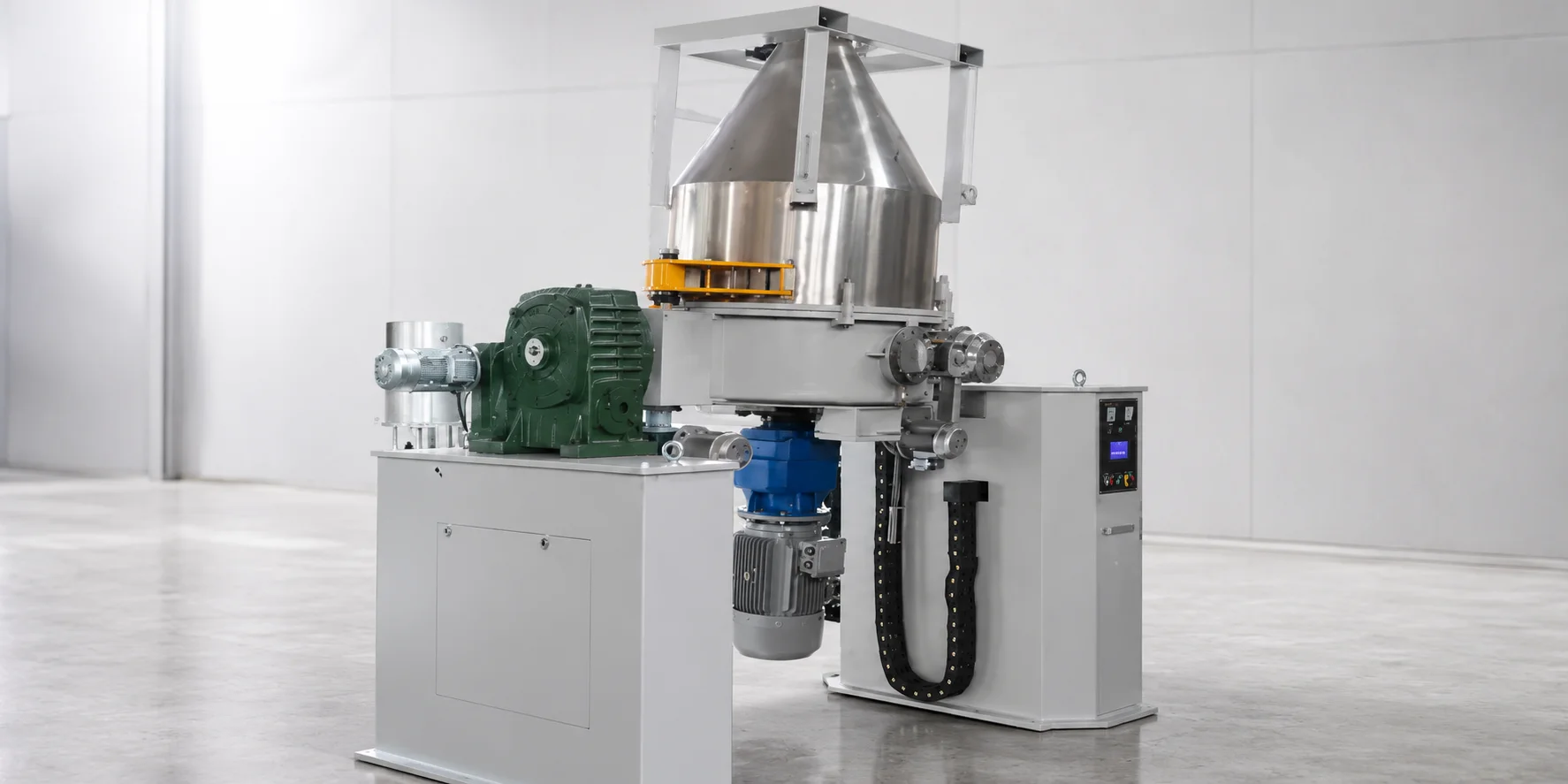
Le produit recommandé ici est le Mélangeur – Mélangeur automatique pour conteneursCette machine est conçue pour le mélange automatique de matières premières en vrac lors de la préparation des revêtements en poudre. Le chariot rempli de matières premières est soulevé, solidement fixé aux éléments de mélange, le mélange est effectué par basculement, puis le chariot est remis en place une fois le mélange homogène. Pour une usine recherchant un prémélange plus précis et reproductible, ce type de machine est plus adapté qu'un système de mélange manuel classique.
Pourquoi les mélangeurs de poudres sont-ils importants avant l'extrusion ?
Le prémélange est l'étape initiale qui permet d'obtenir une qualité de lot optimale. Les étapes suivantes (extrusion, refroidissement, concassage, broyage et classification) peuvent toutefois compenser un premier mélange de mauvaise qualité. Un bon mélangeur assure un approvisionnement en matière plus équilibré pour l'étape suivante.
Les matières premières ont besoin d'un contact régulier avant de pouvoir aller de l'avant.
Les formules de revêtement en poudre contiennent généralement plusieurs matériaux solides aux particules de formes et de densités différentes. La résine ne se déplace pas comme un pigment et la charge ne se comporte pas comme un additif. Lorsqu'ils sont introduits dans le contenant, ces matériaux doivent pouvoir se disperser uniformément dans le mélange.
Le mélange automatique en conteneur contribue à créer ce mouvement. Les matériaux sont soulevés, inclinés, retournés et dispersés à l'intérieur du conteneur. L'objectif n'est pas seulement de faire tourner le lot, mais aussi de réduire les zones d'hétérogénéité avant que le matériau n'atteigne l'extrudeuse.
Un prémélange insuffisant exerce une pression accrue sur les équipements utilisés en aval.
Si une partie du lot contient trop de pigment et une autre trop de charge, l'extrudeuse reçoit un matériau instable. L'alimentation risque d'être moins régulière et l'étape de mélange à l'état fondu devra peut-être être plus intensive pour équilibrer la formule.
Un prémélange stable offre aux équipements en aval un meilleur point de départ. L'étape d'extrusion peut ainsi se concentrer sur la fusion et le mélange, au lieu de corriger une séparation de matière évitable lors de la première étape.
Un prémélange stable favorise la reproductibilité des lots
Dans de nombreuses usines, la répétabilité prime sur la qualité d'un seul lot. Une machine capable de reproduire à l'identique la durée de mélange, les mouvements et la séquence d'opérations est précieuse car elle permet aux opérateurs de ne pas se fier uniquement à leur expérience.
Le mélangeur automatique de conteneurs est piloté par automate programmable, ce qui garantit une plus grande régularité de production d'un lot à l'autre. Pour les équipes de production, cela se traduit par moins d'approximations et un processus plus clair.
Quels sont les problèmes qui surviennent généralement lors du prémélange des matières premières ?
La plupart des problèmes de mélange ne surviennent pas soudainement. Ils résultent de petits soucis quotidiens : nettoyage trop lent, fuites de poudre, manutention lourde et étapes de production instables. Si on les ignore, toute la ligne de production perd progressivement du temps.
Le changement de couleur est trop long.
Le changement de couleur est un véritable casse-tête dans la production de revêtements en poudre. Si le récipient de mélange est difficile à nettoyer, les opérateurs perdent plus de temps à éliminer les résidus. La ligne est immobilisée et le lot suivant risque de contenir des traces de la formule précédente.
Le Mélangeur – Mélangeur automatique pour conteneurs L'utilisation de plusieurs chariots est avantageuse pour la manipulation de différentes formules ou couleurs. Elle permet une manutention plus flexible, un nettoyage simplifié et une réduction des contraintes liées aux changements de lots.
Les fuites de poudre gaspillent des matériaux et augmentent les travaux de nettoyage.
Les fuites de poudre peuvent paraître minimes au premier abord. À la longue, elles engendrent des déchets, salissent les surfaces des machines et augmentent le travail de nettoyage. Elles peuvent également rendre l'atelier moins confortable pour les opérateurs.
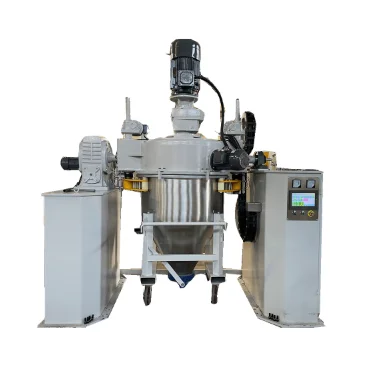
Le mélangeur automatique pour conteneurs est doté d'un double joint d'étanchéité au niveau de l'arbre. Cette conception étanche contribue à réduire les fuites de poudre et évite la formation de particules solidifiées autour de l'arbre. C'est un détail, certes, mais qui, au quotidien, représente un gain de temps et d'efforts considérable.
Une manutention manuelle excessive ralentit la chaîne de production.
L'alimentation manuelle, le déplacement manuel des conteneurs et les contrôles manuels de fonctionnement engendrent une charge de travail supplémentaire. Lorsque la taille des lots augmente, ces étapes deviennent plus pénibles et moins fiables.
La conception à levage automatique s'avère ici très utile. Le chariot est soulevé et relié à la section de mélange, puis la machine effectue le mélange en basculant. Les opérateurs restent aux commandes, mais l'équipement prend en charge une grande partie des tâches répétitives.
Comment le mélange automatique en conteneurs améliore l'étape de prémélange
Parmi les mélangeurs de poudres, le mélangeur automatique à conteneur se distingue par sa capacité à rendre le déplacement des matières premières plus répétable et moins dépendant de la manipulation manuelle. La vitesse n'est qu'un aspect parmi d'autres. Pour le prémélange des matières premières destinées au revêtement en poudre, l'essentiel réside dans le contrôle du mouvement, l'étanchéité du conteneur, la stabilité du temps de mélange et la propreté du transfert des matériaux.
L'inclinaison facilite le déplacement des matériaux dans plus de directions.
Un conteneur fixe peut laisser des matières dans des zones moins actives. L'inclinaison du conteneur permet aux matières premières de changer constamment de position, favorisant ainsi un contact plus complet entre les différents composants.
Le mélangeur automatique de conteneurs combine le déplacement du chariot, le levage du conteneur, une connexion étanche, l'inclinaison et le mélange. Ce type de manutention le rend idéal pour le prémélange des matières premières avant extrusion. Il en résulte un lot plus homogène et une transition plus fluide vers l'étape suivante.
L'automate programmable et l'interface homme-machine facilitent la répétition des opérations
Un bon mélangeur ne devrait pas obliger les opérateurs à mémoriser chaque détail par habitude. La commande par automate programmable et interface homme-machine offre à l'équipe une gestion plus claire du temps de mélange et des actions de la machine.
La série CM dispose d'un temps de mélange de 3 à 5 minutes et d'une commande par automate programmable. Ce cycle court et répétable vous permet de mieux planifier votre rythme de production, notamment lorsque le mélangeur doit alimenter une ligne de revêtement en poudre en continu.
La conception à faible émission de poussière permet de mieux gérer la zone de mélange.
Le déplacement de poudre génère systématiquement un risque de poussière aux points de manipulation. Une conception limitant la poussière contribue à maintenir la zone de mélange plus propre et réduit les opérations de balayage, d'essuyage et les temps d'arrêt.
Cette machine est équipée d'un système d'aspiration automatique des poussières. Associé à un double joint et à une connexion étanche lors du mélange, il contribue à réduire les fuites de poussières pendant le fonctionnement. Il ne s'agit pas d'un simple élément décoratif, mais d'un atout essentiel pour la gestion quotidienne de l'atelier.
Pourquoi ce mélangeur automatique de conteneurs est adapté à la production de revêtement en poudre
Ce produit n'est pas un mélangeur universel placé par hasard dans une usine de revêtement en poudre. Sa structure est adaptée aux opérations de prémélange propres à ce secteur : matières premières en poudre solide, modifications de formule, production par lots et extrusion en aval.
Les différents modèles proposés répondent aux besoins spécifiques des lots.
La série CM comprend les modèles CM-300, CM-600, CM-1000 et CM-2000. Le volume varie de 300 L à 2000 L, avec un rendement de 150 kg par réservoir à 1000 kg par réservoir.
Cette gamme vous permet d'adapter le mélangeur aux besoins réels de votre ligne de production. Une ligne de petite ou moyenne taille ne nécessite pas une machine surdimensionnée. Une ligne à haut rendement ne doit pas être limitée par un mélangeur incapable de suivre la cadence.
La configuration du moteur permet de soulever, d'incliner, de mélanger et de broyer.
Un mélangeur à cuve ne se contente pas de brasser des matériaux. Il a besoin d'énergie pour mélanger, basculer, soulever et broyer. C'est pourquoi les acheteurs doivent prendre en compte d'autres critères que le volume de la cuve.
La série CM comprend des configurations de moteur de mélange, de moteur d'inclinaison, de moteur de broyage et de moteur de levage. Ces détails sont importants car la machine doit gérer le déplacement des matières premières, et non se contenter de contenir un lot.
Les dispositifs de sécurité facilitent le fonctionnement quotidien
Les équipements de mélange comprennent des pièces mobiles, des opérations de levage et le déplacement de conteneurs inclinés. Les opérateurs ont besoin d'une machine conçue avec une protection efficace, et pas seulement d'une machine à forte capacité de production.
Ce mélangeur automatique pour conteneurs est doté d'une protection de sécurité complète. Lors de la comparaison des équipements, ce critère doit être pris en compte lors de l'achat, notamment pour un atelier produisant des lots en série quotidiennement.
Comment choisir les mélangeurs de poudres pour votre ligne de production ?
Les mélangeurs de poudres les plus performants ne sont pas toujours les plus grands. Il est préférable de choisir celui qui correspond au poids de vos lots, à la fréquence de changement de formule, à votre plan de nettoyage et à votre capacité de production en aval. Avant tout achat, il est important d'analyser le fonctionnement du mélangeur au sein de votre ligne de production complète.
Capacité du mélangeur adaptée au débit de l'extrudeuse
Si le débit du mélangeur est insuffisant, l'extrudeuse attend. Si le mélangeur est surdimensionné, vous risquez de gaspiller de l'espace et de l'énergie pour les commandes courantes. Une ligne de production équilibrée est plus performante.
Vous pouvez consulter l'ensemble des informations relatives à l'entreprise. gamme de produits Il s'agit de comparer la façon dont le mélangeur s'intègre aux équipements d'extrusion, de refroidissement et de broyage. Cela permet d'éviter de choisir une machine sans tenir compte de l'ensemble du processus.
Pensez au nettoyage avant de penser à la vitesse
De nombreux acheteurs s'intéressent d'abord à la vitesse de mélange. C'est légitime. Cependant, le temps de nettoyage peut engendrer des coûts supplémentaires en production quotidienne, surtout si les formules changent fréquemment.
La présence de plusieurs chariots, d'un arbre étanche et d'un système d'aspiration automatique des poussières est à prendre en compte. Ces détails déterminent la rapidité avec laquelle vos opérateurs peuvent se préparer pour le lot suivant.
Planifiez le mélangeur en fonction de l'ensemble du processus de production.
Le prémélange n'est que la première étape. Après le mélange, le matériau doit encore être extrudé, refroidi, concassé, broyé et granulométriquement contrôlé. Un mélangeur doit faciliter ce processus, et non l'interrompre.
L'entreprise Centre de solutions peut aider les acheteurs à réfléchir à la planification des gammes. Vous pouvez également consulter des exemples concrets. informations sur le cas pour voir comment fonctionne la planification complète des équipements dans des contextes de production réels.
Conclusion
Le prémélange des matières premières est crucial pour le bon déroulement de la ligne de revêtement en poudre. Si votre usine recherche des lots stables, des changements de couleur plus rapides, une manutention réduite, un fonctionnement étanche, un levage automatique, une commande par automate programmable et interface homme-machine (IHM), une planification des processus à faible cisaillement lorsque nécessaire et une zone de mélange plus propre et moins poussiéreuse, le mélangeur automatique de conteneurs mérite toute votre attention.
Le mélangeur automatique à conteneur est idéal pour la préparation des matières premières pour le revêtement en poudre, car il allie efficacité de mélange et besoins concrets d'un atelier. Il ne se contente pas de mélanger plus rapidement ; il facilite également la gestion des lots, le nettoyage, le contrôle des poussières et la répétabilité des opérations.
Pour les acheteurs qui comparent des mélangeurs de poudres, l'étape suivante consiste à vérifier le service après-vente et à discuter de l'agencement de la ligne avant de choisir un modèle. Vous pouvez consulter le page de service Pour plus de détails sur l'assistance, consultez le centre d'actualités pour plus d'informations sur l'équipement, ou accédez directement à page de contact pour discuter de votre capacité de production, du type de formule et du plan d'atelier.
FAQ (questions fréquentes)
Q1 : Pourquoi les machines de mélange de poudre sont-elles importantes dans le prémélange des matières premières pour le revêtement en poudre ?
A1 : Ils permettent aux résines, aux agents de durcissement, aux pigments, aux charges et aux additifs de former un mélange plus homogène avant l’extrusion. Cela assure une alimentation en matière plus stable pour l’étape suivante.
Q2 : Qu'est-ce qui différencie un mélangeur automatique pour conteneurs d'un mélangeur de base ?
A2 : Ce système utilise un chariot mobile, un levage automatique, une liaison étanche avec la section de mélange, un mouvement d’inclinaison, une commande par automate programmable et un système d’aspiration automatique des poussières. Il est ainsi particulièrement adapté à la production par lots répétés.
Q3 : Comment la machine contribue-t-elle au changement de couleur ?
A3 : L’utilisation de plusieurs chariots facilite le changement de formule. Les opérateurs peuvent nettoyer et préparer les lots avec un temps d’arrêt réduit, ce qui est utile pour les usines produisant plusieurs couleurs ou formules.
Q4 : Quel modèle CM un acheteur devrait-il choisir ?
A4 : Le modèle doit correspondre à la taille du lot et à la capacité de la ligne. Les modèles CM-300, CM-600, CM-1000 et CM-2000 couvrent différents volumes de cuve et besoins de production, de 150 kg par cuve à 1 000 kg par cuve.
Q5 : Ce produit est-il uniquement un mixeur autonome ?
A5 : Non. Il peut fonctionner comme unité de prémélange de matières premières dans une ligne de production de revêtement en poudre et se connecter à des équipements d'extrusion, de refroidissement, de broyage et de contrôle de la taille des particules.


