

Défis communs dans l'extrusion à double vis et comment les surmonter
Défis communs dans l'extrusion à double vis et comment les surmonter
L'extrusion à double vis est une procédure fondamentale dans les lignes de production de revêtements en poudre. Les matières premières quittent le mélangeur et avancent jusqu'au point où elles forment une fonte uniforme prête pour le broyage et le tri ultérieurs. À ce stade, l'extrusion joue un rôle décisif pour déterminer si la ligne complète fonctionne de manière fiable ou rencontre des perturbations. Dans les milieux de fabrication réels, les difficultés se produisent rarement seules. Les variations d'alimentation, les changements de température et la dégradation mécanique progressive se combinent souvent. En conséquence, ils créent une production irrégulière et augmentent les exigences d'entretien. Une compréhension solide de ces difficultés, associée à une conception appropriée de l'équipement, favorise des résultats de production stables et prévisibles.
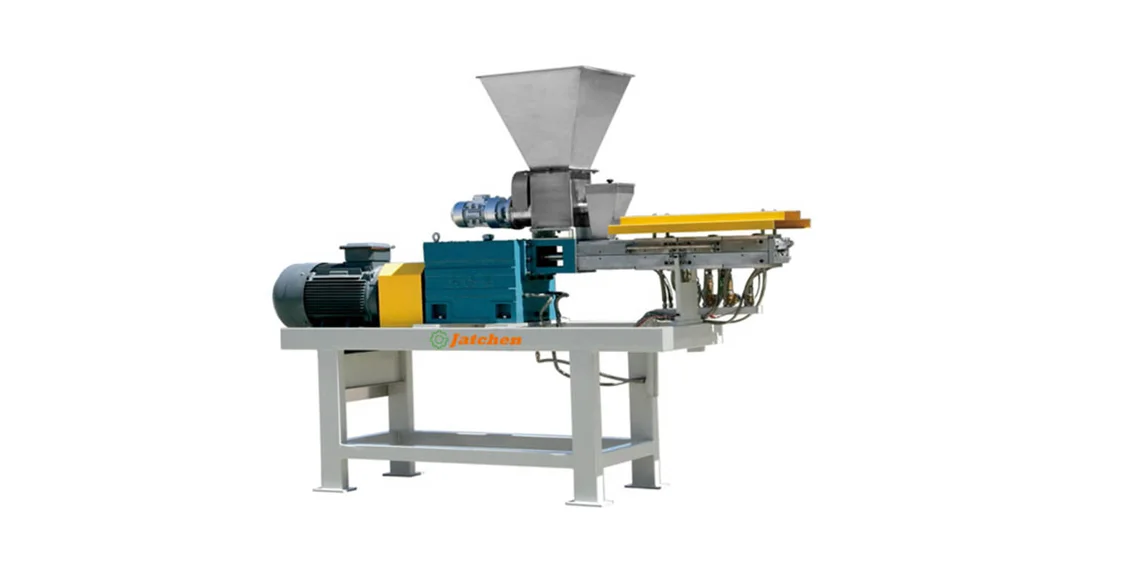
Défis communs dans les procédés d'extrusion à double vis?
Pendant les opérations de routine, diverses préoccupations influent constamment sur l'efficacité de l'extrusion. Ces questions découlent généralement de la préparation des matériaux ou des conditions à l'intérieur de la machine. De plus, ils exercent un effet direct sur la qualité des produits et la productivité de la ligne. Yantai Jatchen Powder Coating Processing Equipment Co., Ltd. se concentre sur la résolution de ces questions par la conception complète de systèmes et des connaissances pratiques en ingénierie.
Problèmes liés à l'alimentation et au flux des matériaux
L'acte d'alimentation reçoit souvent moins d'accent que mérité. Dans des scénarios réels, les variations de la taille des particules ou de la densité de masse peuvent interrompre le rythme constant de l'alimentation. Lorsque l'alimentation tourne irrégulièrement, la vis fait face à différents niveaux de charge. Par conséquent, cette situation provoque des fluctuations de pression et des rendements d'extrusion peu fiables.
Dans une séquence de fabrication standard, les matières premières passent initialement dans un mélangeur. Là, ils sont broyés et agités pour assurer une propagation uniforme. Les données provenant des opérations indiquent que le mélange pendant 3 à 5 minutes suffit pour obtenir un état uniforme. Cette fondation offre un point de départ fiable pour l'alimentation dans l'extrudeuse. Les engrenages équipés de systèmes d'alimentation via des vis anti-retard peuvent en outre préserver un flux constant. Ainsi, il évite l'accumulation ou les déclins brusques.
L'alimentation fiable implique plus que l'alimentateur seul. Il repose sur le calibre de mélange des étapes antérieures. En outre, cela dépend du transfert sans faille des matériaux à travers les procédures.
Problèmes liés au contrôle de la température
La gestion de la température se distingue comme l'un des aspects les plus délicats de l'extrusion. Chaque section du baril nécessite un environnement thermique stable. Même des déplacements mineurs peuvent influencer l'uniformité de la fonte. Cela entraîne à son tour des différences dans la structure des particules finales.
Dans les installations plus développées, le chauffage et le refroidissement se produisent dans plusieurs zones avec une surveillance séparée. La température reste confinée à un intervalle serré d'environ ±2°C. Les dispositifs de chauffage externe collaborent avec les systèmes de refroidissement pour compenser la chaleur produite par le cisaillement de la mécanique. Lorsque cet équilibre est maintenu, la substance progresse à travers le baril de manière fiable.
Si la température commence à varier, l'impact s'étend rapidement. La substance peut ne pas fondre uniformement. De plus, la tension à l'intérieur de la machine augmente, ce qui nuit à la fois au niveau de sortie et à la durabilité de l'équipement.
L'usure et la déchirure des éléments à vis
Les éléments de la vis fonctionnent sous les lourdes exigences constantes. Le frottement ainsi que la pression diminuent lentement leur capacité. Ce changement se manifeste souvent sous forme d'un déclin de la capacité de transmettre ou de mélanger qui manque d'uniformité.
Pour contrer cela, de nombreux systèmes utilisent des alliages d'acier à haute résistance et des pièces traitées à la chaleur. Ces choix renforcent la résistance à la dégradation et prolongent la durée utile des composants essentiels. En outre, la conception de pièces normalisées simplifie le processus d'échange. En tant que tel, il réduit les périodes d'arrêt.
La dégradation ne découle pas uniquement de la sélection des matériaux. Elle découle également des circonstances de fonctionnement. L'alimentation fiable et la surveillance de la température réduisent les contraintes inutiles. Ils ralentissent donc la progression de l'usure.
Difficultés à obtenir des résultats cohérents
La préservation d'un rendement stable constitue un obstacle fréquent. Malgré l'absence de défaillances évidentes, de légers changements dans les caractéristiques des matériaux ou les configurations des processus peuvent générer des disparités dans les résultats de fabrication.
Les systèmes d'extrusion contemporains dépendent du contrôle via PLC, y compris des capacités de stockage de paramètres. Une fois qu'une collection fiable de paramètres est définie, elle devient disponible pour une utilisation répétée. Cette pratique diminue les différences entre les lots. La surveillance en temps réel de la pression, de la température et de la vitesse d'alimentation permet des modifications rapides. Par conséquent, il maintient la procédure dans un champ fiable.
Résoudre les problèmes dans les extrudeuses à double vis de laboratoire?
Les équipements d'extrusion en laboratoire doivent refléter les conditions de production à une échelle réduite. Cette nécessité exige une gestion exacte et une structure adaptable. Yantai Jatchen Powder Coating Processing Equipment Co., Ltd. crée des systèmes pour les laboratoires qui correspondent étroitement aux paramètres de la production industrielle. Ainsi, ils garantissent que les résultats des tests restent fiables.
Optimisation des techniques d'alimentation des matériaux
Dans les équipements de laboratoire, l'instabilité de l'alimentation apparaît plus évidente en raison de volumes de rendement plus petits. Les conceptions de barils qui s'ouvrent comme des coquilles permettent une entrée simple dans les pièces à l'intérieur. Cet accès facilite le nettoyage et l'examen rapides.
Les doublures divisées en segments améliorent également le mouvement des matériaux. Ils réduisent l'accumulation de résidus. De plus, ils rendent le nettoyage plus efficace lors du passage à des recettes variées. Cet avantage s'avère particulièrement utile dans les environnements de test où les altérations se produisent souvent.
Améliorer la gestion de la température pour de meilleures performances
Extrudeurs dans les laboratoires utilisent des systèmes de contrôle de la température avec précision pour s'aligner sur les conditions de production. Le contrôle par PID dans les deux directions aide à maintenir des états thermiques stables. En conséquence, les essais en petits lots donnent des informations fiables.
La manipulation précise de la température pendant les essais garantit que les résultats s'appliquent directement aux lignes de production plus grandes. Aucune modification majeure n'est nécessaire dans le processus.
Sélection de matériaux durables pour les composants à vis
Même lors de l'utilisation en laboratoire, les tests qui se répètent peuvent conduire à une dégradation rapide. Les composants en acier allié augmentent l'endurance et maintiennent une fonction fiable au fil du temps.
Cette approche réduit les pauses au milieu des tests. Il conserve également la stabilité des résultats au cours de plusieurs expériences.
Améliorer l'étalonnage pour obtenir des résultats cohérents
Les systèmes de PLC avec écrans tactiles permettent un réglage détaillé des paramètres. Les opérateurs ont la possibilité d'ajuster la vitesse, la température et le taux d'alimentation pour répondre à des exigences particulières.
Certains dispositifs pour les laboratoires combinent l'extrusion avec des fonctions de refroidissement et de concassage. Cette intégration permet un traitement sans interruption de la fusion à la formation de feuilles. Par conséquent, il augmente la productivité. Il fournit également une simulation qui reflète plus précisément toutes les lignes de production.
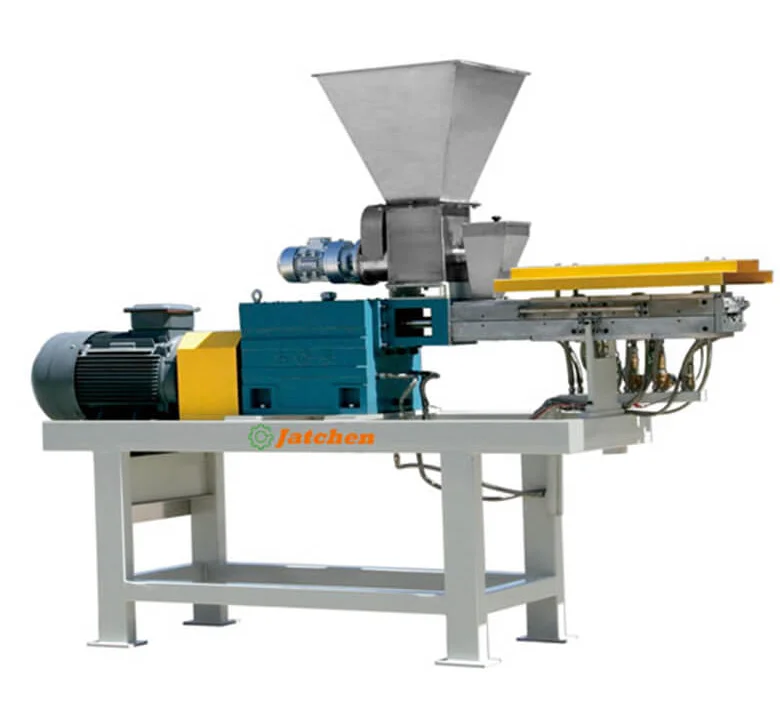
Solutions pour maximiser l'efficacité dans l'extrusion à double vis
L'amélioration de l'efficacité dans l'extrusion nécessite une harmonie entre l'équipement, les pratiques d'entretien et la surveillance des processus. Yantai Jatchen Powder Coating Processing Equipment Co., Ltd. offre des réponses complètes qui abordent toute la chaîne de production.
Technologies avancées pour les extrudeuses de laboratoire
Extrudeurs pour les laboratoires à l'heure actuelle incluent des éléments comme des barils qui s'ouvrent comme des coquilles, des doublures en segments et le contrôle de la température avec précision. Ces aspects permettent aux équipements à petite échelle d'imiter les conditions de l'industrie avec proximité.
Extrudeuses à double vis, structurées avec des rainures qui courent en profondeur et des caractéristiques de faible cisaillement, arrière transport fiable et mélange. Lorsqu'ils sont associés à des systèmes de chauffage et de refroidissement qui fonctionnent bien, ils maintiennent des conditions de traitement cohérentes.
Des conceptions de cette nature réduisent le fossé entre les essais et la fabrication et rendent la croissance des processus plus fiable.
Pratiques d'entretien pour prolonger la durée de vie de l'équipement
Les examens effectués régulièrement jouent un rôle essentiel dans le maintien des opérations qui restent stables. Le suivi de la dégradation des vis, la vérification des systèmes de lubrification et l'échange de pièces à des moments appropriés évitent de plus grandes pannes.
Les systèmes de lubrification à partir d'un point central diminuent le travail effectué à la main. Ils protègent également les composants essentiels. Associés à des matériaux durables, ils prolongent la durée de vie des équipements. En même temps, ils réduisent les frais d'entretien à long terme.
La planification de la maintenance décide souvent si une ligne de production fonctionne sans arrêts ou fait face à des arrêts qui se produisent souvent.
Le rôle de la surveillance et de l’automatisation des processus
L'automatisation améliore la gestion de l'ensemble de la procédure d'extrusion. Les paramètres importants, y compris la température, la pression et le taux d'alimentation, font l'objet d'une surveillance continue.
Systèmes de PLC équipés de fonctions pour éviter les erreurs réduisent les erreurs dans le fonctionnement. Le stockage des données permet l'examen des exécutions antérieures. Cette capacité aide à améliorer les paramètres des processus au fur et à mesure que le temps avance.
Le contrôle à ce niveau introduit la fiabilité. Il s'avère particulièrement utile lorsque les conditions de production changent ou lorsque des recettes variées subissent une transformation.
Solutions adaptées aux besoins spécifiques de production
Les matériaux qui diffèrent nécessitent des configurations de vis qui varient. Les conceptions de vis sous forme modulaire permettent de modifier les sections de transport et de mélange pour répondre aux exigences de traitement particulières.
Arrangements qui répondent à un large éventail de besoins de production sans modifications à grande échelle des équipements. Cette flexibilité apporte une grande valeur pour les fabricants qui gèrent plusieurs types de produits.
Contexte de l'entreprise et de l'équipement
Yantai Jatchen Powder Coating Processing Equipment Co., Ltd. a acquis une expérience substantielle dans la création et la fabrication d'équipements pour le revêtement en poudre. La société fournit des lignes de production qui sont personnalisées pour la productivité, la fiabilité et la simplicité de l'entretien.
Son équipement combine des systèmes de contrôle qui possèdent de l'intelligence, de la surveillance à partir d'un emplacement central et de la manipulation de la taille des particules qui a été raffinée. Ces qualités aident à maintenir la qualité des produits qui reste uniforme. Pendant ce temps, ils diminuent l'utilisation d'énergie et l'implication à la main.
La conception du système dans son ensemble englobe la procédure complète. Il s'étend du mélange et de l'extrusion au refroidissement, au broyage et au tri. Chaque phase se connecte pour garantir un flux de matériaux qui se déroule en douceur. De plus, il assure une fonction stable tout au long de la ligne de production.
FAQ (questions fréquentes)
Q1: Qu'est-ce qui cause l'alimentation instable dans l'extrusion à double vis?
R: Les variations dans la taille des particules, la densité ou l'uniformité du mélange peuvent perturber l'alimentation. Les systèmes de prémélange appropriés et d'alimentation stables aident à maintenir un flux constant.
Q2: Pourquoi le contrôle de la température est-il si critique?
R: La température affecte le comportement de fusion et de mélange. Garder chaque zone dans une portée étroite évite les défauts et réduit la pression sur l'équipement.
Q3: Comment l'usure de vis peut-elle être minimisée?
R: L'utilisation de matériaux à haute résistance et le maintien de conditions de fonctionnement stables réduisent l'usure et prolongent la durée de vie.
Q4: Comment l'automatisation améliore-t-elle la stabilité de la production?
R: Les systèmes automatisés surveillent les paramètres clés et permettent des paramètres répétables, réduisant la variabilité entre les lots.
Q5: Les extrudeuses de laboratoire peuvent-elles fournir des données de production fiables?
R: Oui, lorsqu'elles sont équipées de systèmes de contrôle précis, les extrudeuses de laboratoire peuvent reproduire de près les conditions de production et fournir des données précises pour l'expansion.


