

What Is a Cooling Belt and How Does It Enhance Process Efficiency
What Is a Cooling Belt and How Does It Enhance Process Efficiency
Modern industrial processing depends on precise thermal management during material transformation because it affects both powder coating and polymer manufacturing operations. The cooling belt functions as a vital element which enables efficient thermal management systems. Yantai Jatchen Powder Coating Processing Equipment Co., Ltd. provides dependable cooling systems which are specifically designed for powder processing facilities that need continuous efficient and clean operation. The company provides engineering excellence through application-specific customization of cooling belt solutions based on its proven expertise.
What Is a Cooling Belt and Why Is It Essential in Industrial Processing?
A cooling belt functions as a specific conveyor system which serves to lower the temperature of molten or semi-solid materials that exit high-temperature extrusion processes. The systems play a crucial role in processes that need immediate and consistent temperature reduction to achieve material stability and enable subsequent processing steps.
Definition and Functionality of a Cooling Belt
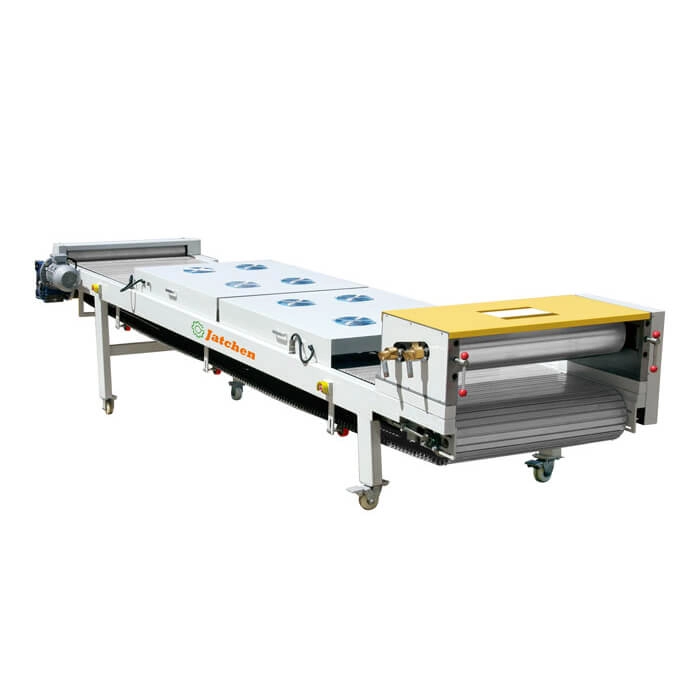
The cooling belt consists of a stainless steel or heat-resistant synthetic material conveyor surface which contains air blowers or water sprays for cooling functions. The belt receives materials from the extruder which then transform into workable solid sheets through thermal reduction control. The system uses heat reduction to shape the melted material into sheet form which becomes ready for milling operations. The process transforms big material blocks into milling-ready sheet materials which produces both efficient and high-quality results.
Role of Cooling Belts in Thermal Management
The design of cooling belts enables fast and balanced heat dissipation which covers the entire surface of processed materials. The process stabilizes material properties including viscosity and adhesion while creating equal solidification throughout the material. The correct thermal management through a cooling belt system protects materials from developing defects which include microcracks and uneven surfaces and residual stress accumulation.
Importance in Powder Coating and Polymer Applications
The manufacturing process of powder coating requires complete prevention of agglomeration during the cooling stage. The production of uniform sheets enables exact control of particle dimensions during grinding and sieving operations. The cooling belts maintain product consistency by transforming molten powder materials into solid sheets which become ready for efficient processing. The feeding device of the extruder spreads molten powder coating materials evenly onto the air cooling belt conveyor during operation.
How Do Different Types of Cooling Belts Operate?
Cooling belts exist in multiple sizes which do not share a common dimension. The selection of thermal reduction methods depends on both material types and production facility conditions. The selection of appropriate cooling configurations determines production success because it affects both energy consumption and manufacturing space requirements.
Air Cooling Belt for Non-Contact Thermal Reduction
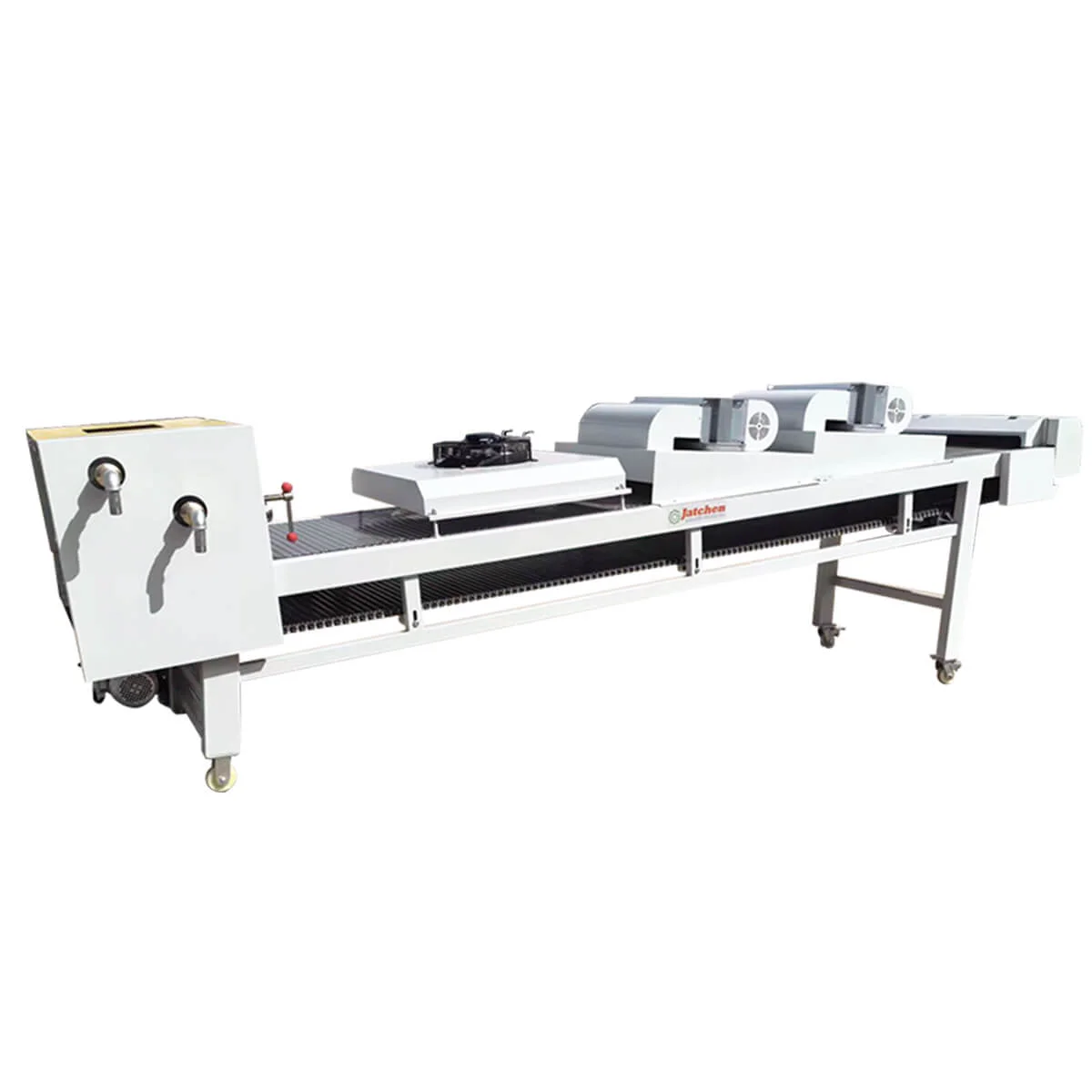
The system uses air-cooled technology to perform temperature reduction while keeping the process dry and free from contamination. The device uses multiple air-cooling units to blow cold air at materials as they move on the conveyor belt which quickly turns hot molten materials into solid sheets that can be crushed and sieved. The Air Cooling Belt provides steady production rates while using minimal power.
Water Cooling Belt for Rapid Heat Dissipation
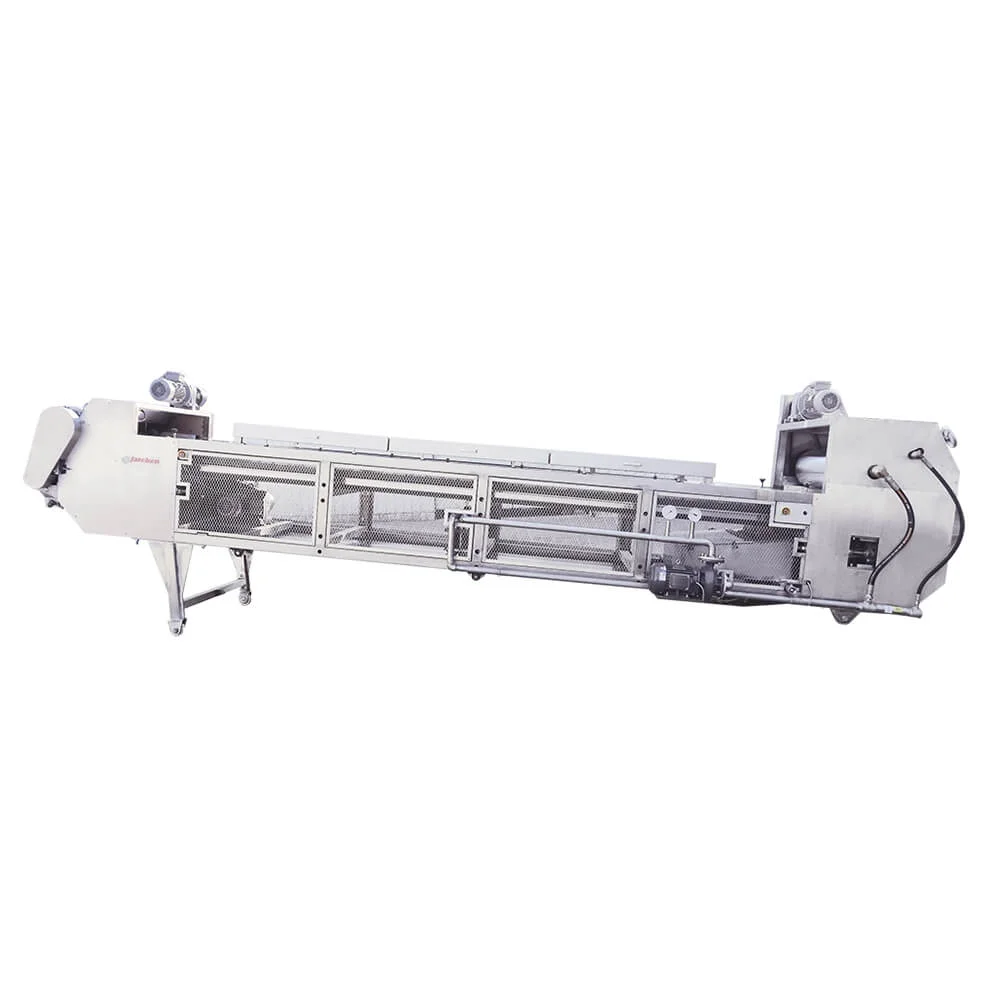
Water-cooled belts provide the highest operational efficiency for dense and thermally resistant materials during high-volume production. The Water Cooling Belt system uses circulating water to flow beneath the conveyor for enhanced thermal extraction speed. The tablet press receives extruded melt which then passes through press rolls to experience cooling and sheet formation into specific thicknesses and shapes. The method produces sheets at high speed while maintaining uniformity during heavy material processing.
Compact Roller Design for Space-Constrained Environments
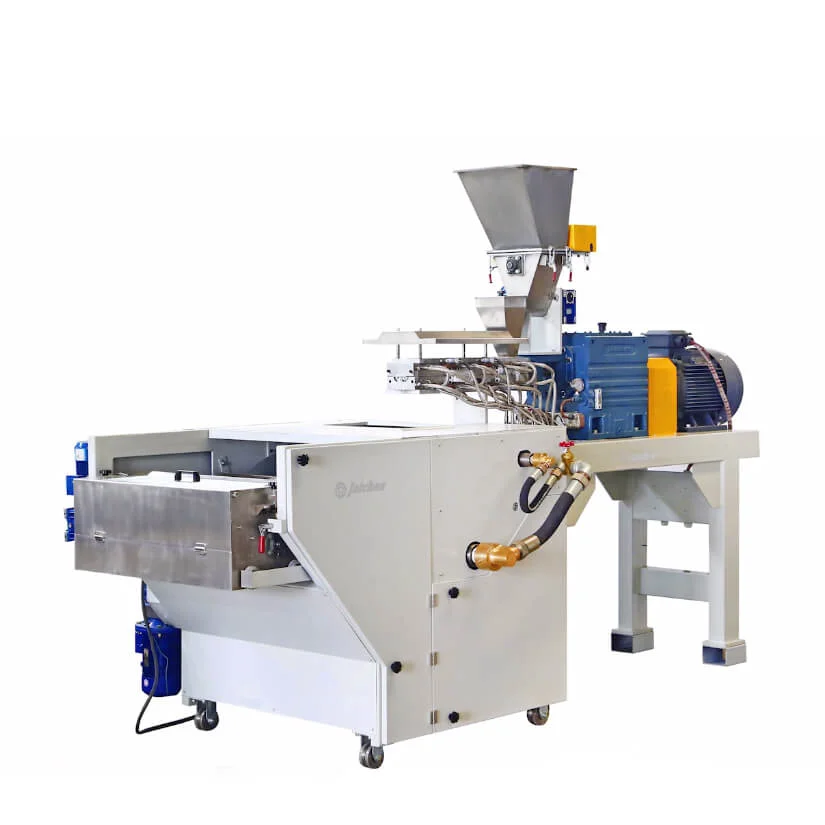
The Compact Roller model provides an attractive solution for businesses that have restricted floor space. The Compact Roller system combines cooling capabilities with a reduced footprint to achieve high production rates. The Compact roller serves as a dedicated tool for powder coating operations to transform materials from batching and mixing stages into sheet form. The device serves two purposes: it helps organizations update their current production lines and it enables them to establish flexible manufacturing systems within restricted factory spaces.
What Are the Key Performance Benefits of Using a Cooling Belt?
Cooling belts serve dual purposes by controlling temperature while ensuring process reliability and maintaining operational continuity and producing uniform end products. The combination of their benefits leads to increased productivity and decreased maintenance stoppages throughout extended operation periods.
Enhanced Process Efficiency Through Continuous Operation
The main benefit of this system allows operations to run without interruption. The steel belt operates continuously to perform non-stop feeding and tableting and discharging operations at high efficiency. The continuous operation of the equipment minimizes production downtime between batches which results in better equipment utilization and lower operational expenses.
Improved Product Quality and Consistency
The controlled cooling process results in products that have uniform characteristics. The precise roller gap adjustment between rollers maintains uniform sheet thickness which becomes essential for grinding and classification operations. Precise thickness control: The high-precision adjusters maintain exact belt to upper roller spacing for achieving different product specifications with ±0.1mm accuracy.
Reduced Downtime and Maintenance Requirements
The current design of systems uses modular building methods with easily accessible system elements. The system allows users to detach steel belt components for cleaning purposes while its protective design structure blocks dust entry to increase operational duration. The system design structure enables operators to perform cleaning and part replacement operations without stopping the machine.
Why Should You Consider Jatchen’s Cooling Belt Solutions?
Yantai Jatchen operates as a worldwide leader in powder coating equipment supply while developing customized cooling systems for different industrial sectors.
Proven Expertise in Powder Coating Equipment Manufacturing
Yantai Jatchen Powder Coating Processing Equipment Co., Ltd. operates as a specialized company which delivers powder coating production equipment to customers. The company maintains enduring business relationships with leading industrial companies because of its dependable operations and advanced technical capabilities.
Diverse Product Line Covering Multiple Industrial Needs
Their product range includes Air Cooling Belts and Water Cooling Belts and Compact Rollers which serve different production needs and material types.
Customization and Technical Support Services Available
The production line layout follows customer needs while selecting professional suppliers who provide raw materials for powder coating. Jatchen delivers complete support starting from planning through to post-sales maintenance to guarantee your system fulfills all operational needs.
How Does the Air Cooling Belt from Jatchen Improve Operational Flexibility?
The air-cooled system provides flexibility because it works with various materials and line arrangements.
Modular Design Facilitating Easy Installation and Expansion
The system design enables straightforward integration with current operational systems. The system consists of four basic units which include feeding and conveyor sections and air-cooling and discharging components. The system operates with simplicity which makes installation and debugging and operation straightforward while reducing the number of potential breakdowns that cause system downtime.
Energy-Efficient Operation with Minimal Resource Consumption
High automation: The system includes control systems which enable users to set parameters and operate automatically while monitoring in real-time and alerting about system failures. The system operates efficiently through automated processes which do not require human involvement and function independently from external resources including water and refrigerants.
What Makes the Water Cooling Belt from Jatchen Suitable for High-Capacity Lines?
The water-cooled model provides strong performance for volume-driven operations that need to complete solidification cycles at high speed.
Efficient Heat Transfer for Dense Material Streams
The steel band conveyor achieves better cooling results and higher efficient productivity through its integrated water spray system located at the bottom.
Integrated Water Circulation System Enhancing Uniformity
The belt contains cooling devices which include cooling rollers and water systems that quickly solidify molten material. The process maintains uniform temperature throughout the entire belt width regardless of how the material is distributed.
Durable Construction Supporting Long-Term Industrial Use
The imported high quality steel belt provides extended operational life because it resists corrosion that occurs when heat and moisture exposure becomes prolonged.
When Should You Choose the Compact Roller Model from Jatchen?
The small size of facilities creates problems for facility managers when they need to perform equipment upgrades or new installations. The compact roller design solves the problem of limited space.
Ideal Configuration for Limited Floor Space Applications
The large cooling roller design enables maximum capacity utilization while maintaining a compact footprint that saves space.
Balanced Performance Between Throughput and Footprint
Efficient continuous production: High efficiency enables continuous operation. The production system of large models operates at a rate that generates hundreds of kilograms to tons per hour.
Simplified Maintenance with Accessible Roller Assembly
The rollers and feeding devices made from stainless steel serve as material-contacting parts because they provide corrosion resistance and easy cleaning capabilities. The parts have detachable designs which allow complete cleaning procedures between production runs.
FAQ
Q1: Can a cooling belt help reduce operational downtime?
A: Yes, their modular designs allow quick maintenance access, minimizing stoppage durations during cleaning or repairs.
Q2: Which model suits high-volume industrial lines?
A: The Water Cooling Belt supports outputs up to 1200 kg/h with excellent heat dissipation capacity.
Q3: What if I have limited installation space?
A: The Compact Roller delivers full functionality in compact environments without compromising performance.


