

What Are the Types of Grinding Mill Machines for Industrial Material Grinding
What Are the Types of Grinding Mill Machines for Industrial Material Grinding
Industrial material grinding goes beyond simply reducing particle size. It focuses on delivering steady output, precise particle distribution, dependable throughput, and extended service life amid tough production settings. When you pick a grinding mill machine, you are essentially committing resources to reliable production and uniform product quality for many years to come.
If you seek a manufacturer with substantial expertise in industrial powder processing gear, consider Yantai Jatchen Powder Coating Processing Equipment Co., Ltd. This firm specializes in grinding, mixing, extrusion, and full production line setups for industrial powder materials. Their range of products, support for technical needs, and worldwide project background position them as a solid option when assessing grinding methods.
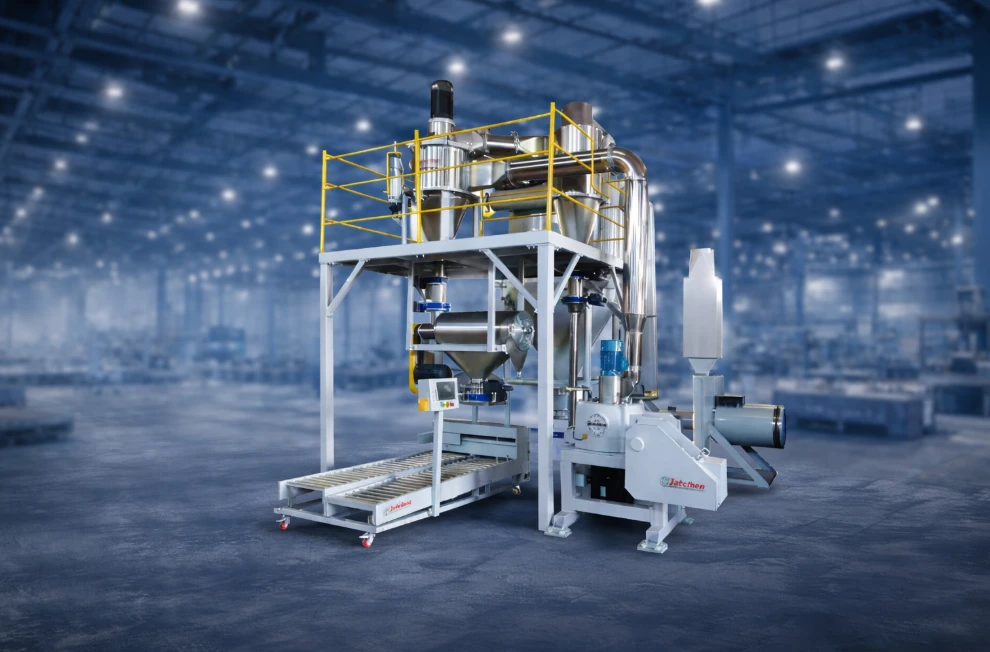
What Industrial Tasks Require Grinding Mill Machines?
Prior to selecting a grinding mill, gain a clear understanding of your specific production needs. Industrial grinding applies to numerous fields, ranging from mineral fillers and metal powders to polymer-based materials employed in building and sophisticated manufacturing. Every field calls for varying levels of fineness, output volume, and sorting accuracy.
Overview Of Industrial Grinding Applications
Grinding mill machines find broad use in powder coating production setups, mineral handling facilities, chemical material readiness, and composite material creation. Within powder coating production, grinding serves as a vital step following extrusion and cooling. Here, materials must attain uniform particle size to ensure reliable spraying results and superior surface finish. In mineral handling, grinding shapes the ultimate particle spread and strongly impacts the effectiveness of later separation processes.
Challenges Of Material Size Reduction
Industrial materials frequently possess considerable hardness, uneven forms, or robust adhesion following initial processing phases. Lacking suitable airflow management and sorting setups, mills might generate too many large particles or excessive fine dust. Such outcomes lower yield and raise energy expenses. Moreover, heat buildup, rotor deterioration, and erratic airflow influence the end particle spread and device durability. This holds especially true in ongoing production settings, where interruptions prove costly.
Benefits Of Choosing The Right Grinding Solution
Selecting an appropriate grinding setup helps cut down on rework instances, decrease energy use per ton, and uphold steady particle spread within tight limits. A thoughtfully planned system merges grinding with sorting functions. As a result, it avoids excessive grinding and boosts overall yield. In the long run, these elements lead to tangible cost management and reliable product results.
What Are The Main Categories Of Grinding Mill Machines?
Industrial grinding mills fall into categories based on their build, airflow arrangement, and sorting approach. Each group addresses distinct production demands and sizes.
Picking the suitable type involves weighing mechanical build, airflow performance, and ease of upkeep, instead of solely eyeing stated output levels.
Vertical Versus Horizontal Mill Systems
Vertical mills depend on gravity-aided feeding, making them fitting for specific bulky materials. Horizontal setups, on the other hand, typically offer simpler access for maintenance and adaptable fitting into automated production flows. Horizontal air classifier mills appear often in powder creation due to their ability to unite impact grinding and active sorting within a single framework.
Traditional Versus High Efficiency Mills
Conventional mechanical mills mainly use mechanical strikes and stationary screens. Advanced efficiency setups incorporate active sorters, managed airflow, and variable rotor speeds to achieve sharper particle spread. This change enables better command over final fineness, all while curbing needless energy loss.
Dry Grinding Versus Air Classifying Mills
Dry grinding mills function without liquid agents and represent the norm in industrial powder handling. Air classifying mills incorporate an active sorter that divides fine particles from larger ones right away. Consequently, they enhance evenness and cut back on extra processing stages.
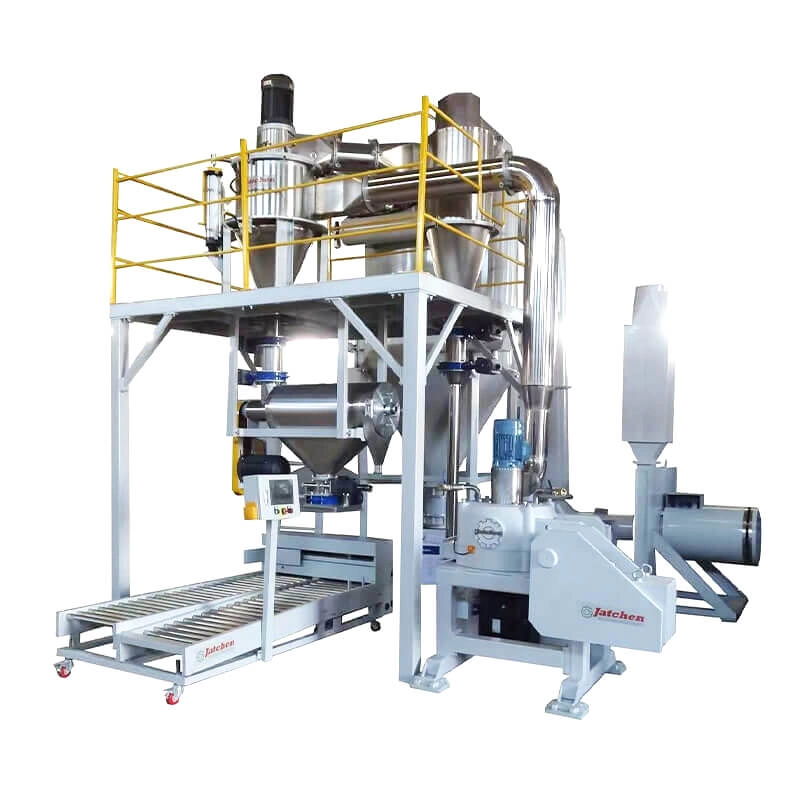
What Is The ICM Grinding System And Where Is It Used?
When operations demand substantial output and consistent particle management, combined grinding setups provide notable benefits compared to isolated mills. A prime instance is the ICM Grinding System, crafted for industrial powder processing lines that need nonstop and reliable functioning.
Detailed build and specs for this system appear in the manufacturer’s product area, where setup options and key parameters receive clear explanation.
Introduction To ICM Grinding System
The ICM system blends impact grinding with built-in air sorting. Materials feed into the grinding area, gain speed from fast rotors, and undergo sorting via adjustable airflow guidance. Larger particles loop back for additional grinding, whereas approved powder leaves the setup. This process cuts down on wasted energy.
Key Advantages In Industrial Material Processing
This system permits fineness adjustments via rotor pace and sorter settings. Such adaptability lets you adapt swiftly to shifts in product needs without extensive mechanical changes. Additionally, its inner loop design limits dust release and aids in maintaining cleaner work areas.
Typical Industries Served With ICM Solutions
ICM systems see common use in powder coating manufacturing flows and similar industrial powder fields, where particle size spread directly sways later performance.
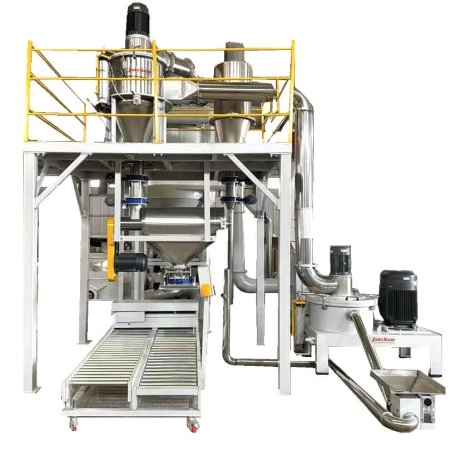
How Does The ACM Grinding System Differ From Others?
Whereas the ICM system prioritizes unified grinding reliability, the ACM Grinding System stands out for its accuracy in fine particles and strong sorting output.
By examining airflow layout and sorter reaction time, the distinctions emerge plainly.
Overview Of ACM Grinding System Features
The ACM system employs a fast-spinning sorter paired with impact grinding parts. Airflow lifts particles into the sorting region, allowing fine powder to proceed while larger ones return to the grinding zone. This looped arrangement enhances particle consistency.
Operational Efficiency And Fineness Control
The ACM system facilitates precise tweaks to particle cutoff size by means of rotor speed and airflow tuning. In setups needing slim particle size bands, this management lessens oversized content and raises yield of completed goods.
Application Scenarios For ACM Grinding Machines
ACM systems fit well in industrial facilities that value high accuracy and uniform output in moderate to sizable operations. Numerous combined line options, as detailed in the solution hub, illustrate how ACM components link with prior mixers and following sieving tools.
What Should You Consider When Selecting A Grinding Mill Machine?
Choosing a grinding mill demands a methodical review process, rather than zeroing in just on device cost. Factors like production steadiness, upkeep intervals, and availability of replacement parts all shape enduring expenses.
Material Characteristics And Grinding Goals
Assess hardness, starting particle size, and desired fineness levels. Substances with greater hardness might need sturdier impact builds, whereas rigorous fineness bounds require active sorting setups.
Output Fineness And Production Capacity Needs
For facilities running steady shifts, capacity forecasts must include high-demand periods and potential growth.
Energy Efficiency And Operational Costs
Airflow pattern, motor performance, and inner loops affect overall energy needs per ton. Gear with merged sorting frequently avoids unneeded re-grinding, thereby reducing total power demands.
How Do Jatchen Grinding Solutions Support Industrial Efficiency?
Grinding setups seldom work in isolation. They form part of a broader production sequence that encompasses mixing, extrusion, cooling, and packing. A provider able to deliver unified solutions eases coordination and technical harmony.
Integration With Industrial Production Lines
From the company profile, it becomes evident that the manufacturer supplies full processing tools. This ensures grinding components align with prior and later equipment specs, avoiding mismatch problems.
Customization And After Sales Service Support
Industrial buyers commonly need tailored airflow settings, motor setups, or control mechanisms. The service area describes technical aid, setup advice, and upkeep help that shorten startup periods.
FAQ
Q1: How Do You Choose Between ICM And ACM Grinding Systems?
A: The selection hinges on the needed fineness scope, output volume, and sorting accuracy. ICM systems stress reliable combined grinding for ongoing lines, whereas ACM systems provide superior command for fine particle spread.
Q2: What Factors Influence Grinding Efficiency Most?
A: Rotor pace, airflow guidance, sorter build, and material hardness all shape grinding results and ultimate particle spread.
Q3: Can Grinding Systems Be Integrated Into Existing Production Lines?
A: Yes, unified solutions exist, and system fit should get checked against prior and later equipment details.
Q4: How Important Is After Sales Technical Support?
A: Technical aid cuts installation duration, boosts startup performance, and lessens unforeseen pauses in running.
Q5: Where Can You Get Detailed Technical Specifications And Project References?
A: Examine product details, solution overviews, and case analyses via the official site and contact section for straightforward inquiries.


