

The Role of Powder Grinding Machines in Modern Industrial Production
The Role of Powder Grinding Machines in Modern Industrial Production
Modern industrial production increasingly depends on the precise control of material characteristics, among which particle size plays a decisive role in product quality, process stability, and operational efficiency. Powder grinding machines therefore occupy a critical position within industrial processing lines, functioning not merely as size reduction equipment but as foundational systems that influence downstream performance and long-term production reliability. As manufacturing requirements continue to evolve toward higher consistency and efficiency, the design and integration of grinding systems have become central considerations for industrial planners. Yantai Jatchen Powder Coating Processing Equipment Co., Ltd. specializes in powder processing and system engineering, providing integrated grinding solutions that combine equipment design with practical production requirements, and supporting modern industries with reliable, process-oriented powder grinding technologies.
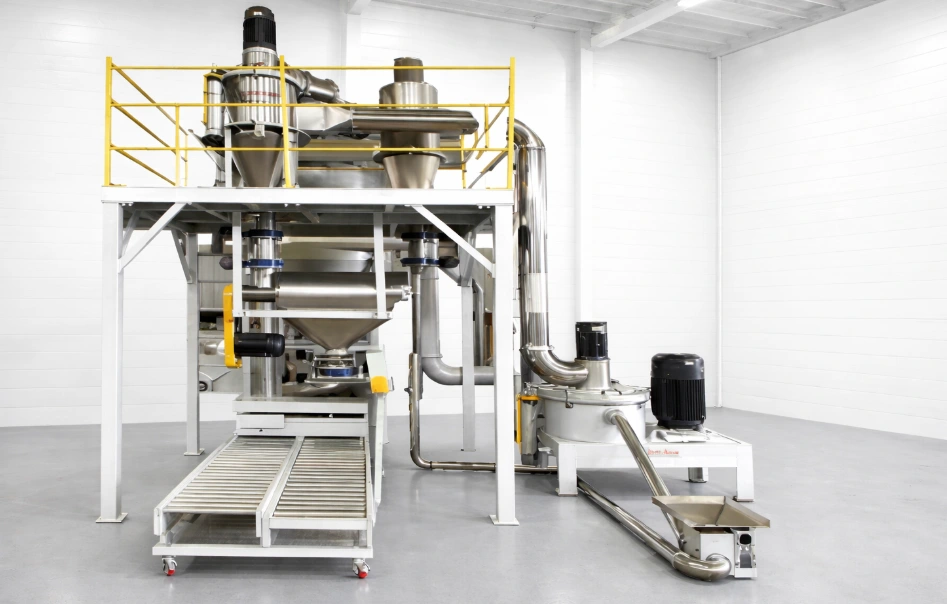
What Are Powder Grinding Machines And Why Do They Matter In Modern Industry?
Powder grinding machines are often treated as simple size reduction tools, but in real production they influence output rate, energy use, and even how stable your downstream processes feel. Before looking at models or systems, it helps to see what role these machines truly play.
Definition Of Powder Grinding Machine
A powder grinding machine reduces solid materials into fine and controlled particles through mechanical force. In industrial settings, this process must stay consistent across long production cycles. According to project descriptions and system explanations from the Jatchen product center, industrial grinding systems are designed as integrated units.
Importance Of Particle Size Reduction
Particle size affects flowability, surface contact, and packing behavior. In daily production, even small variations can cause blockage, uneven coating, or unstable mixing. Case records shared in the solution center show that controlled grinding often reduces rework and manual adjustment later in the process.
Impact On Industrial Production Efficiency
When grinding runs smoothly, the entire line benefits. Stable particle output reduces stops and material waste. In contrast, inconsistent grinding often shows up as downstream problems that seem unrelated at first.
How Do Grinding Machines Improve Production Quality And Consistency?
Quality problems rarely come from one big mistake. More often, they grow from small inconsistencies that repeat every shift. Grinding machines help limit those issues at an early stage.
Uniform Particle Size Distribution Benefits
Uniform particles behave predictably. They feed more smoothly, spread more evenly, and reduce surprises during later processing. Technical explanations from Jatchen frequently highlight how internal classification systems help control size ranges without constant manual tuning.
Reduction Of Material Waste
Poor grinding leads to oversize particles that need reprocessing or disposal. Over time, that waste adds up. Real factory cases published in the case section show that stable grinding systems lower reject rates simply by staying consistent over long runs.
Enhanced Downstream Processing Performance
When material leaves the grinder in a predictable state, mixers, feeders, and conveyors behave better. Operators spend less time adjusting settings.
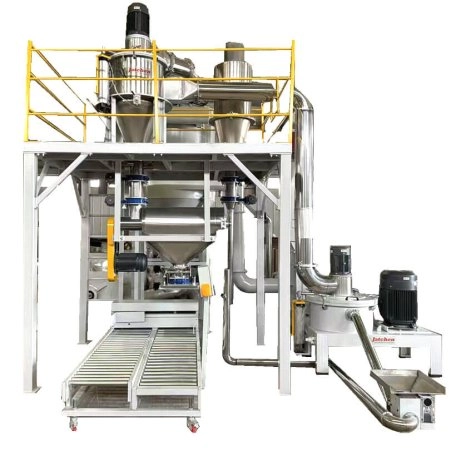
What Are Key Types Of Industrial Grinding Systems Available Today?
Not all grinding systems serve the same role. Different production goals require different structures, airflow designs, and control logic. Modern factories usually choose systems based on output needs, space limits, and maintenance expectations.
| Grinding System | Output (kg/h) | Main Motor Power (kW) | Classifier Motor Power (kW) | Fan Motor Power (kW) | Key Features |
| ACM04 | 15 | 3 | 0.12 | 4 | Adjustable particle size, low energy consumption |
| ACM07 | 50 | 5.5 | 1.1 | 5.5 | High throughput, flexible size control |
| ACM10 | 150 | 7.5 | 1.5 | 7.5 | Larger output, flexible operation |
| ICM2.4 | 40 | 2.2 | 0.55 | 2.2 | Fine grinding, low noise |
| ICM4.8 | 80 | 4 | 0.55 | 4 | Compact, high control |
| ICM12 | 200 | 7.5 | 1.1 | 11 | High efficiency, energy-saving |
ICM Grinding System Features
The ICM GRINDING SYSTEM is designed for fine and controlled powder production. According to technical descriptions on the site, it integrates grinding and internal classification in one system, helping maintain narrow particle size ranges.
ACM Grinding System Features
The ACM GRINDING SYSTEM focuses on airflow-driven grinding with adjustable classifiers. It supports higher throughput while keeping size control flexible. In practical terms, it fits factories that need both capacity and adaptability across different batches.
Comparison Of Different Grinding Technologies
ICM systems tend to favor fine control and compact layouts. ACM systems often emphasize output and flexibility. Choosing between them usually depends on your material behavior and daily production rhythm.
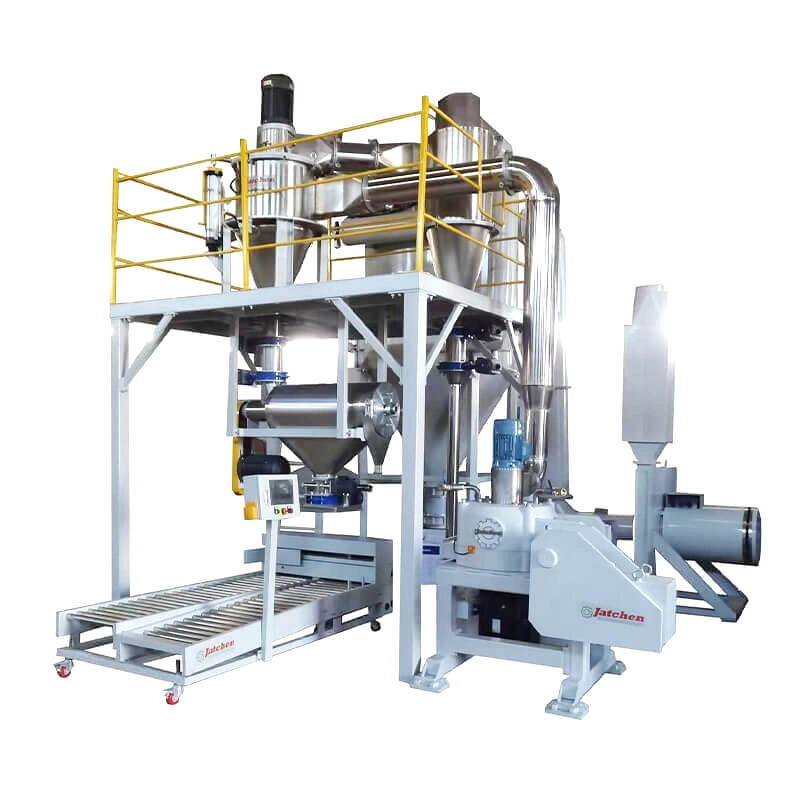
Why Choose Yantai Jatchen Powder Coating Processing Equipment Co., Ltd. For Industrial Grinding Solutions?
Equipment choice is not only about steel and motors. It is also about how much support you get once the machine starts running.
Company Expertise And Engineering Background
Jatchen long-term focus on powder processing equipment and system engineering. This experience translates into practical layouts.
Comprehensive Product Portfolio And Custom Options
Beyond grinding systems, the product section covers feeding, conveying, and integrated solutions.
Strong After-Sales Support And Services
Service descriptions in the service center point to installation guidance, technical support, and follow-up communication.
How Does The ICM Grinding System Meet Diverse Industrial Needs?
Fine grinding often brings tight tolerances and narrow margins. Small deviations can ripple across the entire line.
Customized Solutions For Fine Powder Processing
The ICM GRINDING SYSTEM supports configuration adjustments based on material behavior.
Operational Efficiency And Low Maintenance
Integrated classification reduces external components. Fewer parts usually mean fewer things to adjust.
What Advantages Does The ACM Grinding System Offer For Industrial Applications?
Some factories value flexibility above all else. Batch sizes change. Output targets shift. The ACM system responds well to that kind of environment.
High Output With Precise Control
The ACM GRINDING SYSTEM balances airflow and mechanical force, supporting higher throughput without sacrificing control. This balance matters during peak production periods when delays cost real money.
Versatility Across Multiple Material Types
According to technical notes shared in Jatchen news updates, ACM systems adapt well to different material characteristics. That versatility reduces downtime between product changes.
Reliability And Ease Of Integration
ACM systems integrate smoothly into existing lines. Many buyers notice this during installation.
How Can Manufacturers Maximize Value With Powder Grinding Machines?
Buying a grinding system is only the first step. Long-term value comes from how well the machine fits your process and how it is maintained over time.
Proper Selection Based On Material And Production Goals
Choosing between systems like ICM and ACM depends on your actual material flow and output targets. Rushing this step often leads to compromise later.
Routine Maintenance And Operator Training
Service guidance shared in the service section stresses regular inspection and operator familiarity. Machines last longer when operators understand their behavior, not just their buttons.
Leveraging Jatchen Service And Support Tools
Clear communication channels through the contact page help resolve issues faster. In real factories, quick answers often matter more than perfect ones.
FAQ
Q1: How Do You Choose Between ICM And ACM Grinding Systems?
A: The choice depends on required particle size control, output volume, and material behavior. ICM systems suit fine and stable grinding, while ACM systems support higher throughput with flexibility.
Q2: Can Powder Grinding Machines Be Integrated Into Existing Lines?
A: Yes. System layouts are commonly designed to match current feeding and conveying equipment, reducing installation disruption.
Q3: What Maintenance Work Is Typically Required?
A: Routine inspection, wear part checks, and airflow monitoring are common. Clear service guidance helps keep downtime low.
Q4: Where Can You Get Technical Support After Installation?
A: Ongoing technical assistance is available through the manufacturer’s service and contact channels, supporting long-term operation.


