

Struggling with Slow Cooling at High Output? A Water Cooling Belt May Be the Answer
Struggling with Slow Cooling at High Output? A Water Cooling Belt May Be the Answer
In today’s busy industrial manufacturing world, keeping up process speed while ensuring product quality remains a tough task. One key element that affects both is solid cooling. If your production line faces holdups from overheating, or if you notice uneven product outcomes, the problem might stem from old or weak cooling setups.
Yantai Jatchen Powder Coating Processing Equipment Co., Ltd., a reliable provider of powder coating production gear, delivers custom fixes to tackle these problems. The company has gathered plenty of hands-on know-how in creating, building, and producing top-notch powder coating production tools and lines. It can also design and adjust efficient production lines based on what customers require. You can check out their complete set of options at Jatchen’s official website.
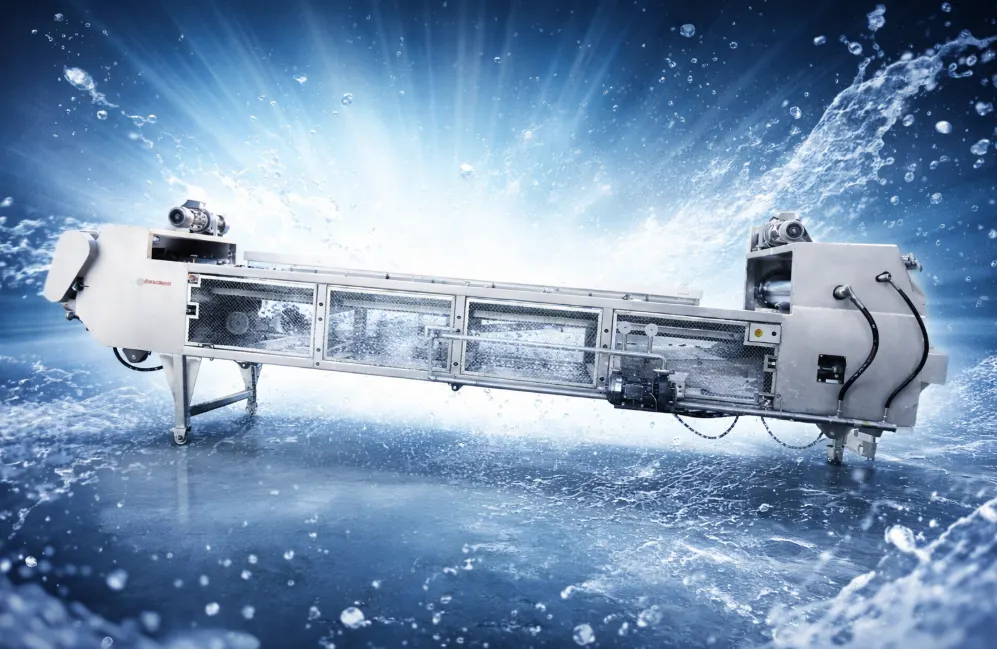
Why Is Efficient Cooling Critical in High-Output Industrial Production?
As you ramp up production amounts, the heat produced during work grows too. Without the right cooling tools, this extra warmth can harm your work in several ways.
Impact of Inadequate Cooling on Production Stability
Too much heat is not merely a fix-it problem. It poses a real risk to production. When heat builds up during steady manufacturing, it wears out equipment faster and speeds up damage to machine parts. Such heat pressure often causes sudden stops in work. Even worse, uneven cooling changes the basic traits of your product. Differences in heat levels while materials harden can lead to bent or fragile items that do not pass checks.
Influence of Cooling Speed on Throughput Efficiency
If cooling drags on or stays patchy, wait times for each cycle get longer than needed. Every moment spent letting materials hit the needed heat level adds up over groups of items, which cuts down your daily results a lot.
Role of Temperature Control in Product Uniformity
Even cooling makes sure every part of your material hardens at the same pace. The extruded melt goes into the tablet press. Under the push of the press rolls, the melt cools and forms into sheet-like items with a set thickness and form. When heat management lacks accuracy, some areas might set quicker than others. This brings internal strains, outer flaws, or uneven thickness. It directly harms looks and usefulness.
Based on performance data from our TSK30 lab extruder tests , transitioning from traditional air-cooling to a water cooling belt can reduce the cooling zone footprint by up to 40% while ensuring the material discharge temperature stays consistently below 30°C—even during 24/7 high-intensity operation.
What Are the Limitations of Traditional Cooling Methods?
Outdated setups often fail to handle current high-speed demands. Their weak points show up clearly in plants that seek quickness, accuracy, and steadiness.Unlike traditional air-cooling which relies on ambient air and often results in a cooling rate of only 5-8°C/min, Jatchen’s water cooling system uses a closed-loop water circuit to achieve a rapid cooling rate of 18-25°C/min. This ensures that molten material from the extruder (at 180-220°C) solidifies within 2-4 minutes instead of 10+ minutes.
Restricted Heat Dissipation Capacity
Common cooling arrangements, such as those using air or simple carriers, do not have the heat-moving power needed for big loads at fast paces. Standard setups usually cannot deal with heavy heat amounts during top production, particularly with liquid materials that need to turn solid fast.
Inconsistent Surface Cooling Performance
Systems based on air or coolant flows that spread poorly often create uneven heat patterns over the material’s outer layer. This causes changes in depth and might lead to breaks or splits when cooled spots shrink in different ways.
High Maintenance and Energy Consumption
Old setups often use large mechanical pieces that break easily. They demand regular repairs and use more power, which raises worker expenses and energy costs.
How Does a Water Cooling Belt Improve Industrial Cooling Performance?
If cooling pace and reliability slow down your work, moving to a water cooling belt could be your smartest step ahead. These tools come built for the needs of current manufacturing.
Direct Contact Heat Transfer Efficiency
Water cooling belts offer better heat-moving ability because of straight touch between the item and the cold stainless-steel belt face. Thermo-melting material from extruder is rolled to be sheet for 1-2mm by cooling rollers, and being cooled down on the stainless steel conveyor to ambient temperature. This approach speeds up heat removal more than air-based ways.
Stable and Uniform Cooling Across the Belt Surface
By spreading cooling water evenly below the belt and keeping steady flow amounts, these belts get rid of hot spots. Cooling devices (e.g., cooling rollers, water systems) under the belt quickly cool and harden the liquid material. You end up with even sheet depth and steady firmness over groups of items.
Integration With Continuous Processing Lines
A big plus is how well it fits into automatic lines. The steel belt moves without pause for ongoing supply, pressing, and output, with strong efficiency. No matter if you run extrusion or mixing tasks, this setup matches perfectly with earlier mixers or extruders.
Why Choose Jatchen’s Water Cooling Belt for Your Facility?
Not every water cooling belt matches in quality. If you seek a fix made just for tough industrial uses, Jatchen brings strong reasons to pick it.
Advanced Engineering for High-Capacity Applications
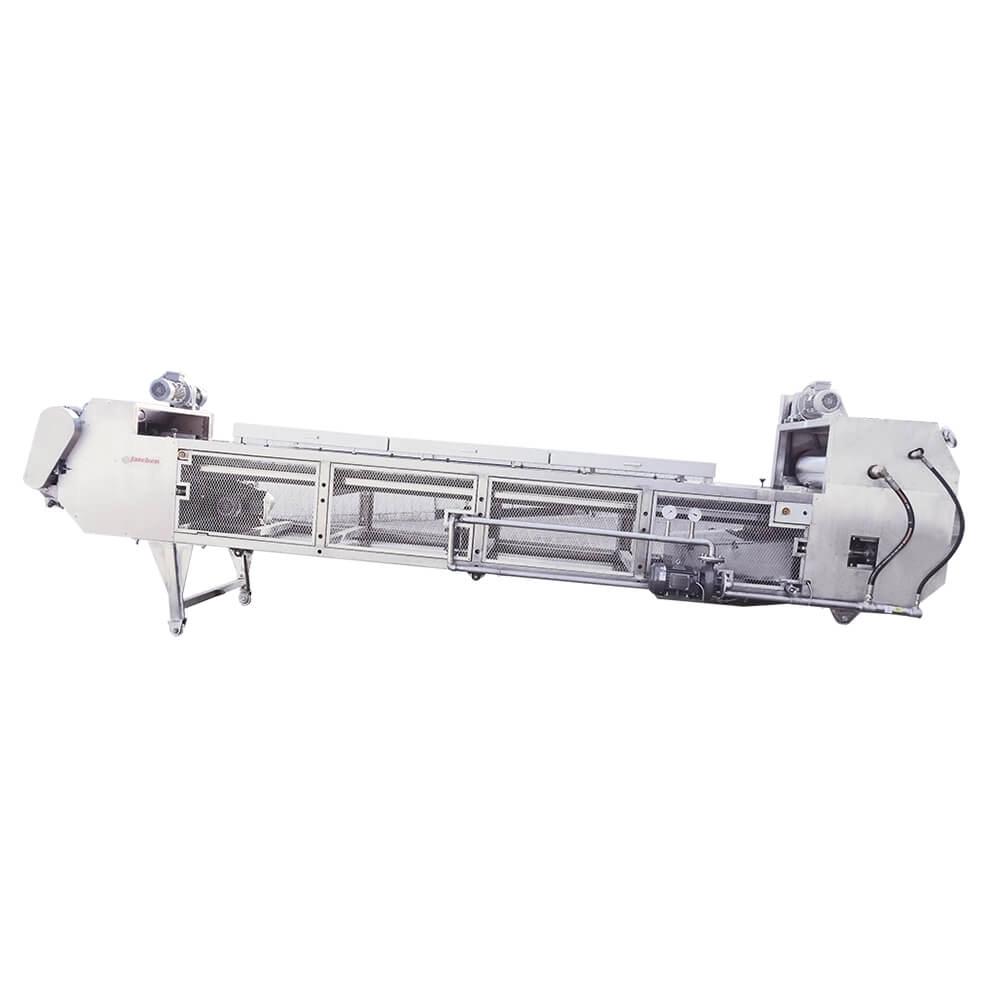
Jatchen’s water cooling belts feature improved parts like cooling rollers, crushers, and adjustable-speed carriers made for round-the-clock running. Stainless-steel band cooling crusher of GDJ is composed of cooling rollers, stainless steel conveyor, crusher and cooling-water spraying system. Each version meets certain output demands, from 200 kg/h up to 1200 kg/h.
Durable Construction With Corrosion Resistance Features
All main parts use top-quality stainless steel that fights off rust or chemical damage. It includes imported high quality steel belt, along with safety features like guide tools to prevent bending while in action.
Customizable Solutions Tailored to Your Process Line
Each plant has its unique space needs. Jatchen gives flexible setups and exact control choices for roller space, chip depth, and belt pace. You can learn more about their building options fitted to your site at Jatchen’s solution center.
How Does the Design of Jatchen’s Water Cooling Belt Enhance Performance?
Results depend as much on solid build as on how it works. Here is how Jatchen’s build makes it stand out.
Optimized Belt Structure for Maximum Heat Exchange Area
With belt widths reaching 1200 mm and lengths up to 7000 mm, these setups offer the largest touch area between warm material and cooling face. Fine-tune adjusters control the space between the belt and top rollers, so you gain sharp command over the end product details.
Precision-Controlled Water Flow System Design
The water flow setup comes planned for exactness. It lets you tweak settings based on input material kind or goal traits. Workers adjust factors (belt speed, supply rate, cooling heat) through controls. Then, the system operates on its own with ongoing checks.
Easy Maintenance With Modular Component Access
Time lost to upkeep costs money. Removable main pieces (e.g., steel belt) make washing simple. Strong shields block dust entry. Experts can swap parts fast without taking apart big sections of the unit.
What Operational Benefits Can Be Expected From Upgrading to Jatchen’s System?
Taking on a fresh water cooling setup like Jatchen’s leads to clear gains in various work measures.
Increased Output Capacity Through Faster Cooling Cycles
Quicker cooling means shorter waits between work steps. As a result, you manage more groups per work period without extra staff or room.
Improved Product Consistency and Reduced Rework Rates
Steady heat handling cuts flaws such as outer breaks or inner gaps. This lowers fix-up expenses and raises buyer approval.
Lower Operating Costs Over Time With Efficient Energy Use
Thanks to smart water looping and few parts moving under strain, Jatchen’s belts use less electricity than old air-cooled carriers. See how other users boosted gains with like changes at Jatchen’s case studies.
How Can You Integrate Jatchen’s Water Cooling Belt Into Your Existing Line?
Updating systems need not cause big interruptions. Jatchen’s build team makes sure it matches and installs smoothly.
Compatibility With Various Industrial Processing Equipment Types
No matter if you use twin screw extruders or ACM grinding lines, this gear slides right into most ongoing work areas.
Support From Jatchen’s Engineering Team During Implementation
From planning the layout to starting up with help, Jatchen supplies tech aid (from afar or in person). Their specialists guide setup to fit your current work flow, avoiding extra lost time.
After-Sales Service and Global Support Availability
Once set up, your crew gets ongoing aid. They supply true spare parts and pieces, plus focused service groups set for quick fixes. Get in touch straight through Jatchen’s contact page for custom help.
| Required Output | Recommended Series | Cooling Mode | Key Feature |
| 30 – 300 kg/h | YPJ Series | Water/Air Optional | Compact, Hard Chrome Roller |
| 200 – 400 kg/h | GDJ-406 | Pure Water Cooling | High-quality imported belt |
| 500 – 800 kg/h | GDJ-510 | Pure Water Cooling | Stable uniform cooling |
| 900 – 1200 kg/h | GDJ-712 | Pure Water Cooling | Maximum heat exchange area
|
FAQ
Q1: What materials are suitable for processing on a water cooling belt?
A: The system handles various powder coatings by adjusting temperature, pressure, and speed settings.
Q2: Is the Jatchen water cooling belt customizable for different throughput levels?
A: Yes. Models range from 200 kg/h up to 1200 kg/h depending on belt size and motor configuration.
Q3: How do I maintain temperature consistency across the belt?
A: The integrated water spraying system and advanced roller design maintain uniform cooling zones beneath the stainless steel belt.
Q4: Can this system integrate into an older production line?
A: Yes. The modular design allows retrofitting into existing setups including extruders and crushers.
Q5: How quickly can I get support if an issue arises?
A: Jatchen offers global after-sales service including spare parts supply and remote technical guidance—available anytime through their support platform.


