

How to Choose the Right Powder Manufacturing Equipment for Your Production Line
How to Choose the Right Powder Manufacturing Equipment for Your Production Line
Putting together a powder coating production line feels much like building a big and expensive puzzle. If just one part does not fit right, the entire arrangement looks wrong. Producers often look for ways to raise their output levels. Meanwhile, they work hard to prevent sharp increases in power expenses or repeated machine troubles. Finding the proper mix of automatic functions and hands-on supervision creates a real difficulty. Here is where Yantai Jatchen Powder Coating Processing Equipment Co., Ltd. offers help. This firm has spent many years learning what works well in tough factory conditions. Buying a machine goes further than a simple transaction. In fact, it amounts to putting money into a smoother everyday operation. Let us now explore how to pick the best tools for each part of the making process.
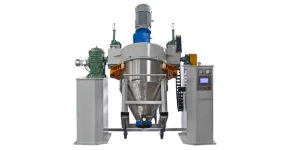
Selecting the Ideal Mixing System for Homogeneous Raw Materials?
The starting step in production sets whether the end powder shows annoying color variations or bumpy textures. You need a good setup that deals with resins and pigments in a solid way. Because of this, those parts turn into one even batch. If your present mixer creates lumps or needs long cleanup times when changing colors, it slows the full process.
Efficient Mixing with the Automatic Container Mixer
When you must change colors quickly, the AUTOMATIC CONTAINER MIXER brings real value. It makes use of movable bins. So, workers avoid long jobs wiping out a fixed tank’s inside. The PLC and HMI setup runs the lifting, tilting, and mixing steps by itself. This build suits plants that value high output, since stoppages cause big problems.
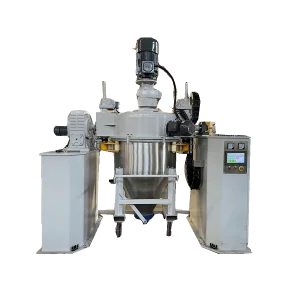
Performance Benefits of High Speed Mixer Series
For hard, lumpy mixes of several parts, the HLJ series takes on the tough work. It has two seals around the shaft to block powder leaks. Nobody wants a work floor full of lost raw stuff. These mixers come in sizes from 10kg up to 1000kg. For that reason, they make a good pick for small test runs as well as big factory jobs.
Versatile Applications of Twin Cone Blenders
The SHJ series aims at balance and keeping noise down. Its shiny stainless steel holders prove easy to clean. Workers can load materials manually if they choose. Or, they might use vacuum pull to cut down on dust in the air. This tool acts as a simple and solid choice for everyday blending work.
Evaluating Twin Screw Extruders for Optimal Melt Mixing?
The extruder serves as the main part of your line. It is the spot where key chemical changes take place, with materials melting and combining under heavy force. If your extruder fails to hold steady warmth or runs into trouble with strong turning power needs, the product quality drops. You want a unit that keeps going all day long. Also, it must stand up to wear or blockages without giving in.
Deep Groove Design for Enhanced Material Processing
A solid TWIN SCREW EXTRUDER should include a clam-shell barrel design. This comes from the easy access it gives. You can open it up like flipping open a book, and that makes washing and care a lot simpler. Jatchen’s TSK series puts in a strong high-torque gear box along with a deep groove screw setup. Such a system gives good self-cleaning action. Plus, it makes sure the melted stuff gets fully mixed before it moves to cooling.
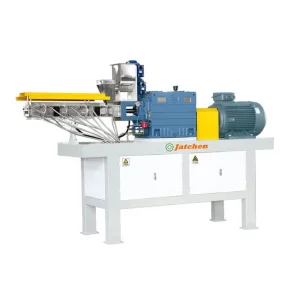
Precision Temperature Control for Consistent Quality
Evenness matters a great deal in powder coating work. So, the heat control setup has to work in narrow bounds, best around ±2℃. Using a screw feeder with a no-backup design keeps stuff from piling up. When the PLC handles the warm areas, staff see less errors and smaller waste piles.
Scaling Production with High Capacity Extrusion Units
You may start out with a low speed like 50 kg/h. Or, you might push toward a high mark of 1500 kg/h. Either way, the gear has to fit your plans. The TSK98 model does great in places with heavy loads. It has tough coverings that fight off grinding damage. This matters because factory powders wear down machine parts over long times.
Choosing Cooling and Tableting Solutions for Efficient Solidification?
Once the hot melt comes out of the extruder, you need fast cooling right then. You also have to break it into chips without delay. If this part moves too slowly, the material stays hot too much. That harms the chemical makeup. On top of that, the whole setup should not take over all the room in your plant.
Compact Roller Systems for Space-Saving Cooling
The COMPACT ROLLER works well in spots with little room. It joins the cooling rolls and a carry belt into one small unit. The man-made rubber band fights static and takes heat without breaking down. Thus, it holds up when moving hot sheets. This method gets the work done well without needing much floor space.
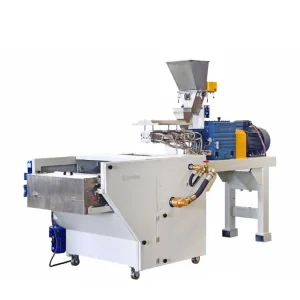
High Efficiency of Water Cooling Belt Series
If you have more area and need strong cooling, the GDJ series uses a water spray under the belt.Staff can change how thick the chips are and how fast the rolls turn. In this way, they get pieces that fit what the grinding machine wants.
Advanced Features of Air and Water Cooling Belts
The YPJ series gives good points from air cooling and water cooling both. It has rolls covered in hard chrome. Those parts can run in reverse to fix jams. A stainless steel chain link keeps the belt from stretching or slipping. As a result, the production flow remains steady and easy to predict.
Optimizing Particle Size with Advanced Grinding Mill Systems?
Grinding turns the chips into real powder you can use. The key goal is to hit a certain size spread for the bits. At the same time, it cuts down on what goes to the dust catcher. Producers want a system that lets them make easy changes. That helps meet the different fineness wants from all kinds of buyers.
Precision Grinding with the ACM System
The ACM system stands as a clever build that grinds, sorts, and pulls apart powder in one step. It relies on a special cyclone method to get back 97% or better of the material. That saves a lot of money that would go into filter bags otherwise. It covers everything from coarse feels to very small powders.
Intelligent Management and Maintenance of Grinding Units
Today’s grinding tools should let you save mix recipes on a touch screen. So, when you switch products, you pick the settings and start up fast. This cuts down on guessing for the team. Also, these setups run with less noise, which the workers will like a lot.
Reliability in Large Scale Grinding Operations
The range goes from the small ACM04 to the big ACM60 that does 1200 kg/h. Every one of these is made to last through long use. They use strong turning parts, since grinding hits hard. Adding an auto scale and bag filler at the end cuts labor costs by a good amount.
Enhancing Product Quality with Specialized Bonding Machines?
For top metallic looks, just dumping aluminum bits into a mixer and crossing your fingers does not cut it. You need a clear bonding step. This sets the best powder makers apart from the cheap ones. Finally, it boosts how the coating looks and helps it spread out evenly.
Superior Bonding with the BD Series Mixer
A BONDING MIXER works to stick metal colors right onto the powder bits. That keeps clumps from forming when you spray. The BD series has a two-bin design with warm and cool covers. Those let you control the heat just right over the whole bonding run.
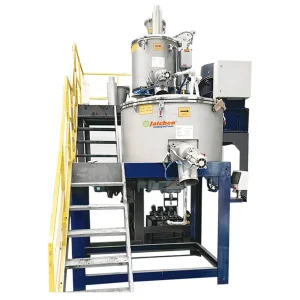
Operational Versatility of Bonding Systems
These units include nitrogen makers and blast-proof parts, because fine metal dust can spark trouble. The PLC runs the full job, from checking gases to handling heat jumps. It offers a smart path to make high-end goods that others might not match easily.
Matching Equipment Capacity to Metal Powder Needs
Sizes fit whether you do tiny custom jobs or huge runs of metal silver. The propeller parts mix everything well but do not hurt the thin metal flakes. The aim stays on getting that perfect glow in the finish, and keeping safety high all along.
FAQ
Q1: How do I know which extruder size is right for my factory? A: You should check your target output each hour. For instance, the TSK55 often makes 200-300 kg/h. But the TSK75 suits needs up to 800 kg/h. It makes sense to build in some spare room. That keeps machines from running flat out every time.
Q2: Is an automatic mixer really worth the extra money? A: Yes, if you switch colors a lot. The time you save cleaning moving bins over stuck ones pays back the price fast. This comes from more running time in just a couple of months.
Q3: What is the benefit of a clam-shell barrel on an extruder? A: It helps with upkeep the most. Workers open the barrel to check inside or change screw pieces without taking it all apart. So, a four-hour fix drops to about thirty minutes.
Q4: How does a bonding machine improve my powder? A: It stops metal bits from coming loose from the powder. So, the color stays the same from first spray to last. Plus, it makes reusing powder in the spray room much easier.
Q5: Can I get a custom production line for a small space? A: Sure, that works. Tools like the COMPACT ROLLER fit tight spots on purpose. Teaming up with a seller lets you shift parts to match your floor plan just right.


