

Common Mixing Challenges in Powder Coating Manufacturing and How to Solve Them
Common Mixing Challenges in Powder Coating Manufacturing and How to Solve Them
Powder coating production seems straightforward at first glance. Raw items enter, finished powder emerges, and then the coating goes on. Yet in actual operations, blending forms the core of various quality issues. These problems delay progress, boost expenses. When blending lacks steadiness, all subsequent tasks grow tougher to manage.
Across numerous assembly lines, such troubles arise without much notice. Shades begin to vary from one run to the next. Tiny particles collect more quickly than planned. Wipe-down periods drag on.
During hands-on efforts, plenty of producers seek out seasoned gear providers to tackle these dangers right at the start. A clear case involves Yantai Jatchen Powder Coating Processing Equipment Co., Ltd.. Jatchen centers on powder coating output tools and full setup options. Its extended involvement with genuine plants provides helpful guides.
Powder coating output depends on a few closely connected phases. Blending occurs early, and it subtly influences the end outcome. If base items blend unevenly, no following phase can fix it completely.
This piece covers usual blending hurdles you might encounter. It also outlines sensible methods to deal with them.
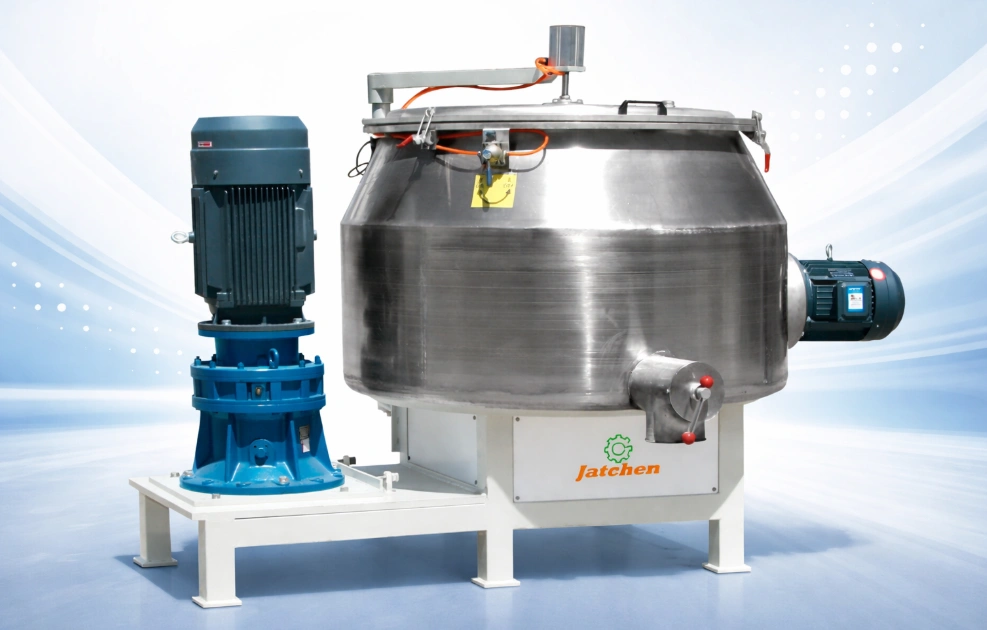
Powder Coating Manufacturing Process Overview
Prior to examining particular troubles, it pays to view the full flow of the process. Powder coating output begins with base items like resins, pigments, fillers, and extras. These enter the blender in exact proportions.
Blending readies the items for each phase ahead. Once blended, the mix shifts to extrusion, cooling, breaking, milling, and sorting. Every part presumes the prior one succeeded properly.
In daily use, most assembly lines stick to this order. Items blend and break in the blender. Then they head to the extruder for melt combining. Next comes cooling into flakes, breaking into bits, milling into small powder, and sorting to fit the needed size span. Should blending fail to spread parts uniformly, the whole series turns unsteady.
Common Mixing Challenges in Powder Coating Manufacturing
Blending hurdles typically stem from a mix of gear boundaries, routine practices, and surrounding elements. These matters display in varied ways based on your output size. Yet the trends feel common in plants.
Inconsistent Particle Size Distribution
Steady particle size starts well before milling. If items lack even blending, certain spots deliver denser or thinner feeds to the extruder. As a result, melt actions vary, and this later hampers milling output.
Wrong blending pace counts as a usual reason. When too sluggish, dense parts drop. If overly quick, items might not loop entirely. Weak blender build adds to it as well. Plain paddles or flawed rotor setups falter with varied solid parts.
The effect shows plainly on the application line. Uneven particle size brings coarse finishes, poor sticking in spots, or irregular layer thickness. Workers might cut spray pace to adjust.
Clumping And Agglomeration
Clumping frequently begins in the blender. It may only grow clear afterward. Water absorption, shaky heat oversight, or weak spreading can make small bits cling.
After forming, clumps proceed along the line. They might jam suppliers, upset extrusion streams, and strain milling units. You could see abrupt rises in tiny powder or odd filter jams.
On the end coating, clumping yields uneven feel. Surfaces might seem fine initially. However, flaws surface under illumination or in checks.
Poor Homogeneity
Homogeneity concerns steadiness from the initial weight to the final one. Weak homogeneity generally arises from ineffective blending gear or mistaken blending duration.
Dust Contamination And Environmental Issues
Dust concerns go beyond mere tidiness. Ineffective dust handling in blending raises item waste and poses hazard risks.
Faulty seals near rods, slack exit spots, or feeble dust pickup units let powder slip out. Gradually, this powder gathers on gear, grounds, and panels.
The fallout extends past upkeep. Dust piles can trigger rule breaches, heighten blaze danger, and harm staff ease. It further hikes base item squander.
Solutions To Overcome Mixing Challenges
Many blending matters trace to gear picks and flow oversight. Sensible fixes aim at firm running over quick patches.
Advanced Mixing Equipment
Picking the suitable blender counts more than folks realize. Quick-paced blenders with fitting rotor builds manage varied items more uniformly. Gear like a HIGH SPEED MIXER lets items loop, smash knots, and combine fully in a brief, managed span.
Sealing stands as another often-ignored aspect. Dual rod seals block powder escape and lessen pollution. In true output, this cuts wipe-downs and yields steadier setups.
For plants facing regular shade shifts, self-acting vessel blenders provide an option. They speed up wipe-downs and cut mix-run pollution. This boosts evenness directly.
You can check varied blender forms and sizes via the product center to fit your real volume demands. Avoid over- or under-scaling gear.
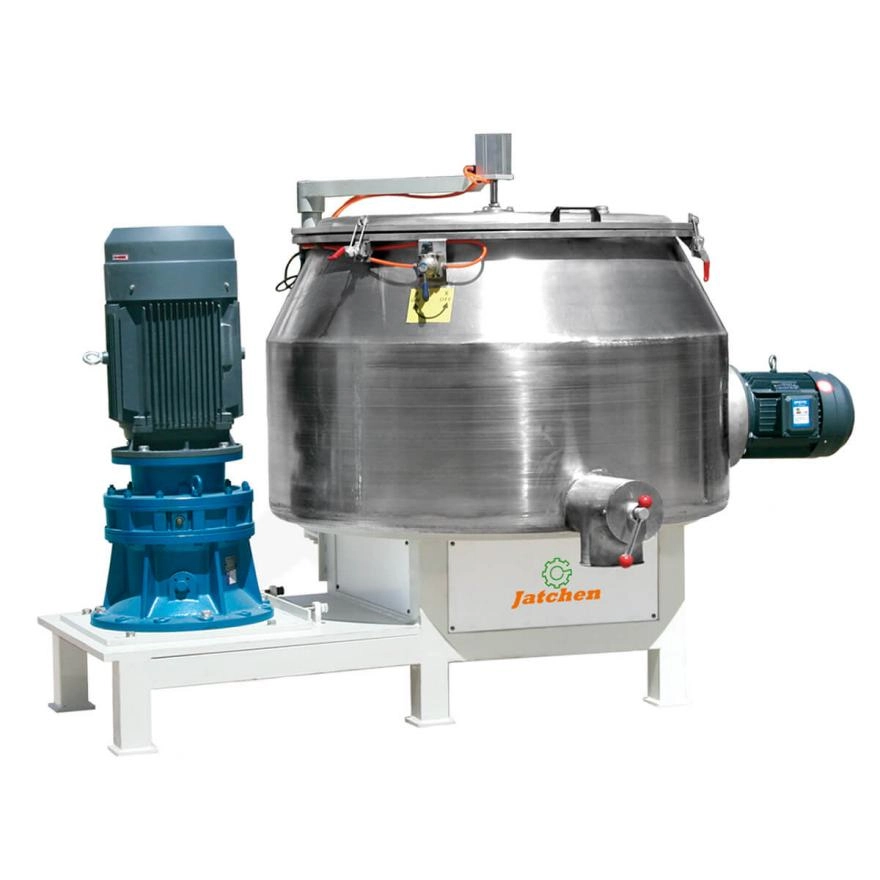
Comparison of Jatchen Mixing Equipment Series
| Feature | HLJ Series (High Speed Mixer) | CM Series (Container Mixer) | SHJ Series (Twin Cone Blender) |
|---|---|---|---|
| Primary Function | High-speed crushing and uniform mixing. | Automatic mixing with movable containers. | Mixing powder products via rotating container. |
| Best For | Solid coarse and lumpish multi-component materials. | High efficiency and easy color changes. | Gentle mixing with low noise and dust-free discharge. |
| Control Mode | Automatic timer for mixing/crushing. | Full PLC & HMI program control. | VFD Motor with time setting. |
| Key Advantage | Excellent sealing prevents powder leakage. | Multi-trolley operation for easy cleaning. | Mirror-polished stainless steel for easy cleaning. |
| Capacity Range | 10 kg/h to 1000 kg/h. | 150 kg/tank to 1000 kg/tank. | 50 kg/h to 1000 kg/h. |
Precision Temperature And Humidity Control
Heat and moisture shape how items act in blending. Firm settings cut clumping and aid spreading.
Built-in chill covers aid in managing heat buildup in quick blending. With item heat held in a set band, bits stay loose and simpler for later steps.
Certain assembly lines link central watch systems to hold settings firm over shifts. This lessens staff-based changes and lifts run-to-run steadiness.
Efficient Material Handling And Dispersion Systems
Item handling extends past the blender. Supply setups, exit builds, and later moves all shape blending outcomes.
Targeted spread paddles better pigment and filler flow through the main item. Paired with right break action in the blender, this lowers clump risks.
Post-blending, air sorting and filter units polish particle size. These pull out large or tiny bits. Thus, they aid a tight size band that applies more uniformly.
Producers frequently assess full line plans via a solution center to confirm each part aids the next.
Dust Collection And Environmental Protection
Strong dust handling begins at the blender. Multi-level dust pickup units grab powder at origin. They act before piles form.
Top-rate filters with apt air flow builds hold dust low. This betters site safety and cuts item loss.
Following green rules goes beyond mandates. Neat spaces prove simpler to keep and foster steadier output. Many plants check true setups through case studies prior to improvements.
Automation And Monitoring
Self-acting systems lessen dependence on staff calls. Clever oversight units follow blending time, pace, and weight live.
If settings stray, self-acting alerts spot troubles soon.
Case Studies: Successful Solutions In Powder Coating Manufacturing
True cases frequently clarify fixes better than ideas.
One effort centered on particle size steadiness. It used a focused size fine-tune setup. By pairing firm blending with exact milling and sorting, the assembly line cut tiny powder output. Recovery rates rose. Care time fell since gear remained cleaner over longer periods.
A further instance stems from an output site that improved its blending and handling units across the line. The gain brought smoother running, quicker shade swaps, and fewer quality gripes. Staff noted briefer wipe cycles and more reliable volume.
These gains mirror a wider trend. With firm blending, all later parts ease in handling. Deeper aid support and setup planning appear via technical services or straight talks through contact channels.
Conclusion
Blending hurdles in powder coating output seldom arise from one error. They build from tiny shortfalls in gear builds, flow oversight, or site care.
By fixing blending matters soon, you cut flaws, firm up volume, and trim lasting costs. Better blenders, set conditions, apt dust care, and clever watch all contribute.
As output needs expand and quality hopes climb, putting funds into solid blending tech shifts from growth to rivalry edge. Firm blending stands as more than a tech note. It forms the base of steady powder coating standards.
For more information about powder coating production solutions or to discuss your specific needs, feel free to reach out to Jatchen. Jatchen’s team at Yantai Jatchen Powder Coating Processing Equipment Co., Ltd. is dedicated to providing you with the best equipment and service to ensure your manufacturing process runs smoothly and efficiently.
FAQ
Q1: Why Do Mixing Problems Show Up Later In The Process?
A: Blending shapes item spread prior to extrusion and milling. Weak blending brings uneven melt actions and particle size matters that surface only in applying or checks.
Q2: How Does Mixer Design Affect Powder Quality?
A: Rotor form, pace oversight, and sealing set how well items loop and combine. Flawed builds cause separation, clumping, and dust slips.
Q3: Can Grinding Fix Poor Mixing?
A: Milling hones particle size yet cannot mend uneven item makeup. If blending wavers, milling merely hides core troubles.
Q4: How Does Dust Control Improve Mixing Results?
A: Strong dust pickup cuts item waste, keeps gear clean, and holds steady work settings. This aids uniform blending and safer running.
Q5: Is Automation Necessary For Stable Mixing?
A: Self-acting cuts staff unevenness and spots setting strays early. Though not required, it markedly lifts steadiness in mid and big assembly lines.


